I’ve decorated my bedroom backward more times than I’d like to admit—picked pretty colors, bought furniture I loved, then wondered why I still couldn’t sleep. So here’s what actually works: start with your mindset, not Pinterest. Prioritize real rest through blackout curtains, a quality mattress, and tech-free evenings. Choose calming colors like soft greens and blues. Get your layout right before buying anything. Hide clutter with smart storage solutions. Layer lighting for warmth. Add meaningful personal touches sparingly. There’s much more to creating a space that genuinely supports restful sleep.
Start With Sanctuary: Why Mindset Matters Before Design
Before you start scrolling through paint colors or rearranging furniture, here’s the truth: your bedroom won’t become a real retreat until you decide it should be one. I learned this the hard way after buying decorative pillows I didn’t actually like.
Your sanctuary mindset matters more than any design trend. When I shifted my focus to viewing my bedroom as a personal retreat—not just a place to sleep—everything changed. I started prioritizing what actually served me: blackout curtains for better sleep quality, a mattress worth the investment, and storage that keeps chaos out.
This mindset grounds calming design choices in real life. You’re not chasing social media aesthetics; you’re building a space that genuinely supports your rest and well-being. That’s the foundation everything else sits on.
Choose Calming Colors (and Skip the Ones That Energize)
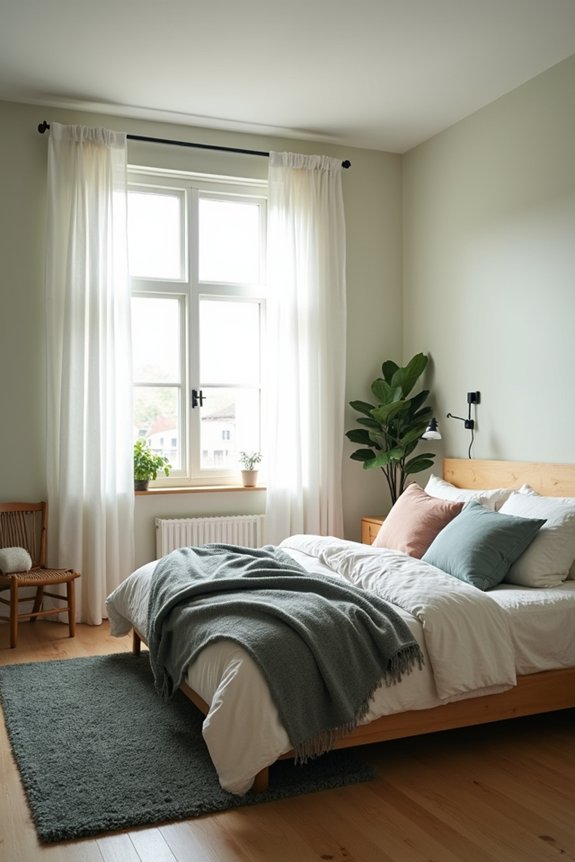
Why do you feel so different in a soft blue room versus one painted bright orange? Color shapes your mood more than you’d think, and I’ve learned this the hard way after painting my bedroom tangerine (rookie mistake). Your soothing palette should include:
Color shapes your mood more than you’d think—I learned this the hard way painting my bedroom tangerine.
- Soft greens, blues, and lavenders that naturally calm your nervous system
- Toned-down versions of favorite colors, like mauve instead of intense purple
- Monochromatic schemes that keep things subdued and peaceful
- Layered color through textiles rather than bold wall paint
I skip energizing reds and yellows entirely—they keep me wired. Consider your lighting interaction too; northern rooms feel cooler, southern ones warmer. Adjust your calming colors accordingly for better color balance. This approach creates the serene bedroom you’re after without feeling sterile.
Make Your Bed the Focal Point: With Built-In Storage
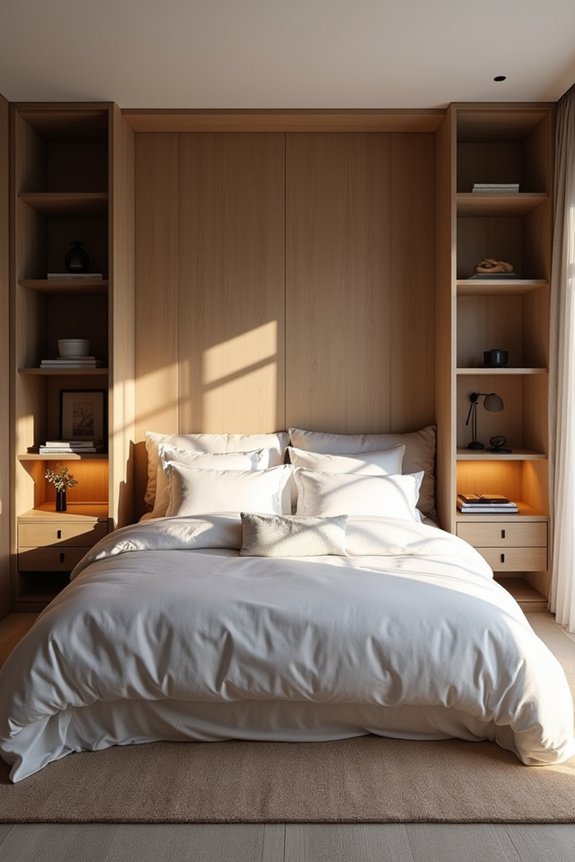
I’ve found that choosing a bed that actually works for me made a real difference in my bedroom. Your headboard can hold shelves or little niches where you stash books and a lamp, while slide-out drawers or a lift mattress underneath give you sneaky storage space that keeps clutter hidden. When I paired my storage bed with matching nightstands, the whole setup suddenly felt organized and balanced instead of like I’d just crammed furniture wherever it fit.
Headboard Shelving Solutions
How’d you like to have your nightstand clutter disappear?
I’ve discovered that headboard shelving solutions improve bedroom organization. With built-in storage right at bed height, I’ve ditched my overflowing nightstand drawers. Here’s what makes this bedside organization work:
- Open cubbies display books and decorative items, creating visual interest
- Closed compartments hide personal stuff you’d rather keep private
- Easy reach means glasses and phones stay within arm’s distance
- Room centerpiece draws attention to your bed as the main feature
When selecting your headboard shelving, I match the depth and materials to my mattress and room style. The result? My bedroom feels calmer, more balanced, and less chaotic. You’ll appreciate how this storage solution combines function with style, making your space feel organized rather than haphazardly arranged.
Under-Bed Storage Design
When you’ve got stuff piling up everywhere except under your bed, you’re missing out on one of the easiest storage options in the room. Under-bed storage works well for organization. Lidded bins and roll-out drawers maximize space while keeping dust away from your belongings. A bed skirt hides everything, so your room stays visually clean. Store seasonal clothing and extra linens underneath—items you don’t need daily but definitely need accessible. The key is choosing containers that fit your bed’s height without blocking movement around the room. When you rotate contents seasonally, your bedroom feels calm and uncluttered. Your bed becomes the focal point, not a storage mountain. That’s effective organization.
Mattress Lift Mechanisms
Gas-lift mechanisms make under-bed storage accessible and practical.
Here’s what makes these lift mechanisms worth considering for bedroom design:
- Effortless lifting: Gas-assisted systems raise your mattress smoothly without straining your back
- Maximum space: Hidden storage cavities stay completely concealed, keeping your room organized
- Sturdy support: Reinforced framing handles your mattress weight plus occupants safely
- Comfortable access: You can raise the mattress to a working height for dressing or organizing
This setup lets you maintain an organized bedroom while storing everything you need. It’s functional design that works for everyday life.
Get Sizing and Layout Right Before You Buy Anything
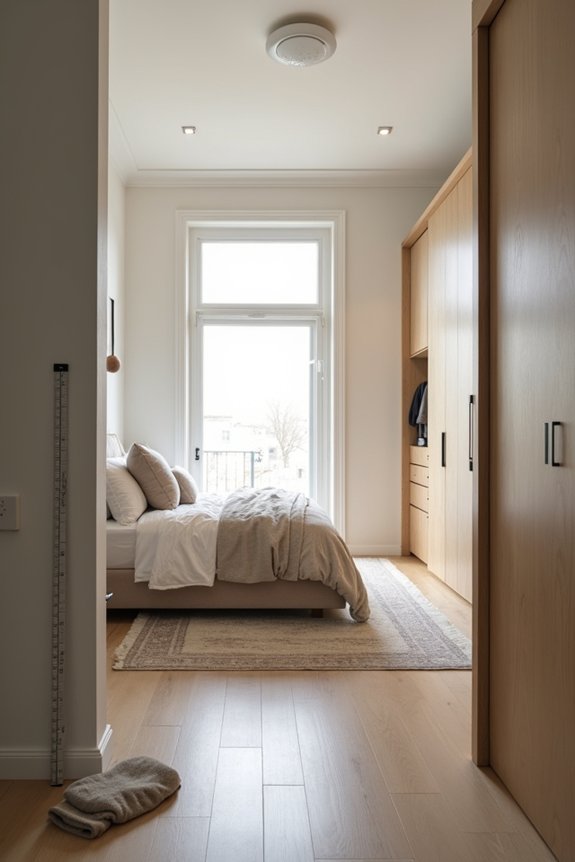
I’ve learned the hard way that buying bedroom furniture without a plan is like assembling a puzzle without checking the picture first. Before I spent money on that bed frame I thought I wanted, I started measuring my room dimensions and sketching out my furniture to scale—turns out it would’ve blocked my closet door. Now I always match my bed and nightstands first, making sure the nightstands are tall enough to reach comfortably, and I use cutouts to test if everything actually fits and works together.
Measure Your Room Dimensions
How many times have you bought a gorgeous dresser only to realize it won’t fit through your bedroom door?
I’ve learned that measuring your room first saves serious headaches. Here’s what I do:
- Measure all four walls to get exact width and length, plus ceiling height for furniture scale
- Note architectural features like doors, windows, and outlets so I know where to place pieces safely
- Document clearance needs—I keep pathways at 24–36 inches wide for comfortable movement
- Create a to-scale sketch with furniture cutouts to test the layout before buying anything
I use my bed as the reference point, placing it on the largest solid wall. Then I re-measure after positioning initial pieces to confirm everything flows naturally. This approach means I’m not cramming oversized nightstands into tight corners or blocking vents. Spending thirty minutes measuring beats returning furniture every time.
Create Scale Furniture Sketches
The real work begins when you stop imagining and start sketching—because that’s when you’ll catch mistakes before they cost you money. I create a simple, to-scale furniture sketch of my bedroom layout using graph paper or a basic drawing app. I cut out proportional shapes representing my bed, nightstands, and dresser, then move them around like puzzle pieces.
This hands-on approach reveals what actually fits. I check that my nightstands reach comfortably from bed height and my rug extends about 24 inches beyond three sides—anchoring the sleeping zone. Most importantly, I verify traffic flow remains clear and storage stays accessible.
Scale matters. A furniture piece that looks perfect online might overwhelm your actual space, so testing your layout planning beforehand saves money, time, and frustration.
Match Bed and Nightstands
Your nightstands and bed should feel like they belong together, not like you grabbed whatever was on sale. I’ve learned that matching them creates a bedroom that feels right for you.
Here’s what I focus on when selecting nightstands:
- Match the bed height: I choose nightstands that align with or slightly exceed my mattress top for comfortable reaching
- Balance proportions: Oversized nightstands dwarf the bed, while tiny ones look lost—I aim for that goldilocks zone
- Plan clearance: I leave 24–28 inches beside the bed for easy movement and actual usability
- Maximize storage: I look for built-in drawers or shelves to keep clutter hidden and surfaces clear
When I verify the combined width fits my wall, everything clicks into place. Your bedroom becomes a space that works for you.
Light Your Space From Every Angle
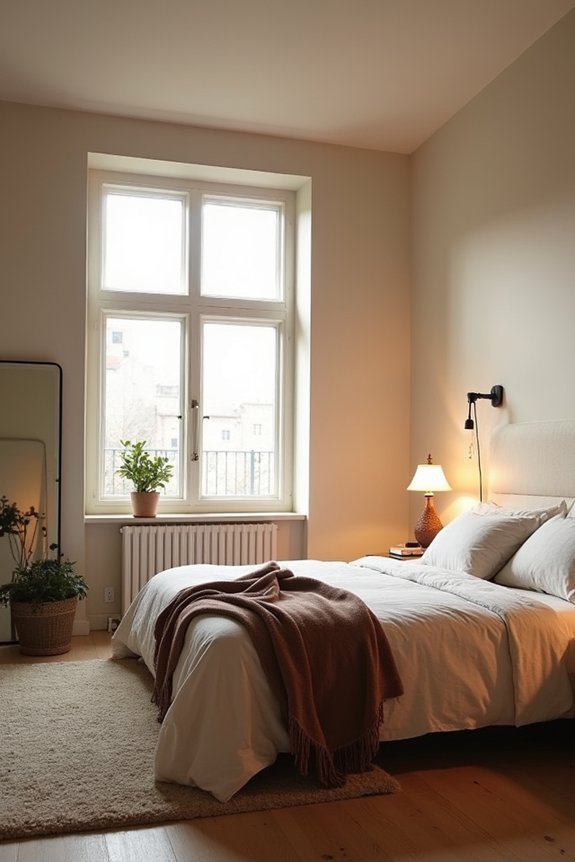
Lighting isn’t just about flipping a switch—it’s about creating layers that serve different purposes throughout your day. I place eye-level lamps on both nightstands to eliminate glare and provide focused light for reading. Adding a floor lamp creates ambient warmth without harsh shadows. Here’s where dimmers made a practical difference: I can dial down brightness for wind-down time, then brighten things when I need to get ready. I also let natural daylight flow through adjustable curtains, controlling glare while keeping that fresh morning feel. This three-pronged approach—task, ambient, and natural light—works well for how I use my bedroom.
Layer Textures With Luxurious, Natural Fiber Linens
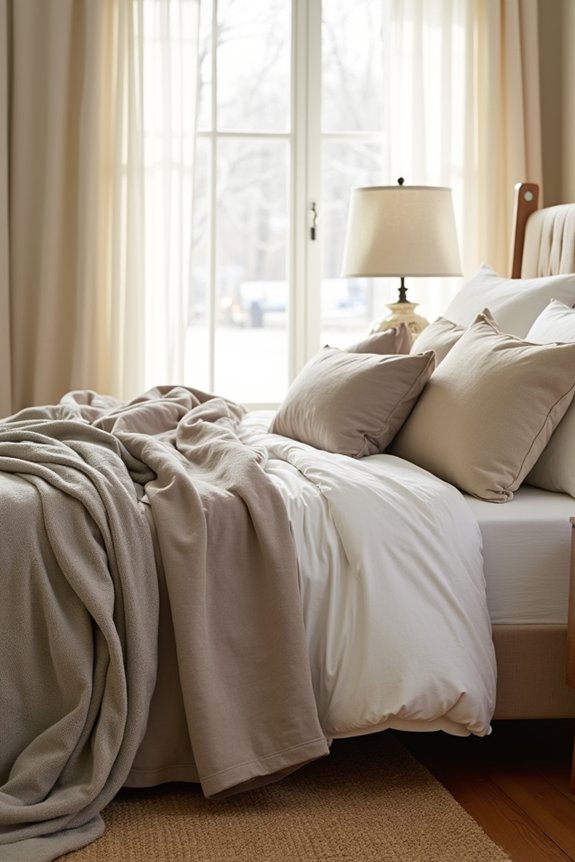
Once I’d nailed down my lighting setup, I realized I’d been overlooking what happens when the lights go off—the textures I’d actually feel wrapped around me at night.
That’s when I discovered the value of layering natural fibers. I switched to 100% cotton, linen, and bamboo bedding because they breathe way better than synthetics, which honestly just trapped heat and made me miserable.
Here’s what improved my sleep:
- Choose sheets with 350+ thread count for that smooth, luxurious feel
- Mix different weaves like percale and sateen for visual interest
- Add plush throws over your base layers
- Stick with natural fibers to avoid overheating
Now my bed feels like a comfortable retreat. I’m sleeping better, and my space finally looks and feels as inviting as it should.
Create Tech-Free Sleep Habits for Better Rest
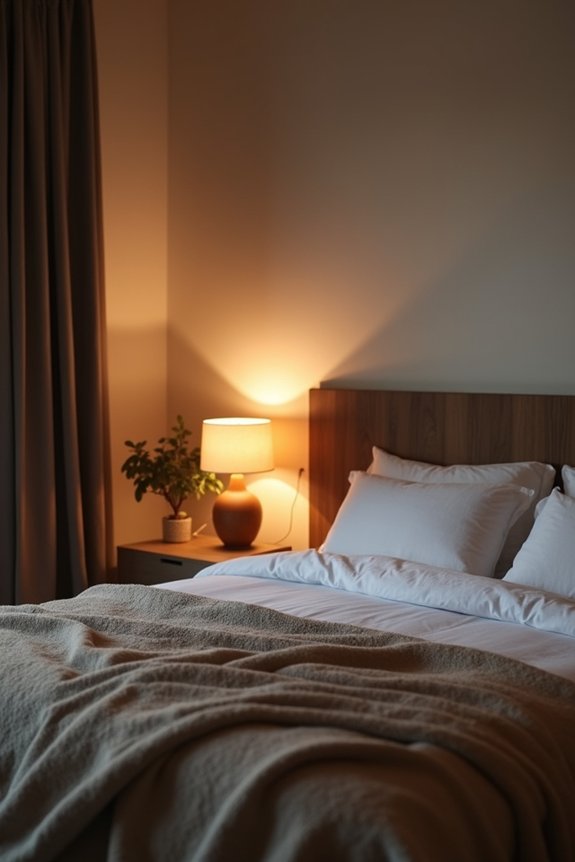
How many times have I scrolled through my phone right before bed, only to lie awake staring at the ceiling an hour later? I’ve learned that my bedroom needed a serious tech detox. I banned screens entirely—no exceptions—and replaced my bright overhead light fixture with warm bedside lamps that won’t mess with my melatonin. I installed blackout curtains to block outside light pollution completely. Here’s what worked: I created tech-free sleep habits by establishing a 20-minute wind-down routine with reading instead of scrolling. I keep my phone in another room entirely. It felt odd at first. But now I’m falling asleep faster, sleeping deeper, and actually waking up refreshed. Your future self will thank you for this simple shift.
Hide Everything: Storage Solutions for a Calm Room
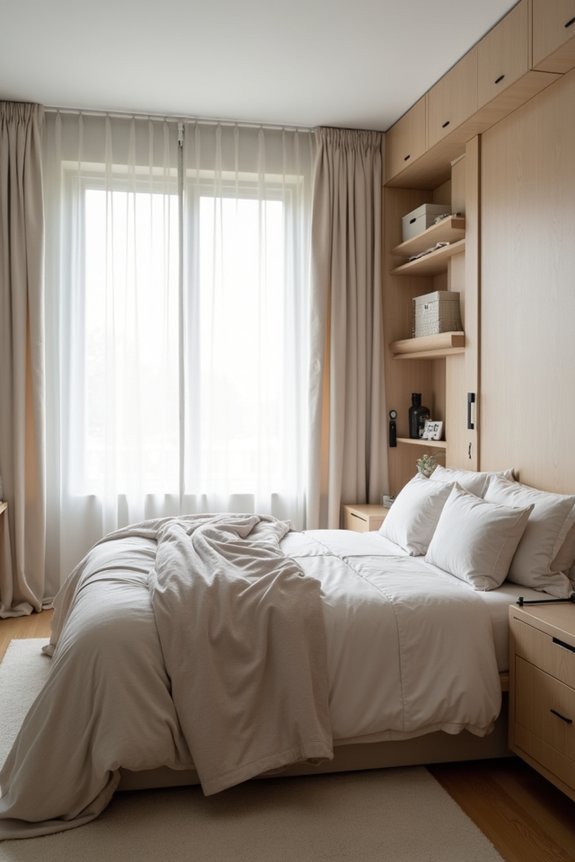
Your bedroom’s calm vibes won’t last long if stuff’s piling up everywhere—I learned this the hard way when I realized my nightstand had become a graveyard of random objects, old receipts, and things I couldn’t even name.
Your nightstand becomes a graveyard of clutter—receipts, forgotten items, chaos. Your calm bedroom vibes won’t survive the mess.
I discovered that clutter equals stress, so I invested in smart storage solutions to create a clutter-free sanctuary. Here’s what worked for my space:
- Headboard with built-in shelves keeps books and essentials organized and visible
- Under-bed drawers hide seasonal clothes and items while staying accessible
- Closet organization systems with rails and compartments contain everything neatly
- Storage boxes under the bed with a dust ruffle conceal belongings completely
These hidden storage options aren’t just practical—they improve bedroom organization noticeably. You’ll feel the difference right away. Your space becomes calmer, your mind clearer, and you’ll actually enjoy spending time there.
Frame Your Windows and Finish Overhead Details
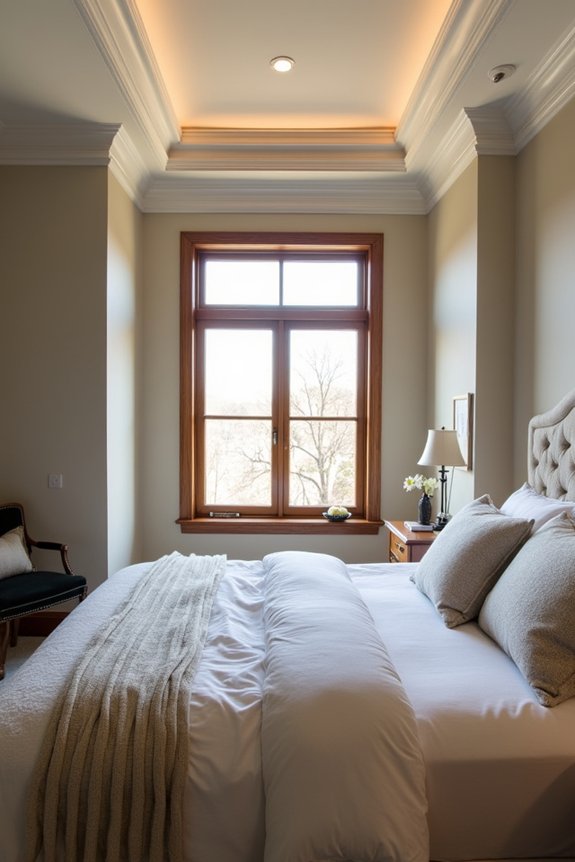
Windows deserve way more attention than most people give them, because they’re basically the eyes of your bedroom. I’ve found that framing them with curtains works well for the space. I extend my curtain rods beyond the window frame to make windows look wider and control light better. Layered window coverings are effective—I pair blackout shades with sheer curtains so I get privacy when I need it, plus soft filtered light during the day. It’s a solid approach for setting mood.
I also coordinate my fabrics and colors with my room’s palette, which keeps everything feeling connected and peaceful. Don’t overlook overhead detailing either. I’ve experimented with ceiling colors and small architectural touches that create focal points and actually make my ceiling feel higher or cozier. These window treatments and finishing details really bring everything together nicely.
Add Meaningful Personal Touches Without Clutter
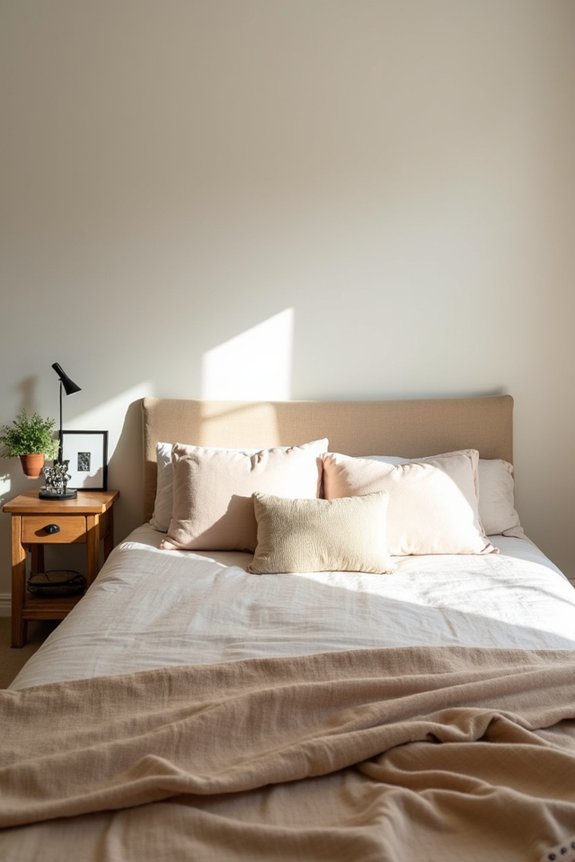
I’ve learned that the best bedrooms tell your story through pieces that actually matter to you—not items you grabbed because they looked good on Pinterest. When I fill my space with a travel memento from my grandmother’s trip to Morocco or that concert ticket stub from my favorite band, I’m creating something far more interesting than matching nightstands ever could. The trick is being selective with what you display, keeping surfaces calm and clear, so those meaningful pieces really stand out without your bedroom feeling like a cluttered museum.
Select Pieces That Matter
A few carefully chosen pieces’ll do far more for your bedroom than a room packed wall-to-wall with stuff you don’t really care about. I’ve learned that personal artifacts with real storytelling value work better in a space than random decorations ever could.
Here’s what I focus on:
- Travel mementos that remind me where I’ve been and who I’m becoming
- Inherited pieces that connect me to people I love and respect
- Cherished objects I’ve collected over time that bring genuine joy
- Meaningful artwork that expresses my personality and values
I pick one great piece as my design anchor, then add just a couple simple accents. This approach keeps my room calm while avoiding clutter. When each item has weight and meaning, your bedroom becomes a true reflection of your life rather than just another decorated space.
Display Intentionally, Not Excessively
How do you decide what actually deserves space in your bedroom? I’ve learned that curation matters. Instead of crowding shelves with every souvenir, I pick one or two pieces that hold real meaning—maybe a travel memento or inherited treasure. Then I give them breathing room. That negative space around focal accents? It works. Your eye lands exactly where you want it to.
I’ve discovered that displaying items cohesively matters too. Grouping framed photos on one shelf or creating a single meaningful vignette tells your story better than scattering things everywhere. It feels purposeful, not chaotic.
The real trick is editing regularly. I rotate my personal touches seasonally, which keeps my room feeling fresh without accumulating clutter. Restraint works—your bedroom becomes a calm space that actually shows who you are.
Curate Your Personal Style
Your bedroom’s real magic comes from the pieces that actually mean something to you—not the stuff that looks good in magazine photos. I’ve learned that my space feels most like home when I fill it with pieces that reflect who I am.
Start by choosing personal touches intentionally:
- Display travel mementos from places you’ve explored
- Showcase inherited pieces with family history
- Hang artwork that moves you
- Include photos of people and moments you cherish
The key is selecting a few standout items rather than cramming everything in. When I limited my accessories, my room felt calmer and more unified. Your bedroom should evolve with you—add pieces slowly, remove what no longer fits your life, and let it become a space that tells your unique story.