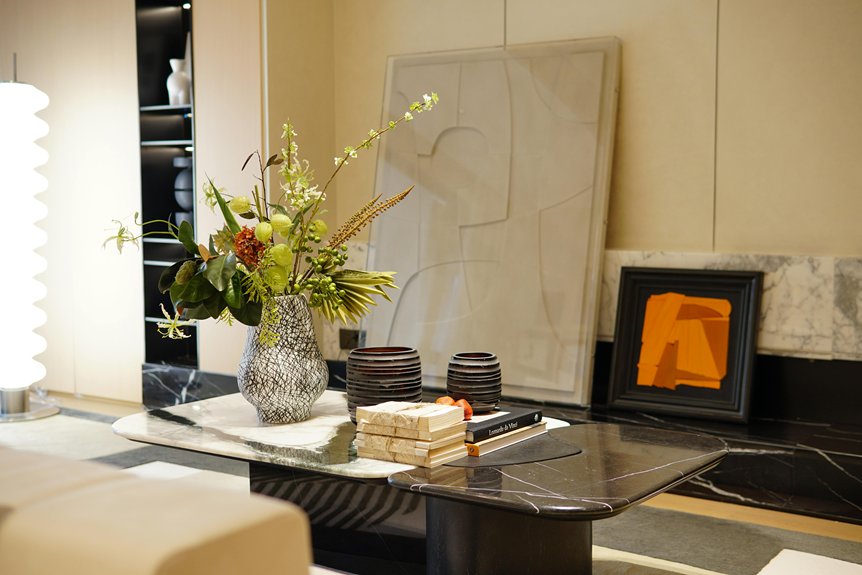
Scandinavian design nails something I’ve always wanted: beautiful spaces that don’t feel pretentious. It’s built on seven core ideas—clean lines that cut through clutter, natural materials like light wood that warm things up, neutral colors that provide breathing room, layered lighting for comfortable vibes, furniture that actually does its job, plenty of empty space, and soft textures that prevent sterile feelings. The strength? Each element works together to create rooms that feel both calm and inviting, which I’ll explain in detail below.
Why Clean Lines and Minimalist Forms Define Scandinavian Design
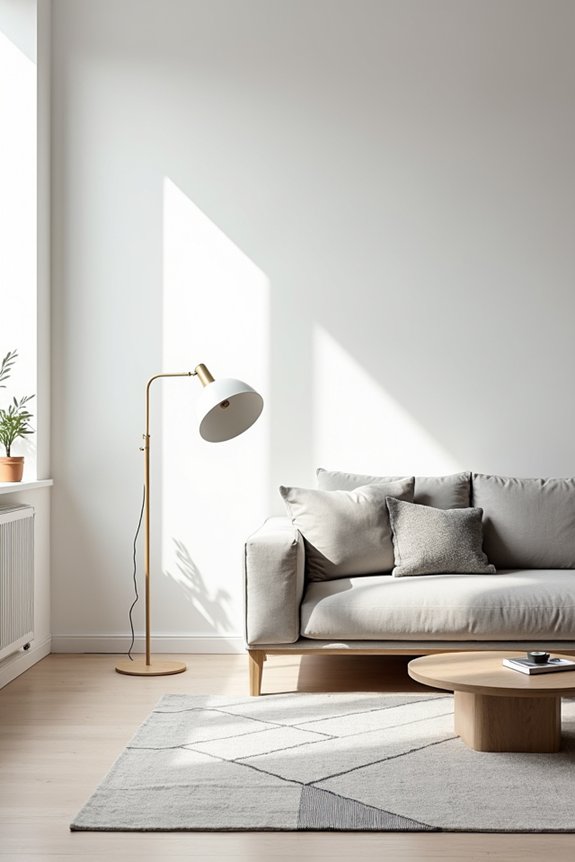
How’d Scandinavian designers manage to make “less is more” actually feel like *more*? I’ve discovered it’s all about intention. They stripped away clutter and kept only what matters—furniture with clean lines, minimalist forms that serve a purpose. When I brought a light wood table into my space, I finally understood: fewer pieces means each one gets noticed.
The neutral palette of whites, creams, and grays creates breathing room. I’m not drowning in color choices; instead, I feel calm. Natural materials like unfinished wood connect me to something real, something honest. There’s no pretending here—just straightforward beauty.
This approach isn’t boring, though. It’s actually freeing. I can focus on what I love without fighting visual noise. That’s the appeal: simplicity that welcomes you home.
Natural Materials: The Warmth Behind the Minimalism
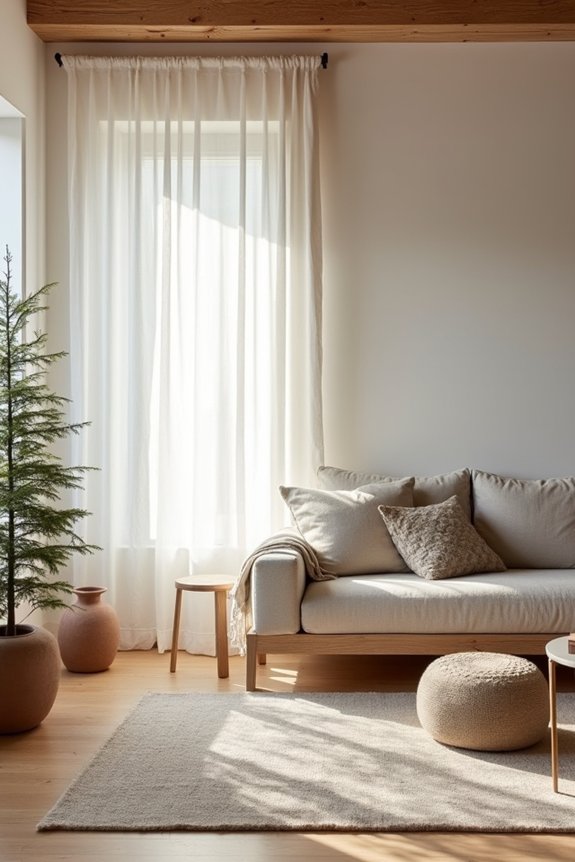
I’ve discovered that what makes Scandinavian design feel so inviting isn’t just its clean lines—it’s the natural materials underneath that do the real work, especially wood in light beech and pine tones that bring warmth to a room like a cabin interior. You’ll find that wool textiles, stone, and leather aren’t just decorative additions; they’re deliberately chosen to give you something soft and real to touch, which makes a space feel less cold and sterile. What I value most is how these materials aren’t wasteful choices—they’re sustainable picks that Scandinavians have relied on for generations, proving that environmental responsibility and creating a beautiful home go hand in hand.
Wood as Primary Foundation
The foundation of Scandinavian design rests on something beautifully simple: wood. Light-colored woods like beech, pine, and spruce create spaces that feel open and calm, which is exactly what minimalism aims for. These natural materials bring warmth without cluttering your home. You’ll notice wood everywhere—floors, furniture, even small accents—creating a unified appearance. The clean lines emphasize function, making each piece work hard for your space. This approach isn’t just aesthetically pleasing; it’s sustainable and built to last. When you surround yourself with quality wood, you’re investing in durability and that warm, welcoming feeling Scandinavians call hygge. It’s honest design.
Textures Beyond the Surface
Why do Scandinavian spaces feel so inviting when they’re designed to be simple? I’ve discovered it’s all about what you can actually *touch*. Natural textures work well here—they add depth to minimalist rooms without making them feel cold or sparse.
When I added wool throws and linen cushions to my living room, the space shifted. These materials soften those clean lines without creating clutter. The wool feels substantial in your hands, while linen drapes with quiet elegance. Wood flooring connects everything together, grounding the space with warmth you can see and feel.
I learned that leaving natural textures visibly prominent—showing off wood grain, wool’s nubby surface, linen’s weave—makes spaces feel alive. You’re not hiding materials under layers of paint or polish. Instead, you’re celebrating them. That’s where the coziness comes from.
Sustainable Material Choices
You’re investing in things that’ll still look good (and feel good) decades from now, which honestly saves money and keeps junk out of landfills. I’ve found that choosing natural materials like light wood, leather, and wool creates spaces that age well instead of falling apart.
Here’s what makes sustainable choices so satisfying:
- Durability that pays off: Wood floors and vegetable-tan leather actually improve with time, developing character rather than falling apart
- Zero guilt factor: Stone and wool come from nature’s renewable resources, so I’m not worried about harming the planet
- Timeless textures: Raw wood grain and wool blends never feel outdated, keeping my space relevant without constant replacements
When I prioritize sustainability, I’m not just decorating—I’m part of a movement that values quality over quantity.
Light, Neutral Color Palettes With Strategic Warmth
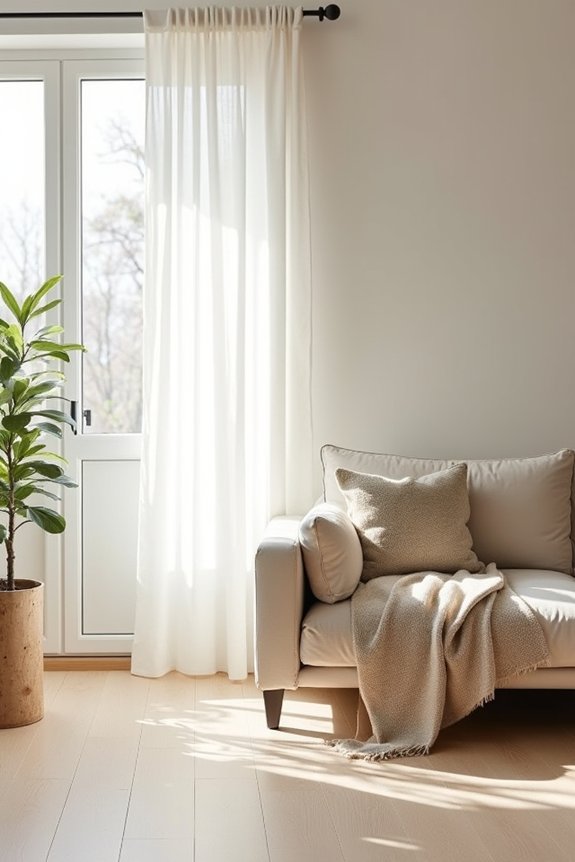
I’ve discovered that Scandinavian design works best when you build with white and soft grays as your foundation, then layer in cozy textures like chunky wool throws and linen cushions to prevent coldness. Strategically placed warm accents—a cream-colored rug or pale wood furniture—break up the minimalism while remaining understated. Thoughtful lighting, including soft pendant lamps and layered light sources, creates depth and makes neutral spaces feel inviting rather than clinical.
White Walls As Canvas
There’s something about stepping into a room painted white—suddenly, everything feels bigger, brighter, and more peaceful. White walls work well with Scandinavian design, letting natural light bounce around your room. Here’s what makes this approach work:
- Maximizes brightness: Large windows paired with white surfaces help distribute daylight throughout your room
- Creates versatility: Your neutral palette stays timeless while textiles and art take center stage
- Adds warmth: Layering wool and linen keeps minimalist spaces feeling inviting, not cold
When I paint my walls white, I’m not creating a sterile environment. Instead, I’m building a foundation where natural materials and seasonal changes stand out. The minimalist approach means your personality comes through in the pieces you choose, not the wall color.
Warm Textiles Break Minimalism
The danger of pure minimalism is that it can feel more like a hospital room than a home, so warm textiles are where Scandinavian design gets its soul. I’ve learned that layering wool throws, linen cushions, and soft rugs in taupe, sand, and grey tones brings depth to stark white walls and creates more inviting spaces. These aren’t random additions—they’re strategic choices that introduce tactile warmth without cluttering your room.
What I value most is how nature-inspired patterns, like gentle botanical prints or subtle geometrics, provide personality and visual interest. Pair these warm textiles with plenty of natural daylight and minimal window treatments, and you’ll achieve that cozy hygge feeling most people seek. You’re not abandoning minimalism; you’re making it livable and distinctly your own.
Layered Lighting Adds Depth
Once you understand how light works in Scandinavian design, you’ll realize it’s not just about brightness—it’s about creating mood and dimension. Layered lighting brings depth to a neutral palette that might otherwise feel one-dimensional.
Here’s what makes this approach work:
- Multiple light sources at varying heights create intimate areas within open spaces
- Warm ambient fixtures with soft, amber tones balance bright overhead lighting
- Natural materials like wood and wool reflect light beautifully, adding texture
When I strategically placed floor lamps, table lights, and ceiling fixtures throughout my space, the effect became clear. The neutral walls and soft furnishings gained visual interest rather than remaining static. Mirrors amplify daylight, while minimal window treatments let natural light flood in. This combination achieves that Scandinavian aesthetic—bright yet inviting, minimal yet warm. You’re not just lighting a room; you’re designing an experience.
Layered Lighting for Brightness and Hygge
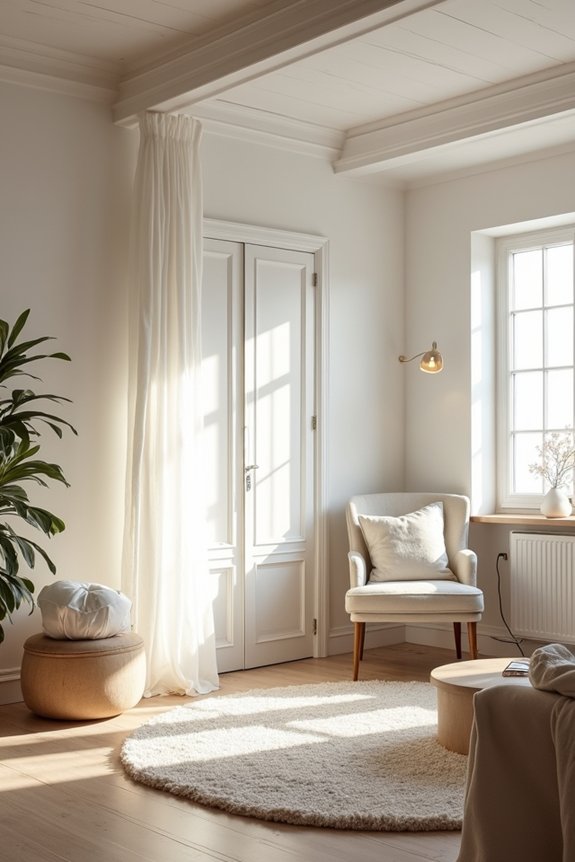
How do you brighten a room without making it feel like you’re sitting in a hospital waiting room? Layered lighting is the answer. Instead of relying on one harsh overhead light, use multiple light sources at different heights—floor lamps here, table lamps there. Choose warm bulbs around 2700K, which creates that cozy hygge feeling. Install dimmers on everything. This lets you adjust brightness depending on your mood and the time of day. Bounce light off white walls and mirrors to maximize what you have. The result? Your space feels bright enough for reading and working, yet still inviting and intimate. That’s the sweet spot.
Furniture That Works Harder Than It Looks
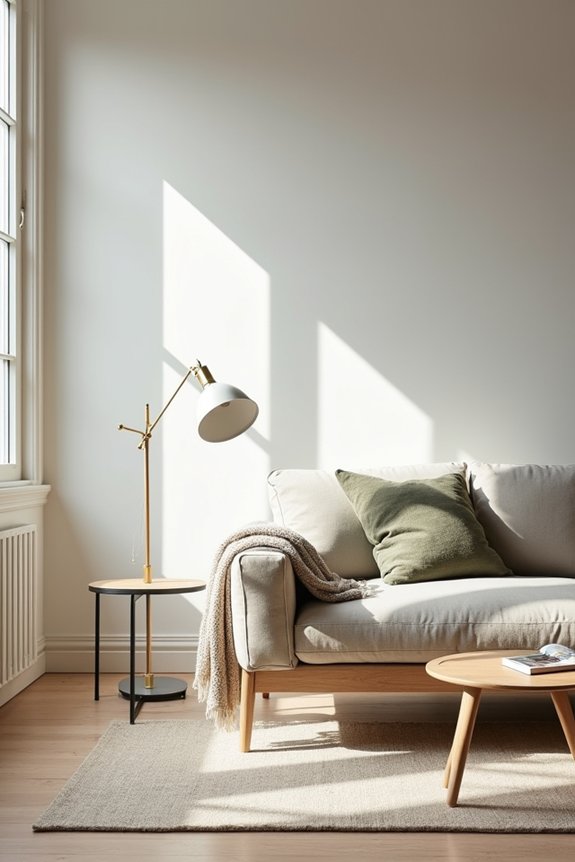
Pick up a Scandinavian chair and you’ll notice something right away—it’s deceptively simple. But here’s what matters: beneath those clean lines lies serious functionality that I’ve come to appreciate. Scandinavian design teaches us that furniture shouldn’t just look good—it should earn its place in your home by actually working for you.
I’ve learned that multifunctional pieces are where this philosophy shines:
- Storage benches that hide clutter while providing seating
- Nesting tables that expand when you need space, shrink when you don’t
- Beds with built-in drawers maximizing bedroom real estate
Natural wood construction keeps everything grounded and warm. Each item serves multiple purposes without calling attention to itself. That’s the value of it. You’re investing in pieces that genuinely simplify your life while maintaining that calm, connected aesthetic we’re all seeking.
Breathing Room: The Power of Uncluttered Spaces
Why does walking into a sparse room feel so different from stepping into one packed with stuff? I’ve noticed that uncluttered spaces calm my mind. Scandinavian minimalism teaches us this principle: fewer, thoughtfully chosen pieces create room to breathe.
Built-in storage keeps surfaces clean and visual clutter at bay. A neutral palette of whites, beiges, and pale woods makes rooms feel bigger and lighter. Natural materials like light wood and linen provide warmth without overwhelming the space.
Clean lines and simple forms matter more than I initially thought. They allow negative space to stand out, making rooms feel open and considered. When I removed unnecessary items and embraced this approach, my home changed. It’s not about having nothing—it’s about keeping only what serves you.
Soft Textures and Greenery: Softening Scandinavian Minimalism
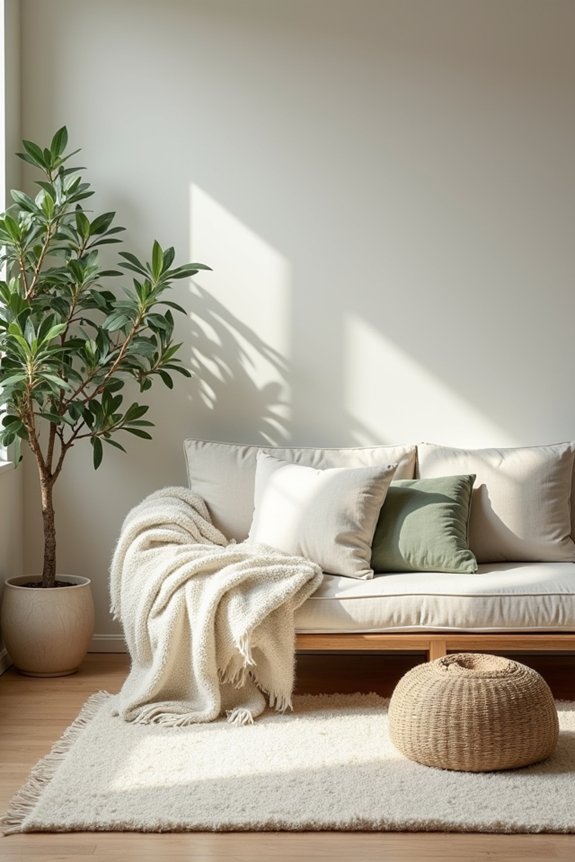
There’s a moment when I realized that my all-white, perfectly sparse room felt a bit cold—almost sterile, if I’m being honest.
That’s when I discovered the benefit of layering soft textures and greenery. I started adding wool throws, linen cushions, and a sheepskin rug. Suddenly, my minimal space felt inviting and comfortable—what Scandinavians call hygge.
Here’s what worked in my space:
- Natural materials: Wood furniture, leather accents, and stone touches paired with soft textiles
- Indoor greenery: A Fiddle Leaf Fig and trailing plants introduced life and color
- Textural layering: Throws and rugs created depth without cluttering
I’ve learned that minimalism doesn’t mean cold. By combining pale neutrals with these elements, I created an environment that feels both spacious and warm. The soft textures and plants catch light beautifully, making my home feel bright yet embracing—exactly where I want to be.