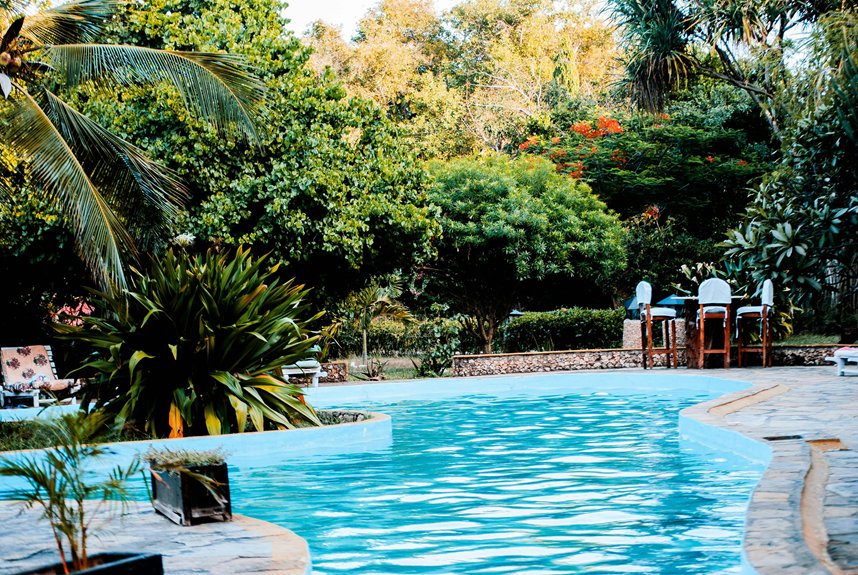
I’ve turned my neglected backyard into a real hangout spot by mapping out distinct zones with pathways, adding screening plants for privacy, and creating a fire pit gathering area with comfy seating.
String lights and accent lighting set the mood after dark, while water features add visual interest.
Finally, I coordinated my furniture, planters, and fence colors into a cohesive palette that ties everything together. Each of these moves builds on the last to create an outdoor space worth spending time in.
Plan Your Backyard Zones and Flow
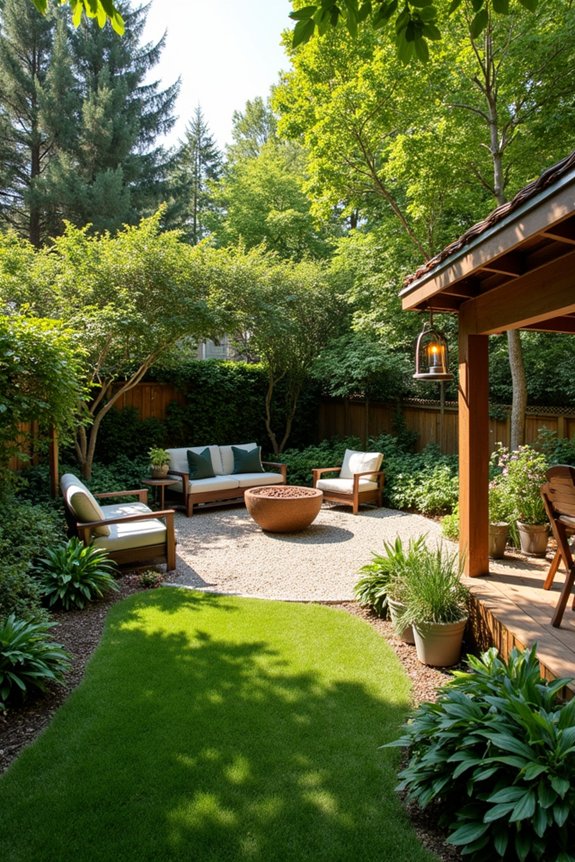
How do you turn a blank outdoor space into somewhere you’d actually want to spend time? I start by mapping out different backyard zones. I separate my dining area from lounging spots using pathways and strategic plantings—this keeps things organized without feeling cramped.
I’ve learned that defining clear zones makes your backyard feel purposeful. I use stepping stones to guide traffic flow naturally from my house toward seating areas and garden beds. This prevents that awkward “where do I walk?” moment.
Accessibility matters too. I position pathways wide enough for comfortable movement, and I place hardscape elements like patios where they’re easy to reach. When I add plantings between zones, they soften the hard edges while creating natural boundaries.
Good flow is what makes a yard into somewhere you’ll actually use daily.
Screen Your Space and Add Height With Plants
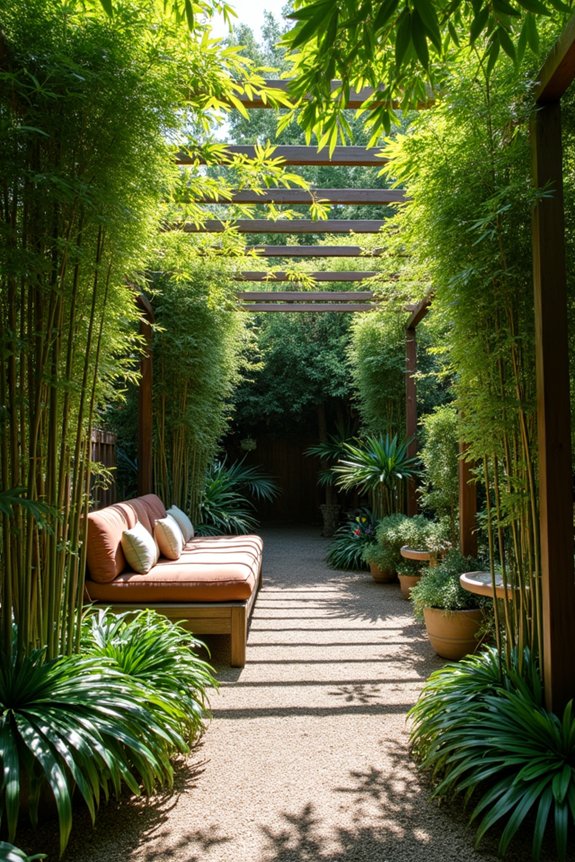
Once you’ve got your zones mapped out and your pathways flowing nicely, it’s time to add some privacy and dimension to your space—because let’s face it, nobody wants to feel like they’re on display while relaxing in their own backyard.
Creating a privacy wall with screening plants works well. Live hedges or tall ornamental grasses offer wind reduction while defining intimate outdoor zones. Quick-growing bushes and vines in pots give you flexibility without permanent commitment—flexibility matters when you’re experimenting.
Here’s my favorite approach: combine drought-tolerant and native plants along borders. You’ll get vertical texture and visual interest while keeping maintenance minimal. Plus, you’re supporting local wildlife and pollinators. That’s what it means to belong in your space.
Create Gathering Points With Seating and Fire
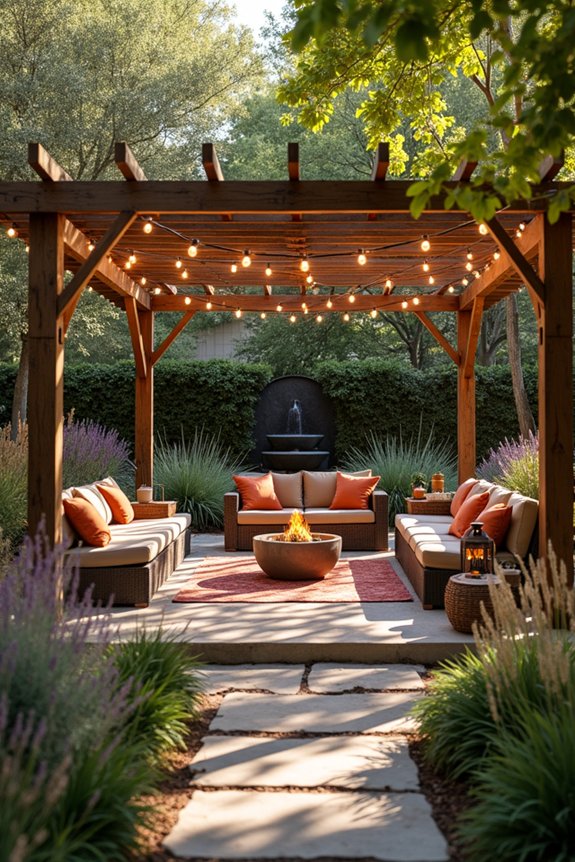
Why do the best backyard memories happen around a fire pit? A fire pit becomes the heart of your backyard, naturally drawing people together. I arrange my outdoor seating in a circle facing the flames, mixing chairs, benches, and loungers for different comfort levels. Adding cushions with outdoor-grade fabrics encourages guests to stay longer.
| Element | Why It Matters |
|---|---|
| Fire pit | Creates warmth and togetherness |
| String lights | Extends your social space into evening |
| Weather-resistant seating | Protects your investment |
| Layered cushions | Invites people to relax |
| Ambient lighting | Sets the right mood |
Defining this gathering point with a rug anchors the space visually. When I combine the fire pit with surrounding lighting and shade elements, my backyard becomes an inviting outdoor living area where friends want to spend time.
Light Your Backyard Evenings and Add Water Features
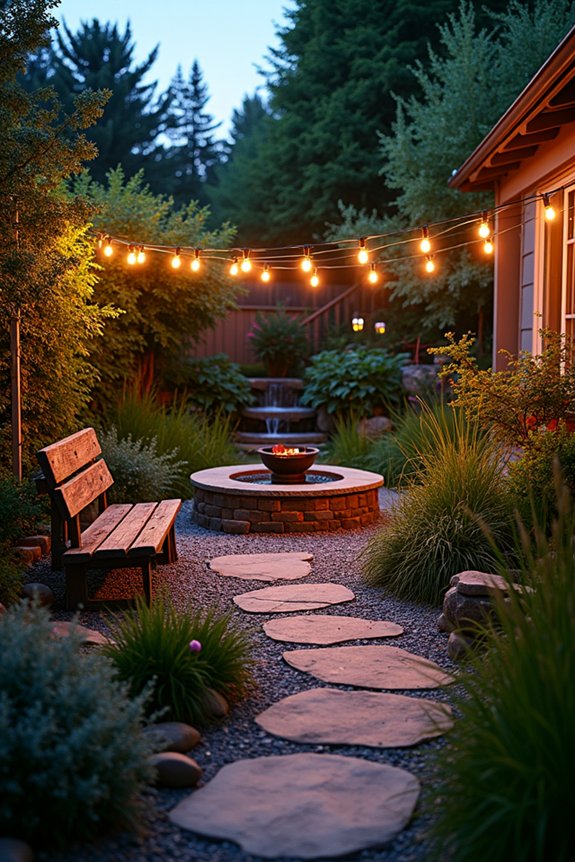
As the sun dips below the horizon, your carefully arranged seating and fire pit are only half the story—the right lighting makes your backyard a destination for evening entertaining. String lights across my patio create that warm, inviting glow people seek for gatherings. Solar-powered outdoor lighting keeps my energy bills down while providing ambient beauty. I use accent lighting to highlight my water features and pathways, making the design intentional and well-considered. Dimmable fixtures let me adjust the mood lighting depending on whether I’m hosting a lively gathering or enjoying a quiet night. Pairing my patio lighting with outdoor speakers completes this outdoor space, making my backyard the neighborhood spot everyone wants to visit.
Personalize Your Patio and Planters With Color and Details
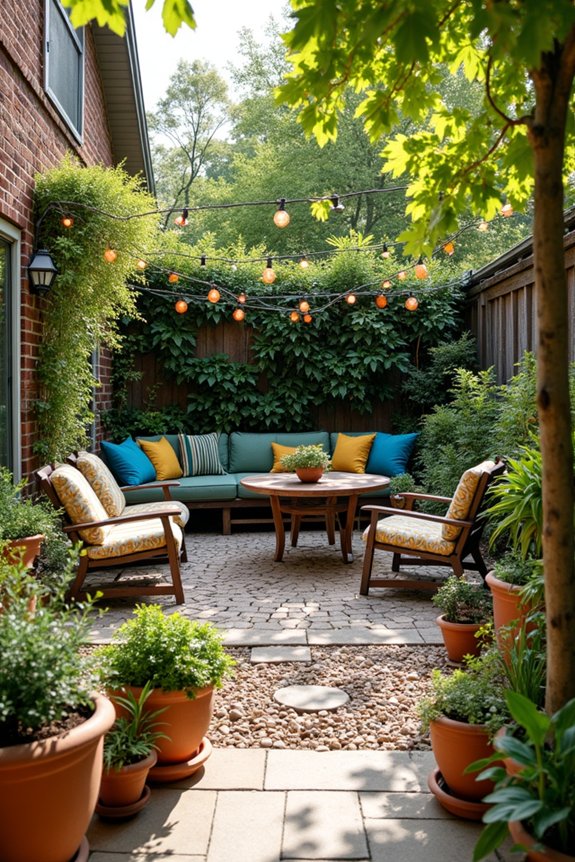
How do you turn a plain patio into a space that actually reflects who you are? I’ve discovered that color works well as a starting point. I begin by choosing a cohesive color palette—maybe soft grays with deep charcoal accents—then weave it throughout my outdoor area. I pick furniture, planters, and throw pillows in these shades to create unity.
My favorite approach? I painted my fence a complementary color that anchors everything together. Then I added an outdoor rug in a lighter tone, which defined the space and made it feel deliberate.
I’ve learned that water features and garden accents in coordinating colors enhance the whole backyard vibe. Balancing bold colors with natural textures like wood and stone keeps things warm and inviting without feeling overwhelming. That’s when your outdoor space becomes distinctly yours.