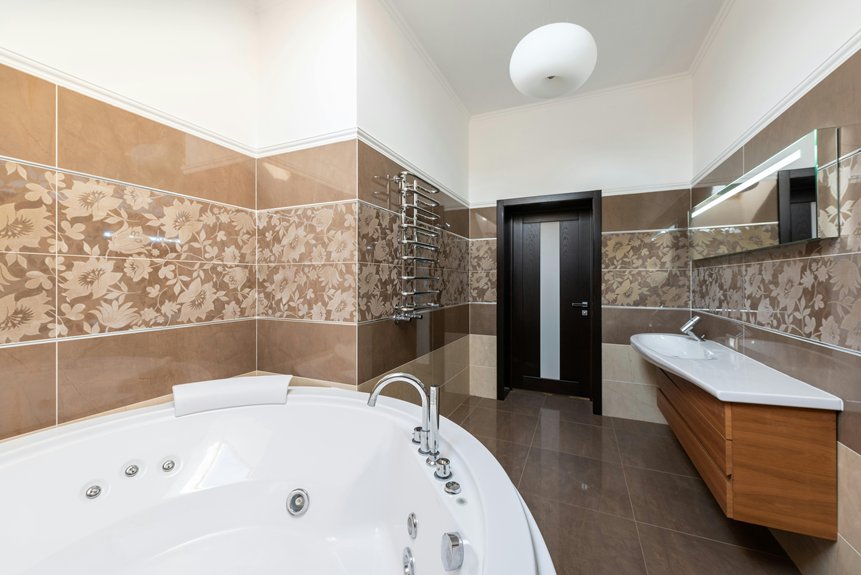
I’ve found that decorating your bathroom costs anywhere from $1,500 to $20,000-plus, depending on what you’re actually doing.
A quick cosmetic refresh with new fixtures and paint? That’s $1,500–$3,000.
Swapping out vanities and fixtures without moving plumbing runs $4,500–$7,500.
A complete overhaul with new layouts and premium finishes? You’re looking at $10,000 or more.
The real budget-shifters are your material choices—marble tiles versus ceramic, stock vanities versus custom ones—and whether you’re relocating plumbing lines.
Keep reading to discover practical ways to maximize your budget.
Why Bathroom Renovation Costs Vary: Five Key Drivers
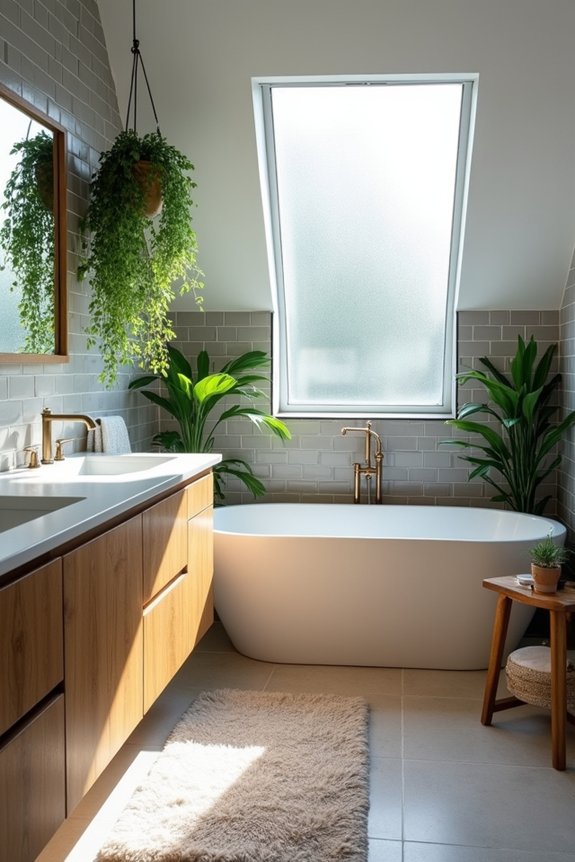
Why do bathroom renovation costs swing wildly from a few thousand dollars to tens of thousands? It all comes down to five key drivers. Your bathroom remodel’s total cost depends on size—larger spaces need more materials and labor. The finishes you choose matter greatly; budget options with stock vanities cost considerably less than designer fixtures and premium tiles. How many fixtures you’re installing plays a role too. Moving plumbing or electrical lines? That’ll increase your budget significantly. Finally, your project’s complexity determines overall expenses. A small partial retiling job costs differently than a full gut renovation. Understanding these drivers helps you make informed choices and avoid unexpected costs when getting quotes.
Cosmetic Updates: $1,500–$3,000 (No Layout Changes)
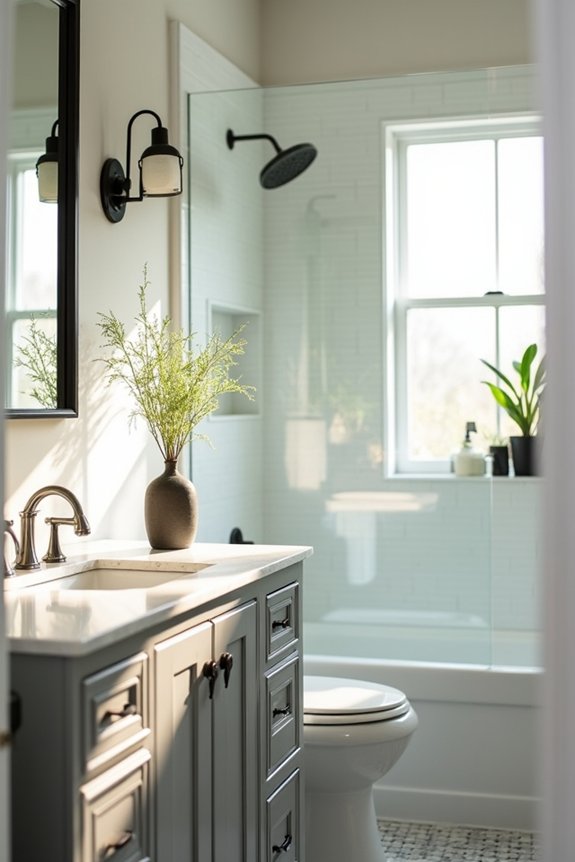
What if you don’t need to rip out your entire bathroom to make it feel brand new? Cosmetic updates between $1,500 and $3,000 work well without touching your layout. Here’s what to focus on: swapping out tired bathroom fixtures like old taps and showerheads for sleek, modern ones. Add selective tiling in key spots rather than redoing everything—it saves money and looks intentional. Fresh paint refreshes walls quickly, and pairing it with new decorative touches completes the update. Since you’re keeping the layout unchanged, you avoid expensive plumbing and electrical work. These smart cosmetic updates let you refresh your space affordably while maintaining what already works. You get maximum visual impact for minimum disruption.
Partial Renovations: $4,500–$7,500 (New Fixtures, Same Plumbing)
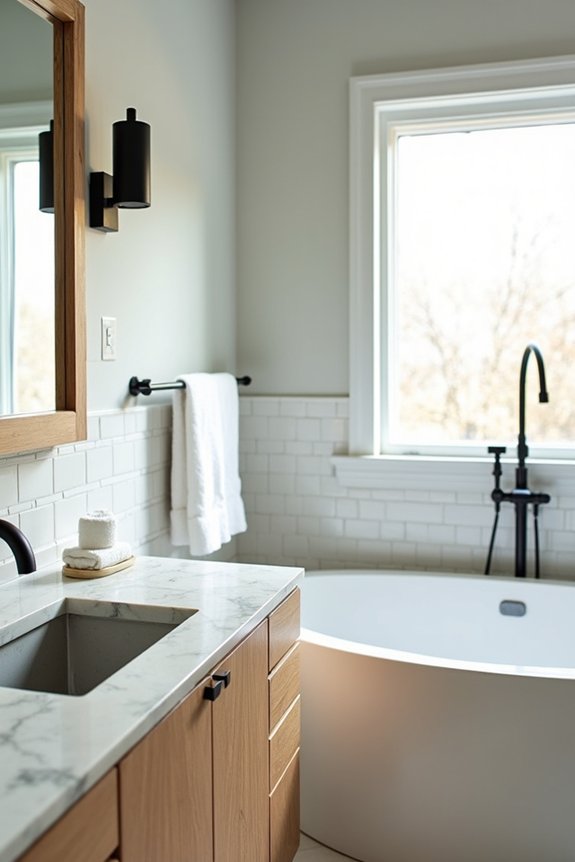
When you’re ready to upgrade beyond cosmetic touches, I’d recommend looking at partial renovations in the $4,500–$7,500 range, where you can swap out fixtures like faucets, showerheads, and vanities without moving your plumbing around. By keeping your pipes and drains exactly where they are, you’ll save considerably on labor costs—relocating plumbing gets expensive quickly. This option lets you choose mid-grade materials that look current and modern while staying realistic about your budget.
Fixture Upgrades Within Budget
How’d you like to refresh your bathroom without gutting the entire space? I’ve found that fixture upgrades offer the perfect sweet spot for bathroom remodeling on a budget. Within the $4,500 to $7,500 range, I can swap out old taps, showerheads, and tired hardware for sleek, modern pieces that completely refresh the room. I’m talking new faucets, stylish lighting, and updated cabinet handles that make everything feel current. The beauty? I’m keeping my existing plumbing right where it is, which saves serious cash. I’ve discovered that mid-range fixtures paired with fresh tiling create that polished look I wanted. Adding these upgrades feels like I’m joining folks who’ve smartly invested in their homes while staying within budget. It’s satisfying.
Plumbing Placement Cost Strategy
Keeping your plumbing right where it is might sound like settling, but it’s actually the smartest money move I’ve made in bathroom updates. When I decided on a cost strategy for my small bathroom, I realized that avoiding plumbing relocation saved me thousands. Partial renovations with new fixtures while maintaining existing plumbing typically run $4,500 to $7,500—way more manageable than moving pipes around.
During my fixture installation, I swapped out my old sink, toilet, and faucet without touching the plumbing placement underneath. This straightforward approach meant less drywall cutting, fewer surprises, and honest labor costs. I upgraded my tile and added a new showerhead, all while keeping those pipes in place.
You’re not compromising—you’re being strategic. This plumbing placement choice lets you splurge on quality fixtures instead.
Full Renovations: $10,000–$20,000+ (Complete Redesign)
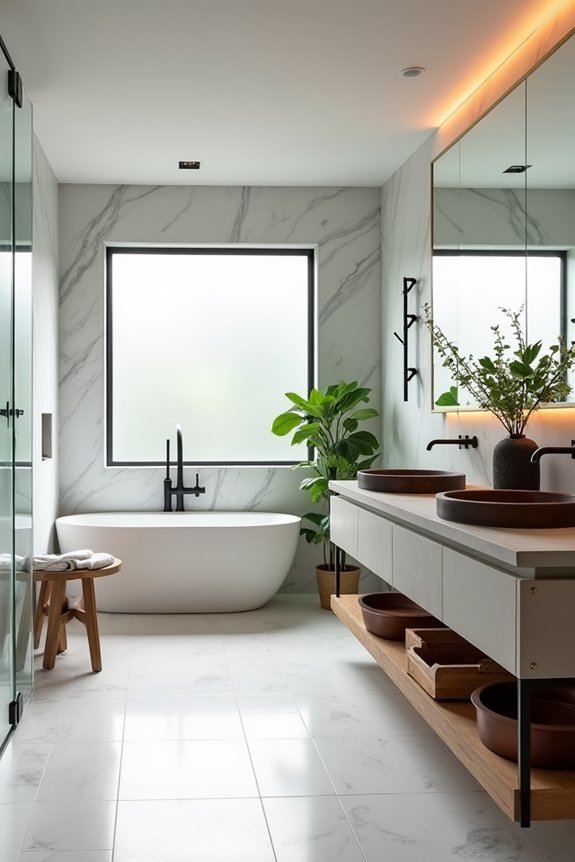
If you’re ready to completely redesign your bathroom, you’re looking at a serious investment—typically between $10,000 and $20,000, though it can climb higher depending on what you’ve got in mind. A complete redesign touches everything in there.
Here’s what you’re tackling:
- New fixtures and finishes like sinks, toilets, and faucets
- Custom cabinetry and vanities that match your style
- Layout changes that might require moving plumbing or electrical work
- Contingency costs for unexpected surprises (they always pop up)
Premium materials and high-end choices push your budget further. Larger bathrooms need more materials and labor, naturally costing more. Plan for extra funds to cover those hidden expenses—permits, structural issues, or upgrades you’ll discover mid-project.
What You’re Paying For: Fixtures, Finishes, and Materials
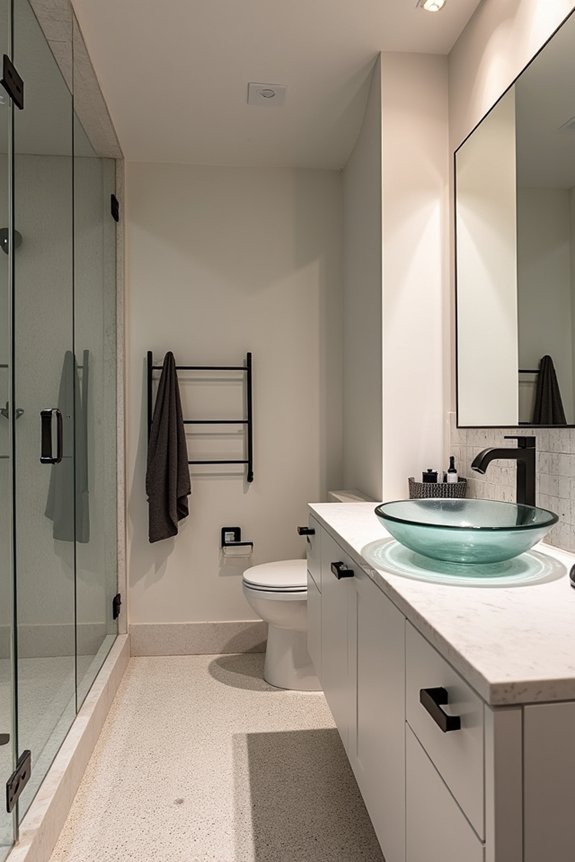
When I broke down my bathroom renovation budget, I realized that fixtures—your sink, toilet, shower, and bathtub—eat up a huge chunk of the total cost, and the price difference between a basic toilet and a fancy one is significant. What caught my attention was how material choices compound those costs: picking natural stone tile instead of standard ceramic can nearly double your per-square-foot expenses, and swapping a stock vanity for a designer one adds hundreds more to your bill. Between the fixtures themselves, the quality of materials you choose, and what you’re paying plumbers and tilers to install it all, you’re paying for durability, aesthetics, and the skilled labor that makes it work.
Essential Fixture Cost Breakdown
Where exactly does your bathroom budget go? Understanding your costs upfront saves headaches later. Let me break down what you’re actually paying for:
- Bathroom vanity: Ranges from $440 to $3,800 depending on whether you choose stock or custom options
- Shower remodel costs: Typically span $2,000 to $15,000 based on design complexity and plumbing needs
- Tile costs: Ceramic runs about $1.50 per sq ft, while marble jumps to around $50 per sq ft
- Other bathroom fixtures: Small bathrooms need $1,500–$3,000, while master baths reach $6,000–$15,000+
Your choices here matter. I’ve seen projects go over budget because people underestimated tile expenses or picked premium fixtures without planning ahead. The gap between basic ceramic and luxe marble is substantial. That’s why knowing these numbers helps you make decisions that fit your wallet.
Material Quality And Pricing
Why does one vanity cost $500 while another runs $3,500? The answer lies in finish level and material quality. I’ve learned that cabinets made from solid wood with premium finishes command higher prices than basic stock options. Your tile choices dramatically affect your budget too—natural stone tiles cost significantly more than ceramic, though both look good.
Faucets reveal similar pricing ranges. A basic chrome faucet might run $150, while a designer brass fixture hits $800+. Countertops follow this pattern; quartz costs more than laminate but offers better durability. When you invest in quality materials, you’re paying for longevity and appearance every time you enter your bathroom. I’ve found this upfront investment pays dividends through years of daily use.
Cut Bathroom Costs Without Cutting Corners
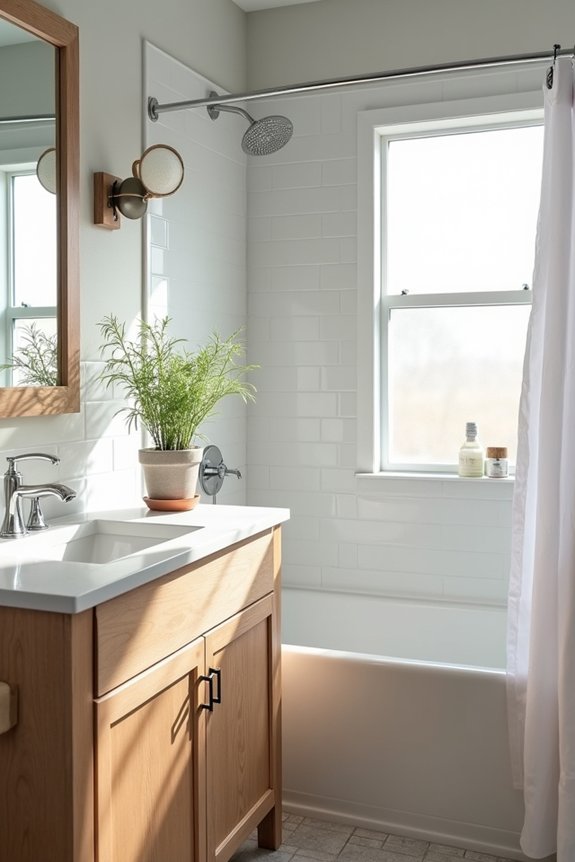
How can you refresh your bathroom while keeping costs down? Smart choices work better than expensive overhauls every time.
- Keep your plumbing exactly where it is—relocating pipes costs a fortune
- Choose budget tiling and standard fixtures instead of luxury finishes
- Skip layout changes that complicate installation and boost labor costs
- Refinish your existing tub or vanity rather than replacing them
Here’s my honest take: you don’t need premium materials to create a bathroom you’ll enjoy. By avoiding layout changes and sticking with mid-range fixtures, I’ve cut costs dramatically while keeping everything functional and fresh. Selective tile use and stock vanities work well when you’re strategic. Refinishing existing pieces gives them new life without the replacement price tag. These moves let me achieve the bathroom refresh I wanted, and they’ll work for you too.
Getting Started: Hiring a Contractor and Setting Your Timeline
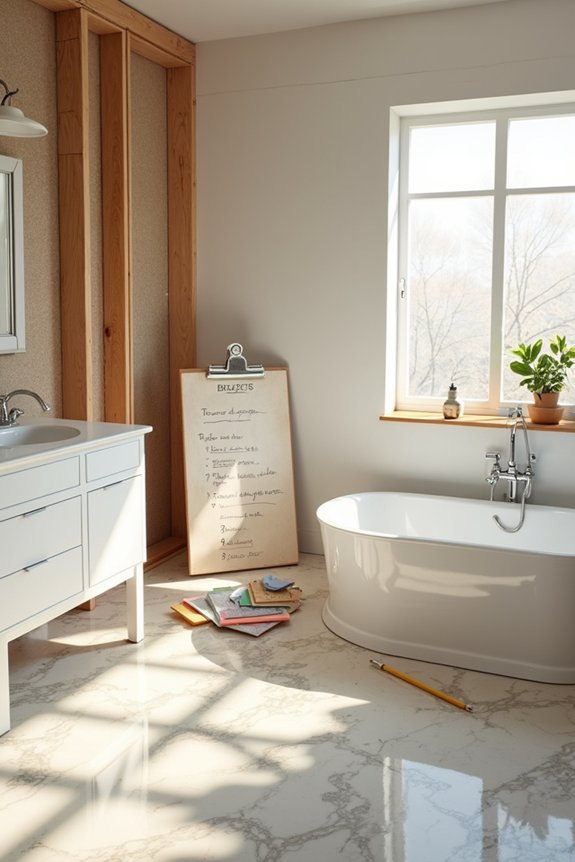
Once you’ve decided what kind of bathroom refresh you actually want, it’s time to bring in the pros—and that’s when things get real. I’d recommend getting at least three contractor quotes to compare what you’re really paying for. You’ll find build-only options, design services, or full design-build packages, and they’ll dramatically affect your timeline management and costs. Design fees typically run 10-20% of your construction budget, so knowing upfront what you’re getting matters. I learned this the hard way—getting multiple bathroom remodeling quotes saved me thousands and helped me understand exactly what each contractor offered. Set a realistic timeline too; gut renovations take longer than simple updates. Once you’ve got your quotes and picked your contractor, you’re ready to move forward without surprises.