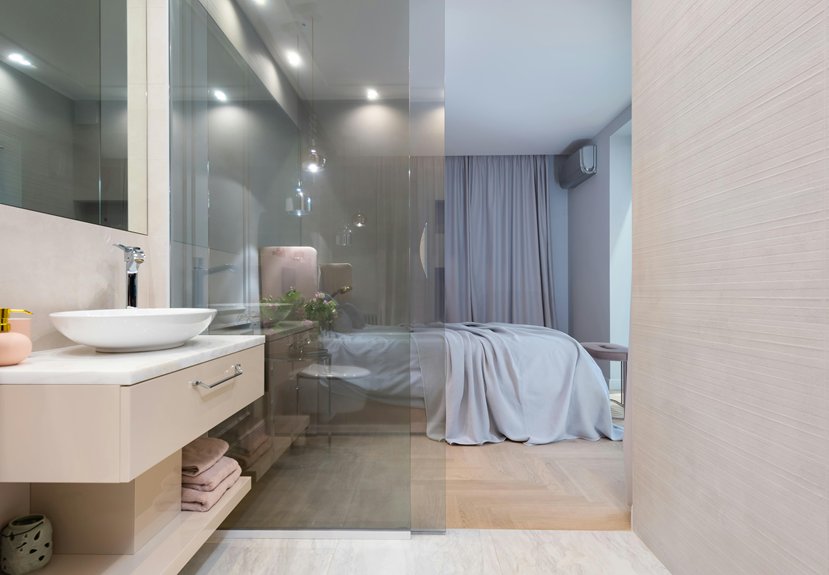
Your bedroom and bathroom don’t need to be identical twins—honestly, they shouldn’t be. What matters is that they feel connected, like they’re part of the same story. I’ve found that sharing a neutral wall color, repeating a couple of textures (think soft linens and natural materials), and echoing the same metal finishes creates harmony without making either space feel like a copy. Each room keeps its own personality while using the same design language.
How to pull this off:
Do Your Bedroom and Bathroom Actually Need to Match?
Why do we assume our bedroom and bathroom have to be twins separated at birth? I used to think they did, until I realized I was stressing myself out unnecessarily. Here’s the truth: they don’t need to match perfectly. Instead, I’ve discovered that connection comes from subtler choices—a shared mood or color undertone works well. When I repeated a few key elements like soft grays and natural textures across both spaces, everything felt linked without being identical. My bedroom became my private retreat while my bathroom maintained its own spa-like character. You’re not locked into matching everything. Let your spaces exist independently and reflect their individual purposes while still feeling like they belong together.
The Psychology of Cohesion: Why Flow Matters in a Primary Suite
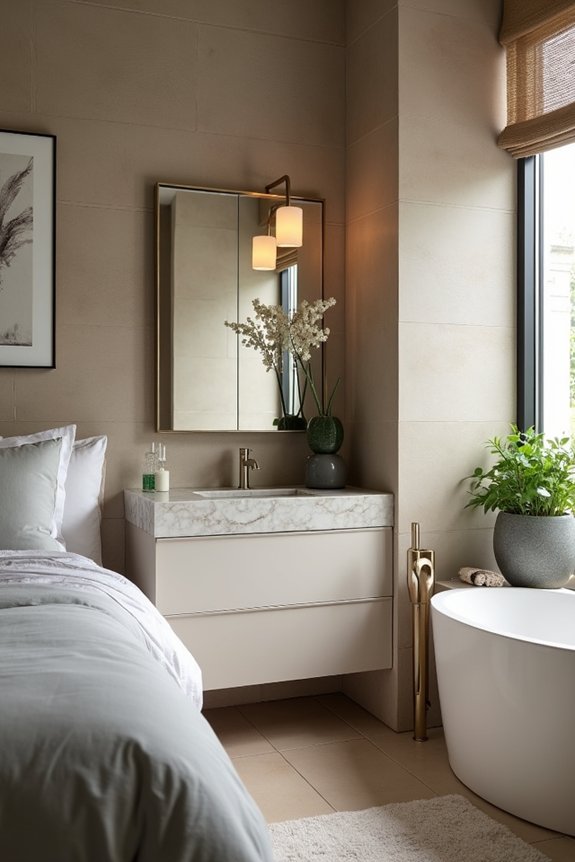
Have you ever walked from your bedroom into your bathroom and felt like you’d suddenly entered a completely different house? I have, and it’s jarring. Creating cohesion in your primary suite matters because your brain craves flow between connected spaces. When I use a shared neutral wall color and complementary textiles, I’m not duplicating—I’m whispering a visual conversation between rooms.
Think of it like this: analogous colors and repeated materials (lighting fixtures, hardware, finishes) act as invisible threads connecting your sanctuary. I can have a warm bedroom and a bright bathroom while still maintaining unified style. Subtle echoes—an accent wall color, matching towels, coordinated rugs—extend visual continuity without erasing each room’s distinct identity.
This cohesion settles your nervous system. You’re not jolted by clashing moods; instead, you drift naturally through spaces that feel designed together.
Harmony Without Uniformity
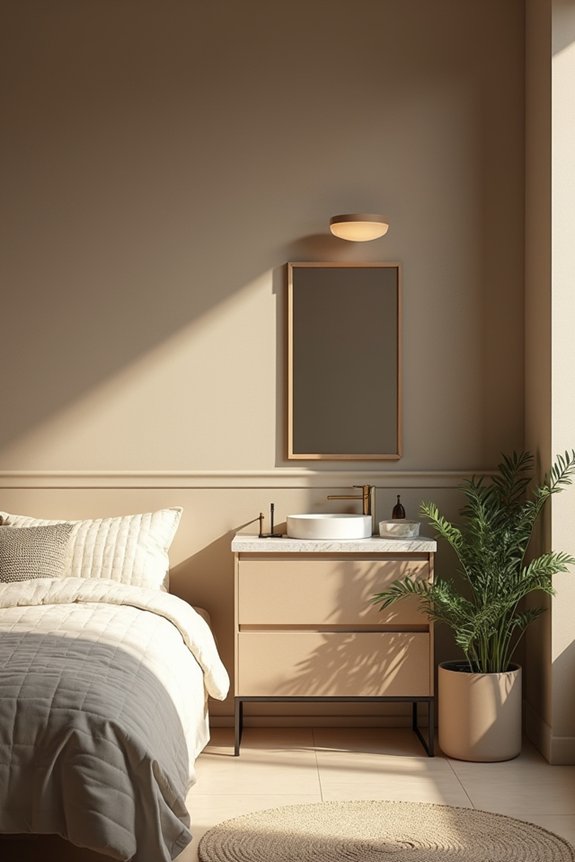
Now that you understand why flow matters, let’s talk about the real challenge: creating that connected feeling without making your bedroom and bathroom look like twins separated at birth.
I’ve learned that true cohesion comes from smart repetition, not exact matching. I use the same neutral wall color in both spaces—it’s like visual glue holding everything together. Then I introduce different accent colors in each room, which keeps things interesting.
Here’s my trick: I repeat textures through coordinated towels and bedding, varying the shades slightly. I’ll echo metals or wood tones across both spaces, creating subtle harmony. This approach gives me a sanctuary that feels unified yet distinct.
The balance between purposeful contrasts and coordinated elements is where the real work happens. You’re not creating identical rooms; you’re crafting rooms that genuinely belong together.
Analogous Colors for Bedroom-Bathroom Flow
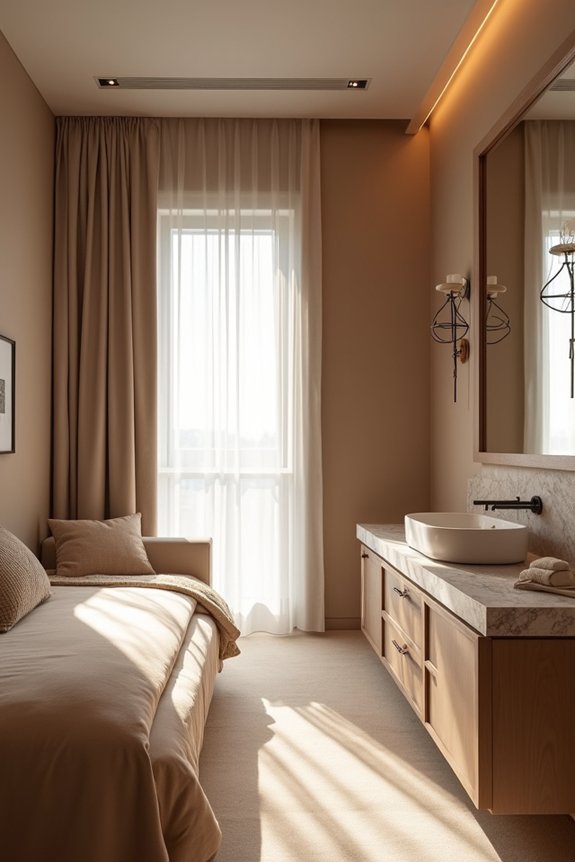
When I’m standing in my bedroom deciding what color to paint my bathroom, I’m not thinking about matching everything perfectly—I’m thinking about colors that inherently belong together. Analogous colors sit right next to each other on the color wheel, and they work well together naturally. Instead of jarring contrasts, I get soft transitions that make walking from one room to the next feel connected. Say I’ve chosen warm beiges in my bedroom; I’d pick terracotta or soft gold for my bathroom. They harmonize without announcing themselves loudly. The real benefit happens when I choose a shared undertone—those cool blues or warm neutrals that create connection without demanding attention. It’s belonging without uniformity, which honestly feels like the right approach for designing spaces that actually work together.
Paint Colors for Paired Bedrooms and Baths
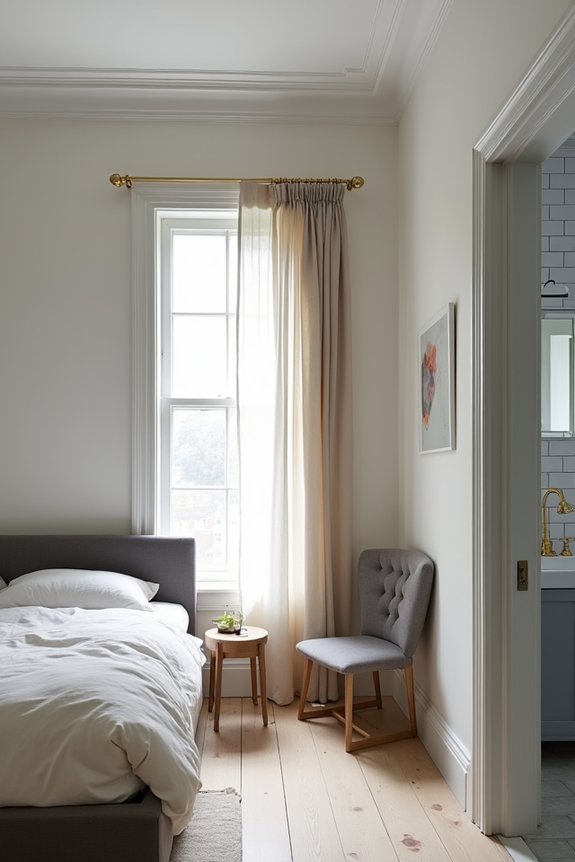
Why do some bedrooms and bathrooms feel like they belong together while others seem like strangers forced to share a wall?
Paint color choices create design harmony between paired spaces. When I painted my bedroom and bath, I realized the walls set the tone for everything else. Here’s what worked for me:
Paint color choices create design harmony between paired spaces, setting the tone for your entire primary suite aesthetic.
- Deeper bedroom blues paired with lighter bathroom blues maintain brightness
- Soft grays or creams as neutral backdrops unify both spaces
- Two shades of the same hue create cohesion while keeping zones distinct
- Analogous colors (color wheel neighbors) connect rooms without feeling identical
I started with a calming sage green in my bedroom, then used a lighter mint in the bathroom. The result? My primary suite felt purposeful. These paint choices anchor your entire design vision and make decorating the rest feel easier.
Shared Textures Between Bedroom and Bath
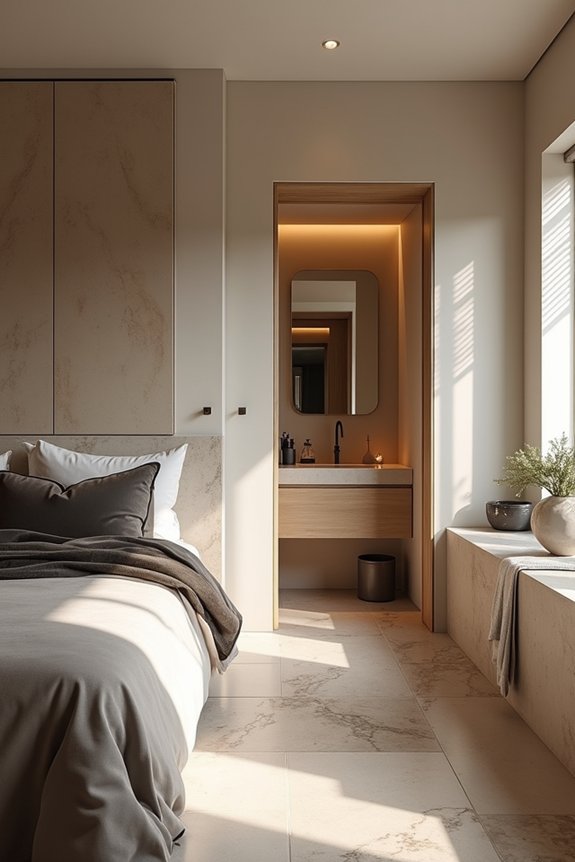
Paint color gets all the attention, but here’s what I discovered: textures create visual and tactile connections between your bedroom and bathroom. When I repeated similar textures—like shiplap, woven linens, or natural materials—across both spaces, the rooms began to relate to each other rather than exist in isolation.
I started small with accessories. A jute rug in the bedroom, woven towels in the bath. The transition felt smooth instead of jarring. You don’t need exact replicas; analogous textures work well. I varied the scale and finish to keep each space distinct while maintaining that unified tactile language.
This approach lets your bedroom feel cozy and your bathroom feel functional, yet they’re clearly connected. They speak the same design language, which produces a satisfying result.
Using Accent Walls to Echo Between Rooms
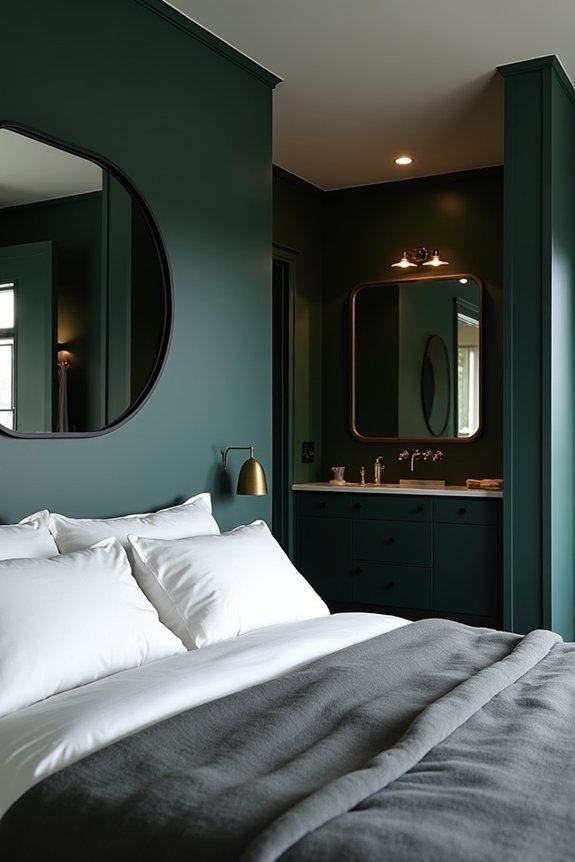
How’d I finally get my bedroom and bathroom to feel like they actually belong together? Accent walls, that’s how. I discovered that echoing the same color across both spaces creates a sense of connection without feeling repetitive.
Echoing the same color across connected spaces creates cohesion without feeling repetitive—that’s the accent wall secret.
Here’s my approach:
- I picked one bold color and used it full-strength on my bedroom accent wall
- In the bathroom, I applied a lighter version of that same shade
- I matched wood tones and metal finishes between both rooms
- I tested everything with paint swatches first—seriously, don’t skip this
The result? My spaces feel cohesive. That accent wall became my design anchor, tying everything together while letting each room maintain its own personality. It’s one of the easiest ways to create unity throughout your home.
Matching Hardware and Fixtures Across Your Suite
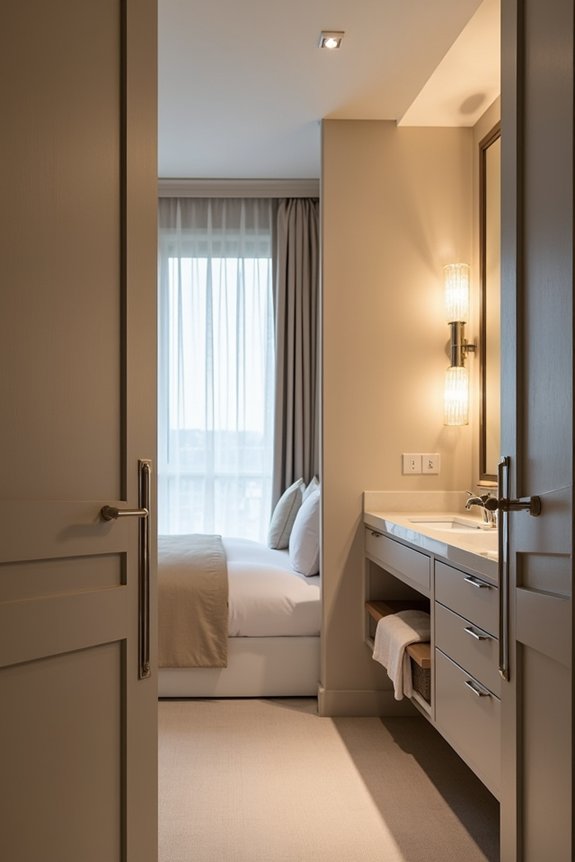
Once I nailed the accent wall strategy, I realized the real payoff came from the details—specifically, the hardware and fixtures I’d been overlooking. I started coordinating my brass cabinet handles, faucet finishes, and light fixtures between both rooms. Matching these elements created a cohesive connection I wasn’t expecting.
I picked two or three main colors and made sure my hardware reflected those tones. A matte black drawer pull in my bedroom matched the bathroom vanity hardware, and suddenly everything felt deliberate. I didn’t need identical fixtures everywhere—just the same finishes repeated strategically.
This approach let me maintain my own style in each space while keeping them connected. My bedroom feels cozy while my bathroom stays spa-like, yet they’re clearly part of the same suite. That’s the balance I was searching for.
Bedding, Towels, and Rugs: Your Coordination Tools
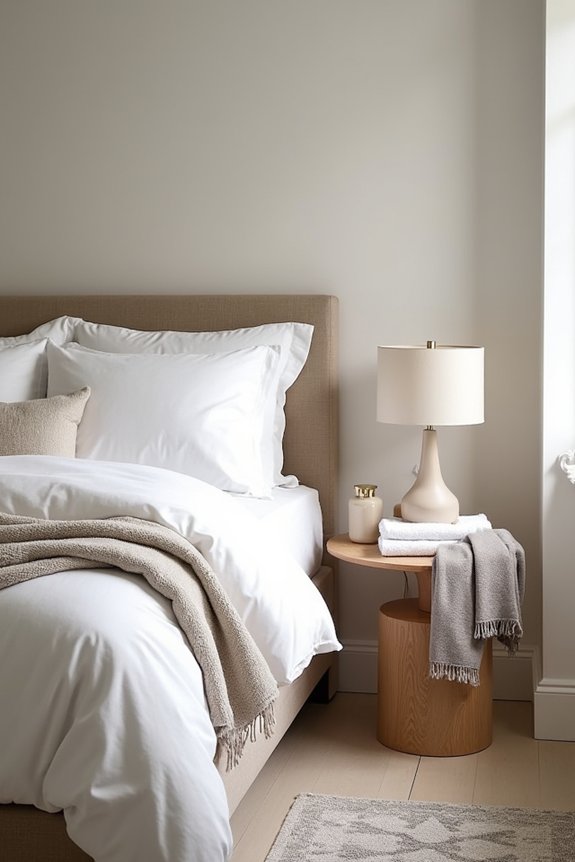
What if I told you that the easiest way to tie your bedroom and bathroom together doesn’t require replacing your fixtures or repainting walls?
I’ve discovered that textiles are your strategic asset. Here’s what I use:
- Bedding and bath towels – I pick complementary colors rather than identical ones, so they feel connected without looking copied.
- Rugs – I place similar textures in both spaces to echo the bathroom’s vibe.
- Color undertones – I keep all textiles sharing the same warm or cool base, creating harmony across both rooms.
- Pattern variety – I mix geometric and solid pieces while keeping everything coordinated through shared tones.
This approach lets me create a suite that works together as a unified design.
Strategic Contrast in Bedroom-Bathroom Design
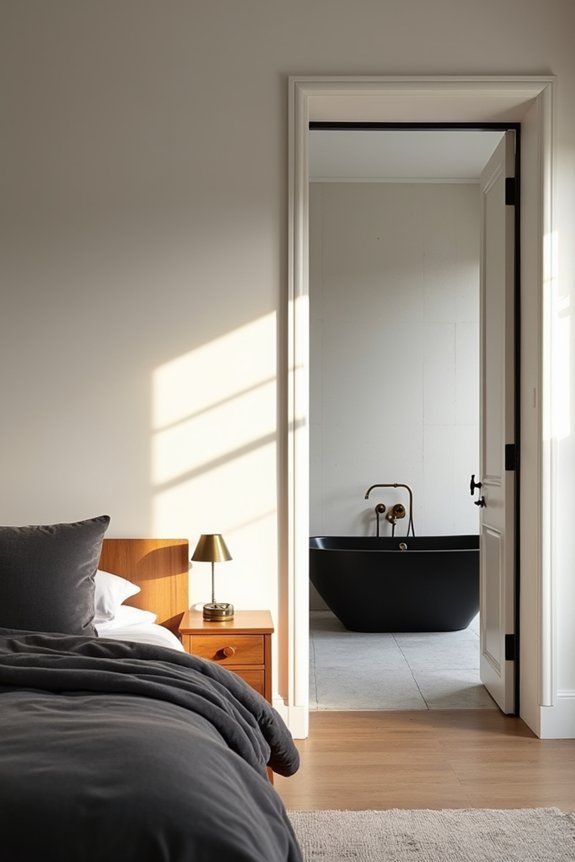
Now that you’ve got your textiles working together, your bedroom and bathroom don’t need to match.
Strategic contrast works well. Think warm, cozy bedroom paired with a cooler, spa-like bathroom. This balance feels deliberate rather than mismatched. I use analogous colors—picking shades that sit nearby on the color wheel—so they’re related without being identical.
Here’s what I do: I keep my color palette to two or three main colors across both spaces, then let the contrast show through mood and temperature. My bedroom feels inviting and intimate; my bathroom feels refreshing and calm. This approach gives each room its own character while maintaining harmony.
The key? Repeat materials or hardware finishes. These shared design details connect everything together, making distinct spaces feel genuinely linked.
Which Design Styles Work for Coordinated Suites
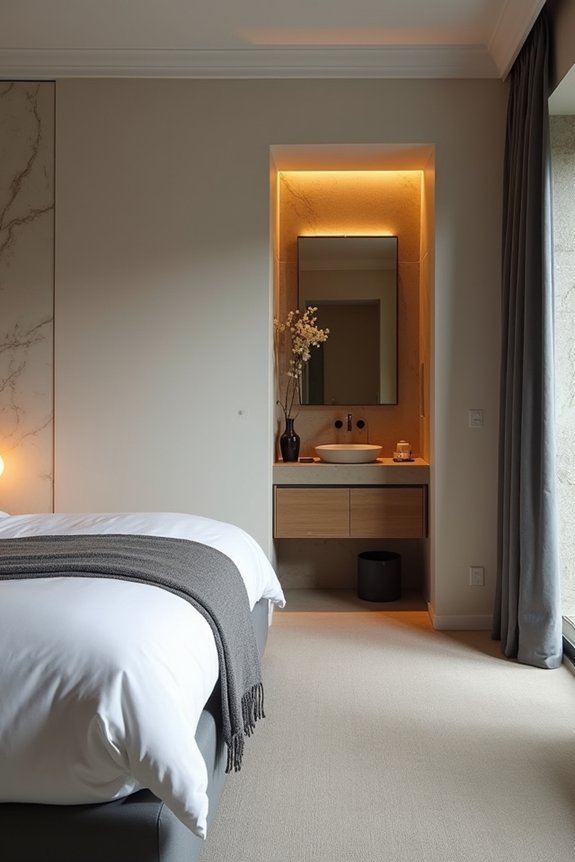
How do you pick a design style that works for both your bedroom and bathroom? Certain design styles naturally lend themselves to coordinated suites.
- Modern Coastal – Think clean lines with soft blues and whites
- Minimalist Luxe – Simple elegance using neutral tones and quality materials
- Rustic Retreat – Warm woods and earthy colors throughout
- Organic Modern – Natural elements blended with contemporary touches
These design styles work because they’re inherently flexible. You’re not locked into matching everything perfectly. Instead, you’re building a shared feeling through consistent materials and a cohesive color palette. Scandinavian Calm achieves this too—it creates unity without excessive decoration. Pick a style that speaks to you, and your spaces will naturally feel connected.
Quick Reference: Matching vs. Coordinating vs. Individual
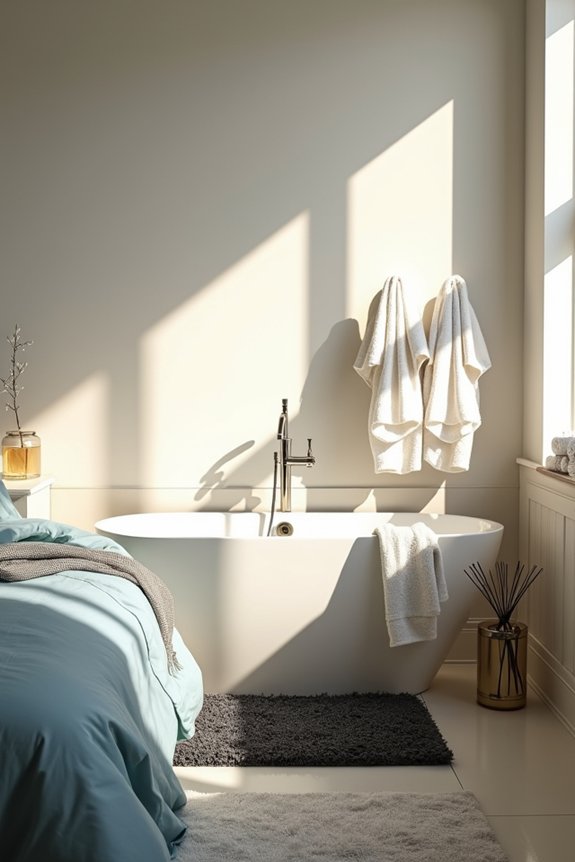
I’ve found that when I’m decorating a bedroom and bathroom together, I can choose three different approaches, and picking the right one helps me avoid design regret. Matching means I’d use identical paint colors, the same cabinet style, and matching fixtures in both rooms—which creates a cohesive appearance but can feel uniform if I’m not careful. Coordinating lets me have more flexibility: I’ll share a color palette and repeating finishes (like chrome hardware) while letting each space have its own character, and individualizing takes it further by giving each room distinct qualities while still tying them together through shared undertones and a couple of accent colors.
Matching Creates Visual Uniformity
When you walk from your bedroom into your bathroom, do you want to feel like you’ve entered a completely different world, or would you prefer a connected experience? Matching creates visual uniformity that ties these spaces together.
Here’s what matching does:
- Uses identical color palettes across both rooms for continuity
- Repeats the same finishes like wood tones or metal accents
- Applies matching design motifs so patterns feel deliberate, not random
- Coordinates lighting styles to strengthen the unified atmosphere
When you match your spaces, you’re creating a sense of belonging. Your bedroom and bathroom work as connected parts of your home sanctuary. You’ll typically need just 2–3 main colors and repeated materials to pull this off successfully. It’s easier than you’d think, and the result feels satisfying.
Coordinating Balances Unity and Distinction
What if you want your bedroom and bathroom to feel connected without looking like they’re twins separated at birth?
I’ve found that coordinating—rather than matching exactly—strikes the sweet spot. You pick two or three main colors, then repeat them differently in each space. Maybe your bedroom features a bold emerald accent wall with cream bedding, while your bathroom showcases white marble with emerald towels and gold fixtures. Same palette, totally different vibes.
Connection builds through shared materials and complementary textiles. I’ll add matching hardware or lighting in both rooms, which ties everything together without feeling forced. Think of it like wearing the same earrings with different outfits—you’re unified, but not boring.
Individual Spaces Reflect Personal Style
- I use bold jewel tones in my bedroom but kept my bathroom neutral—they work well together
- I repeated the same brass hardware in both rooms, creating subtle harmony
- My bedroom has cozy textures while my bathroom stays clean and minimal
- I echoed one accent color through artwork and towels to tie everything together
Your spaces don’t need identical vibes. Instead, let your personality show through distinct choices while maintaining visual flow through shared elements like lighting or finishes. That’s when rooms become livable.