The correct spelling is “living room”—two separate words, not “livingroom” squished together. This mistake appears frequently, and editors notice it right away. Think of it like “sleeping bag,” not “sleepingbag.” English keeps gerunds (those -ing words) separate from the nouns that follow them, which sounds more natural when you say it out loud. If you want to know why “bedroom” breaks this rule, stick around.
The Standard Spelling: Living Room (Two Words)
Why do so many people want to smoosh “living room” into one word? I’ve wondered this myself, honestly. The truth is straightforward: “living room” is always two words, and that’s what you’ll find in dictionaries, style guides, and basically everywhere that matters.
Here’s the thing—I used to second-guess myself too. But after checking multiple sources, the pattern’s clear. You’d never write “bedroom” as one word, right? Same logic applies here. The word “living” acts as a modifier describing what kind of room we’re talking about.
When you’re writing in regular text, keep it lowercase: “living room.” In titles or headings, capitalize it properly: “Living Room.” That’s all there is to it. Stick with two words, and you’re all set.
Why “Bedroom” Is One Word but “Living Room” Isn’t
The difference comes down to how English builds words, and honestly, it’s kind of fascinating once you see it. “Bedroom” works as a single word because it’s formed the straightforward way—you take the noun “bed” and add a suffix to create a new compound noun. “Living room,” though, plays by different rules. “Living” is a gerund (a verb form that acts like a noun), and when you pair a gerund with another noun, English typically keeps them as two separate words instead of smooshing them together. Think of it this way: we say “sleeping bag” and “running shoe,” not “sleepingbag” or “runningshoe.” That’s your living room staying true to how English actually works. The language has its quirks, but this one follows a real pattern.
Why -ing Words Don’t Form Single Compounds
Ever notice how English seems almost allergic to squishing -ing words together with other nouns? I’ve wondered about this too, and there’s actually a pattern here worth exploring. English resists creating single-word compounds when -ing forms meet other nouns. Here’s what’s happening:
- Pronunciation feels awkward – Saying “livingroom” as one word just sounds clunky compared to “living room”
- Historical precedent matters – The OED shows countless “ing room” entries but zero “ingroom” variants
- Spacing feels natural – We keep them separate because that’s how English has always worked
This tendency isn’t random. When I look at other examples, I notice the same thing: we don’t say “workingdesk” or “readingcorner.” English prefers breathing room between -ing words and following nouns. It’s simply how our language evolved, and it works well for us.
How “Livingroom” and “Living-Room” Became Common Mistakes
If you’ve ever typed “livingroom” as one word or seen someone write “living-room” with a hyphen, you’re spotting mistakes that happen regularly. These errors occur because we tend to simplify language. We see compound words everywhere, so our brains naturally try to merge “living” and “room” together.
| Form | Status |
|---|---|
| living room | Correct |
| livingroom | Incorrect |
| living-room | Outdated |
| Livingroom | Wrong |
| Living-Room | Archaic |
The hyphenated version comes from older writing styles, leading people to believe it remains acceptable today. Digital autocorrect sometimes contributes to these mistakes. Understanding that “living room” stays as two separate words helps you write correctly and develop stronger writing habits.
When Capitalization Matters for Living Room
I’ve noticed that capitalization rules for “living room” trip up a lot of people because the context really matters—and honestly, I used to get it wrong too. When you’re writing a title like “Living Room Design Ideas” or labeling a floor plan that says “Living Room,” you’ll want those capital letters, but when you’re chatting about your space in regular sentences, you’d write “I redesigned my living room last summer” with lowercase. The key is asking yourself: Am I using this as a heading or formal label, or am I just talking about the room in everyday writing?
Titles And Headings Guidelines
Capitalization rules shift depending on where “living room” appears in your writing, and understanding this distinction prevents errors in formal documents.
Here’s what works best:
- In running text: Keep it lowercase—”we decorated our living room last month”—unless it starts a sentence.
- In titles and headings: Capitalize both words—”Living Room Design Ideas” or “How to Organize Your Living Room”—to indicate importance.
- On floor plans and labels: Use “Living Room” with capitals to match other room labels like “Kitchen” or “Bedroom.”
Once you recognize this pattern, capitalization becomes straightforward: formal contexts and special positions receive capitals. Mastering these rules will give you confidence in any document you produce.
Proper Capitalization In Running Text
Now that you’ve got the big picture of when to capitalize “living room” in different contexts, let’s zoom in on what matters most: how you’ll actually write about it in everyday sentences.
In your regular writing, keep things simple: use lowercase. When describing your space in an email or essay, write “the living room is where my family gathers,” not “the Living Room.” It feels natural and matches how we normally talk.
The key? Save capitalization for titles and headings. If you’re writing a section called “Designing Your Living Room,” that capital L makes sense there. But in the body of your text, lowercase keeps everything consistent and readable. This approach makes your writing look polished without seeming overly formal. Your readers will appreciate the clarity.
Floor Plan Labeling Standards
Have you ever looked at a floor plan and wondered why some room labels are capitalized while others aren’t? This confusion actually follows specific standards that make sense once you understand them.
When you’re labeling rooms on architectural plans or real estate documents, here’s what matters:
- Capitalize room names in floor plans – “Living Room” appears in title case because it’s a formal label
- Use consistent formatting throughout – all rooms follow the same capitalization pattern for professional appearance
- Match your document’s style guide – residential plans often capitalize, while technical specs might use lowercase
Treating your living room label professionally on floor plans demonstrates attention to detail in the document’s purpose. It’s a small detail that communicates clarity and competence to anyone reading your plans.
Living Room vs. Sitting Room: Regional Terminology
What’s the difference between a living room and a sitting room, you ask? I’ll break it down for you, because honestly, it confused me too when I first moved to England.
| Term | Region | Purpose |
|---|---|---|
| Living room | American English | Casual, everyday gathering space |
| Sitting room | British English | Smaller, intimate conversation area |
| Lounge | British English | Alternative to living room |
| Family room | American English | Kitchen-adjacent, relaxed space |
| Drawing room | Historical | Formal entertaining (outdated) |
In my experience, Americans use “living room” as their go-to term for that central hangout space. Meanwhile, if you’re chatting with British friends, they’ll likely mention their “sitting room”—a quieter, more personal retreat. Both work perfectly; they’re just regional flavors of the same idea.
When Brands and Websites Break the Two-Word Rule
If you’ve ever scrolled through furniture websites or home décor ads, you’ve probably noticed something weird: some companies write “livingroom” as one word, while others stick with “living room” as two.
Here’s what I’ve discovered about why this happens:
- Marketing choices – Brands sometimes make spelling decisions based on what sounds catchier or more memorable to them, not grammar rules.
- SEO strategies – I’ve noticed companies occasionally use nonstandard spellings hoping search engines treat them differently, though this rarely works.
- Brand identity – Some websites want to appear trendy or unique, so they deliberately break the two-word rule.
The truth? These inconsistencies don’t mean “livingroom” is suddenly correct. I’d still use “living room” in formal writing. When you’re creating your own content, stick with the standard form—it keeps you credible and consistent.
Living Room vs. Sitting Room, Lounge, and Other Synonyms
Now that we’ve settled the “living room” versus “livingroom” debate, I want to show you something interesting: the term you use actually depends on where you live and how formal your space is. If you’re British, you might call it a “lounge” or “sitting room,” while someone in America would stick with “living room”—and if you’re reading old books or watching period dramas, you’ll spot the formal “drawing room” popping up. Picking the right word comes down to understanding your audience and whether your space feels everyday or more formal.
Regional Terminology Differences
Why do people in different parts of the English-speaking world call the same room by completely different names? Geography shapes our vocabulary in distinct ways. Here’s what I’ve discovered:
- American English defaults to “living room” as the standard term you’ll see everywhere
- British English embraces “sitting room” or “lounge” for that same comfortable space
- Historical contexts sometimes use “drawing room” or “front room,” reflecting older traditions
When I travel, I notice these differences immediately. Americans naturally say “living room,” while my British friends instinctively say “lounge.” It’s not that one’s wrong—it’s just how different regions evolved their language. Understanding these regional distinctions helps us appreciate how English adapts across borders, making conversations richer and more connected to our respective communities.
Choosing The Right Term
Understanding regional differences is helpful, but when you’re actually writing or speaking, you need to pick the right word for your audience. I’ve learned that “living room” is my safest bet—it’s what most people recognize everywhere. If I’m chatting with British friends, I might say “lounge” without raising eyebrows. For formal writing or anything official, I stick with “living room” because it’s standard across style guides. I’ve noticed that using regional terms like “sitting room” works well when I’m in those communities, but it can confuse others. The key? Know your audience. When in doubt, I default to “living room”—it’s universally understood and always correct. That way, I’m connecting with readers rather than creating confusion.
Living Room Spelling Checklist: Common Errors to Catch
Ever catch yourself typing “livingroom” as one word and then second-guessing yourself? I’ve been there too. Let me share the errors I’ve spotted most often:
- Livingroom (one word) – This is the biggest culprit. Your spell-checker will flag it because it’s incorrect in standard English.
- Living-room (hyphenated) – I used to think hyphens looked fancy, but style guides say no. Save hyphens for compound adjectives like “open-concept living room.”
- LIVING ROOM (all caps) – Reserve this only for floor plan labels or room signs, not regular writing.
The trick? Remember the two-beat rhythm: “living” and “room” are separate. I read aloud every time I’m unsure, and it works. You’ll catch these mistakes faster once you’re aware of them.
Historical Evolution: From Parlour to Living Room
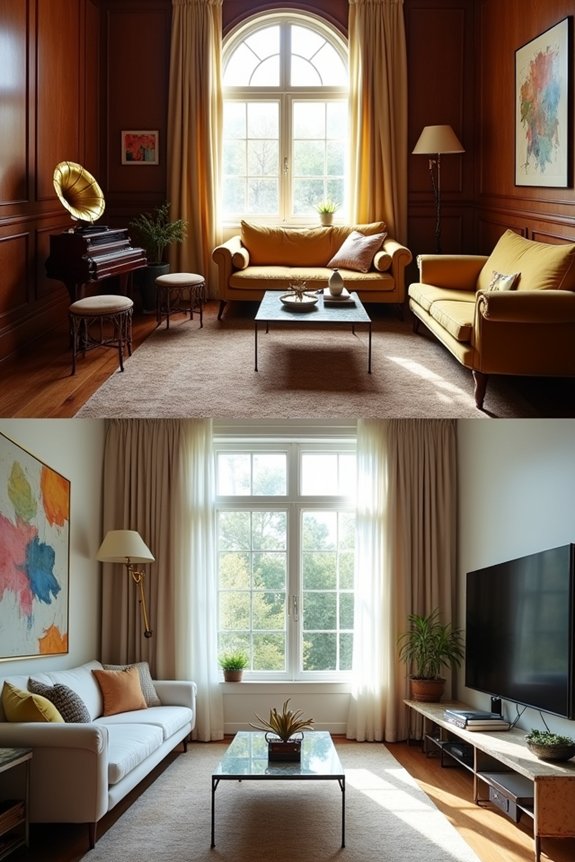
I’ve noticed that the word “living room” wasn’t always the standard name for that cozy family space—Victorians called it a “parlour” and used it mostly for formal entertaining, which honestly sounds exhausting. What changed everything was when Edward Bok, the editor of *Ladies’ Home Journal*, started promoting “living room” in the late 1800s as a practical, everyday space where families could actually, you know, live and relax together. That shift from fancy-and-formal to comfortable-and-casual altered how we think about naming our home spaces, and it’s why we say “living room” today instead of sticking with “parlour.”
Victorian Parlour Traditions
Have you ever wondered why your great-grandmother called her fancy front room a “parlour” while your grandma called hers a “living room”?
I found it interesting how much this shift tells us about changing lifestyles. The Victorian parlour represented something quite different from what we know today. Here’s what made it distinctive:
- Formal entertaining space – Families reserved the parlour exclusively for guests, keeping it pristine and rarely used daily
- Social etiquette hub – Strict rules governed behavior, seating arrangements, and conversation topics in these rooms
- Status symbol – The parlour showcased a family’s wealth through fine furniture and decorations
My ancestors treated their parlour almost like a museum! They’d cover furniture with protective cloths and kept children out. Eventually, families wanted spaces they could actually live in, leading to our modern living room concept.
Edward Bok’s Modern Influence
What if I told you that one man’s magazine advice actually changed how we talk about our homes? That’s exactly what Edward Bok did in the early 1900s. Through his influential magazine, he pushed Americans to embrace a more practical approach to home design. He championed the living room—a space meant for everyday family life, not just formal entertaining.
Bok’s vision connected this new room to modern, affordable living. He rejected the stiff formality of Victorian parlors and drawing rooms, arguing that homes should match how people actually lived. His message resonated widely. Suddenly, the living room became our common language. That two-word phrase stuck around because it captured something we all understood: a place where life actually happens.