
No, your bathroom fan won’t cool your house—it’s really just for removing moisture and odors from showers. I’ve learned the hard way that running it constantly actually makes your AC work harder because it’s pulling conditioned air outside.
A typical 110 CFM fan delivers around 70-95 CFM in real conditions due to duct friction, which isn’t enough for whole-house cooling. You’re better off using windows in spring and fall, or investing in a whole-house exhaust system if you want serious ventilation. The real trick is understanding when and how to use what you have.
Bathroom Fans Cool Bathrooms, Not Whole Houses: Here’s Why
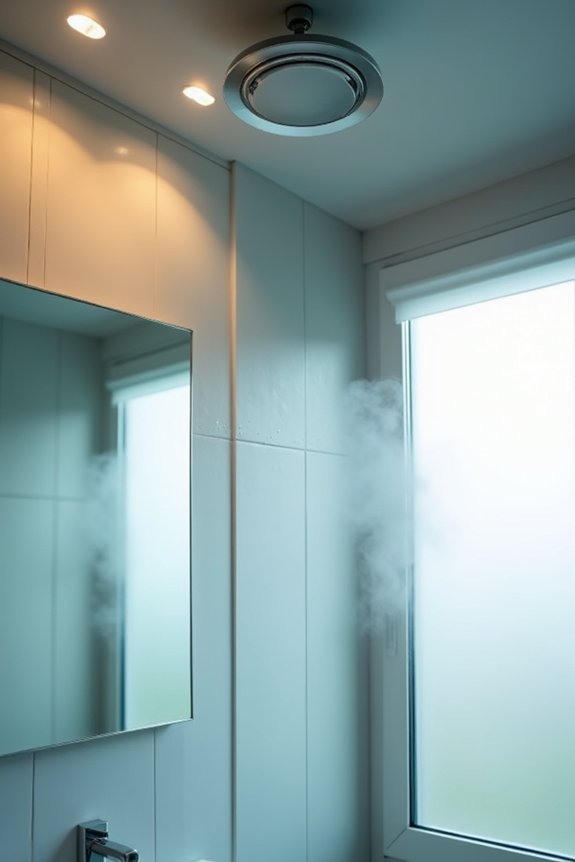
Why do so many people think their bathroom fan’s going to cool down their entire house? I’ve wondered that too, honestly. Here’s the thing: most bathroom fans operate around 50 CFM, which honestly isn’t nearly enough to impact your whole home’s temperature. What they’re actually designed for is removing moisture and odors from your bathroom—that’s it.
When you run that fan continuously, you’re pulling conditioned air straight out of your house and sending it outside. Your air conditioner then has to work harder to cool replacement air coming in from outside or your attic. It’s like trying to fill a bathtub while the drain’s wide open. So while your bathroom might feel fresher, your cooling system’s basically fighting an uphill battle. You’re not cooling your house; you’re just making your AC work overtime.
How Much Air Does a 110 CFM Fan Actually Move?
A 110 CFM fan measures cubic feet per minute—which tells us how much air volume moves, not necessarily how well it cools your whole house. In a typical 2,000-square-foot home with 9-foot ceilings, running that fan continuously would only refresh all the air about 2.2 times per hour, and that’s before friction from ducts and bends reduces the actual airflow. While 110 CFM far exceeds what you’d need for personal comfort (most people only require 10–15 CFM each), that extra capacity doesn’t automatically translate into effective whole-house cooling if the fan’s stuck venting just one bathroom.
CFM Measurement And Context
So the gist about that 110 CFM rating stamped on your bathroom fan—it’s telling you the fan can move 110 cubic feet of air every single minute when everything’s running perfectly, like in a lab with ideal conditions.
But the reality I’ve learned: real life doesn’t work that way. Here’s what actually happens:
- Ductwork reduces performance — Long ducts and sharp bends slow your airflow down
- Static pressure matters — Resistance from your home’s structure cuts actual CFM at the grille
- Placement affects results — Location relative to moisture sources and air intake changes effectiveness
- Installation quality counts — Poorly sealed connections waste precious airflow
That rated CFM? It’s your starting point, not your guarantee. Understanding this gap between theory and reality helps you make smarter choices about cooling and ventilation for your home.
Real-World Air Exchange Rates
that 110 CFM rating looks impressive on paper, but when you install the fan in your home and flip the switch, you’re probably moving somewhere between 70–95 CFM in real conditions—not the full 110.
Ducts, static pressure, and air leaks eat into your fan’s performance. I learned this the hard way. Check out what actually happens in typical homes:
| Factor | Impact | Result |
|---|---|---|
| Duct friction | Reduces airflow | 15-25% loss |
| Air leakage | Shortcut returns | Uneven circulation |
| Static pressure | Resistance buildup | Lower air changes per hour |
Capacity Versus Actual Performance
that 110 CFM rating you’re seeing on the box? It’s basically a best-case scenario. I’ve learned the hard way that what happens in a perfect testing lab doesn’t match what happens in your actual home.
Here’s what really affects your fan’s performance:
- Ductwork length and bends – Every turn and extra foot of duct steals CFM from you
- Static pressure buildup – Resistance in your system means less air actually moves
- Damper restrictions – Closed or sticky dampers cut airflow significantly
- Real-world conditions – Your fan rarely hits that advertised 110 CFM number
The takeaway? You’re probably getting 70–90 CFM instead. It’s still useful, but it won’t cool your whole house like you might’ve hoped.
The Real Danger: Motor Burnout and Fire Risk From Constant Running
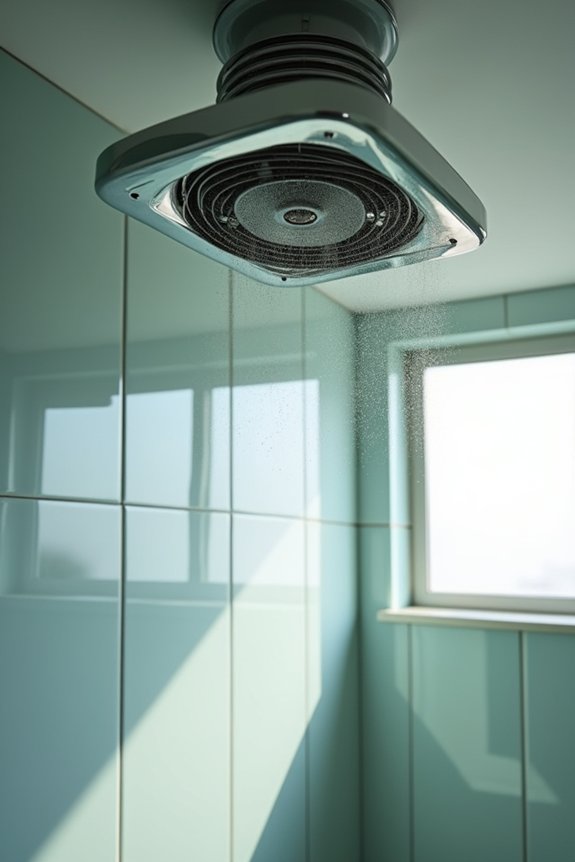
I’ve learned the hard way that running your bathroom fan constantly can actually create serious problems you might not expect. When dust builds up inside the fan—which happens faster than you’d think—the motor has to work harder and harder, generating heat that can eventually melt plastic parts or even ignite nearby materials. The constant cycling also wears out the motor itself, and replacing the whole housing and wiring is much more of a hassle (and expensive) than just swapping out a burned-out motor.
Dust Buildup and Overheating
Dust buildup on the fan’s grate and internal components traps heat around the motor and prevents the cooling air it needs to function. Ignoring this creates a dangerous situation. Here’s what happens when you neglect cleaning:
- Dust acts like insulation, wrapping around the motor like an unwanted blanket
- The motor can’t cool properly, so temperatures climb dangerously high
- Internal components wear out faster, pushing the fan toward failure
- Plastic parts may melt, and nearby materials can catch fire
Constant operation without regular cleaning accelerates this process. You’re baking your fan from the inside out. That’s why cleaning monthly is necessary—it’s the difference between a safe bathroom and a fire hazard waiting to happen.
Continuous Cycling Motor Strain
What happens when you leave your bathroom fan running 24/7? I’ll be honest—you’re basically asking your motor to work overtime without a break. Electricians I’ve talked to explain that continuous cycling wears out the motor faster than normal use, shrinking its lifespan considerably. Your fan’s rated CFM (cubic feet per minute) capacity wasn’t designed for nonstop operation. Think of it like running a marathon every single day; eventually, something gives. The motor heats up, components degrade, and you’re looking at burnout. I’ve learned the hard way that replacing an aging fan beats dealing with a sudden failure. That’s why I now run mine strategically instead of constantly. Taking this approach will benefit both your equipment longevity and your utility costs.
Why Spring and Fall Ventilation Works (Winter and Summer Don’t)
- No heating load – You’re not paying to warm replacement air sneaking in through gaps
- No cooling load – Fresh air won’t spike your energy bills by forcing AC to work overtime
- Perfect air changes per hour – A 110 CFM fan on a 20-minute cycle handles your three people and two cats well
- Balanced moisture control – You’re reducing indoor humidity and pollutants without seasonal extremes
Winter and summer? That’s when your bathroom fan becomes a heating or cooling liability. You’re literally fighting your HVAC system, wasting money. Spring and fall are when simple ventilation actually works.
Two Safer Alternatives: Windows vs. Whole-House Exhaust

When I’m thinking about keeping my house comfortable without relying on that bathroom fan as a cooling system, I’ve got two main players to consider: opening my windows or installing a whole-house exhaust setup. Windows give me direct control and fresh air whenever I want it, but honestly, they’re pretty unpredictable—humidity sneaks in, noise from outside bothers me, and in Florida’s summer heat, opening them just cranks up my cooling bill. A dedicated exhaust system, on the other hand, works more like a reliable employee, pulling out moisture and stale air at a steady, controlled rate without those wild temperature swings.
Natural Ventilation Through Windows
How do you cool a room without flipping a single switch? Windows are your best friend. Natural ventilation through windows is refreshingly simple, though it requires a bit of strategy on your part.
Here’s what works best:
- Open windows on opposite sides of your room to create a cross-breeze that moves air naturally
- Position them strategically during cooler hours—early morning and evening work well
- Monitor outdoor conditions, since summer heat and humidity can actually work against you
- Accept that results vary depending on weather and your home’s design
Windows offer temporary relief without any electricity costs. They’re less reliable than mechanical fans, and they might invite in dust or noise. But when conditions align, they’re effective and completely free.
Whole-House Exhaust Systems
While opening windows gets you partway there, they’ve got real limitations—especially when you’re dealing with humidity, noise, or just want consistent cooling without babysitting the weather. That’s where whole-house exhaust fans come in. They’re effective for pulling stale air from your entire home and pushing it outside continuously. A 110 CFM system on a three-bedroom place delivers roughly 60–70 CFM per person when running steadily, which is solid air exchange. However, I’ll be honest: running exhaust fans constantly without balanced intake can create problems like depressurization or pulling unwanted air from crawlspaces. For tight homes, I’d actually recommend considering balanced systems like HRV or ERV units instead—they recover heat while filtering outdoor air, making them more efficient than exhaust-only setups.
Heat Recovery Ventilation: A Better Long-Term Solution
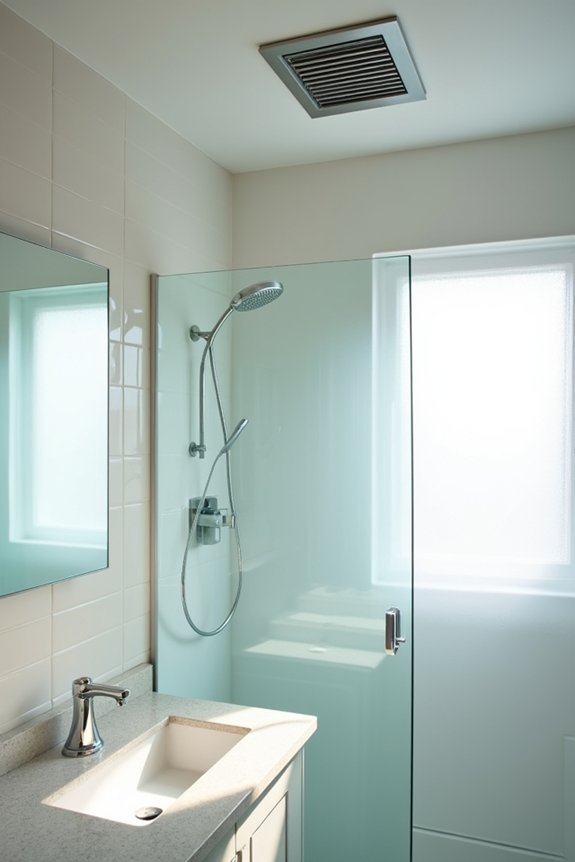
If you’re serious about cooling—or more importantly, maintaining comfortable indoor air year-round—a bathroom fan alone won’t cut it for the long haul. That’s where Heat Recovery Ventilators (HRVs) enter the picture. I’ve learned they’re worth considering if you want smarter ventilation.
Here’s what makes HRVs stand out:
- They swap stale indoor air with fresh outdoor air while recovering heat energy
- Your HVAC system doesn’t work overtime, so energy bills drop noticeably
- You get consistent air quality without uncomfortable drafts or backdrafting issues
- Installation integrates with existing ductwork for seamless operation
Yes, upfront costs run higher than a standard fan. But I’ve found the long-term comfort and efficiency gains justify the investment, especially if you’re building community through better home performance.
The Moisture Problem Your AC Alone Can’t Fix
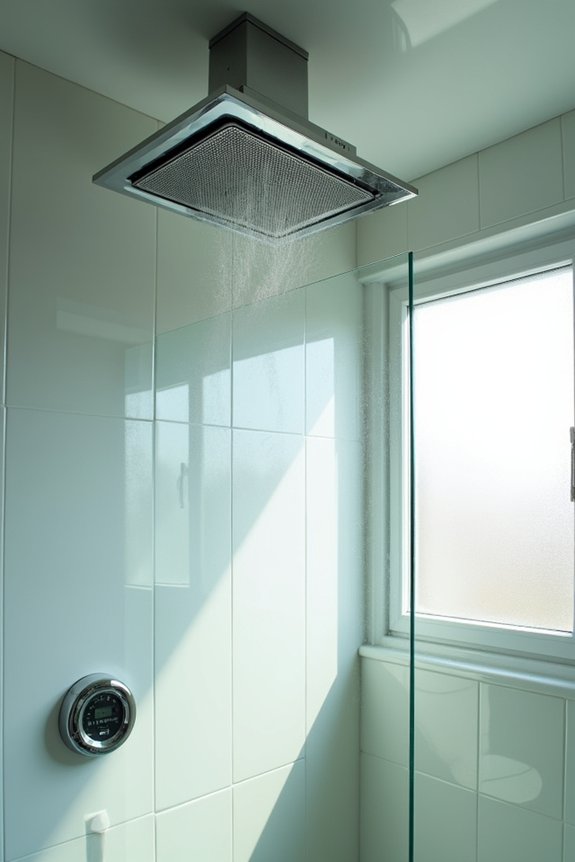
Ever noticed those dark spots creeping across your bathroom ceiling or a musty smell lingering in the corners? That’s moisture doing its damage, and here’s the thing—your AC unit alone can’t fix it.
See, air conditioning cools air, but it doesn’t remove the humidity that bathroom showers and baths create. Without proper ventilation, that moisture settles into your walls, ceilings, and fixtures, inviting mold and mildew to move in like unwelcome guests.
That’s where an exhaust fan becomes essential equipment. It directly vents that humid air outdoors, dropping interior moisture levels before problems start. Your AC works harder when fighting excess humidity, but your exhaust fan tackles the root cause. Together, they work as an effective team.
Ductwork and Fresh Air Intake: Getting It Right

How you route your ductwork and where you pull fresh air from can make or break your whole ventilation system—and honestly, it’s one of those details people often miss. Getting this right improves how your bathroom exhaust fan actually performs.
Proper ductwork routing and fresh air placement are critical details that directly impact your entire ventilation system’s performance.
Here’s what to focus on:
- Pull fresh air from clean spaces like your living room, never from crawlspaces or garages where contaminants hide
- Seal and insulate all ductwork runs, especially in attics, to prevent energy loss and condensation buildup
- Avoid running a single bathroom exhaust fan continuously without balanced intake—you’ll create backdrafting that sucks in unwanted air
- Keep ducts short with minimal bends, properly sized to your CFM targets, so fresh air reaches where you need it
Getting these fundamentals right means your ventilation system works with you, not against you.
Where Your Fan Gets Buried and Why Maintenance Gets Hard
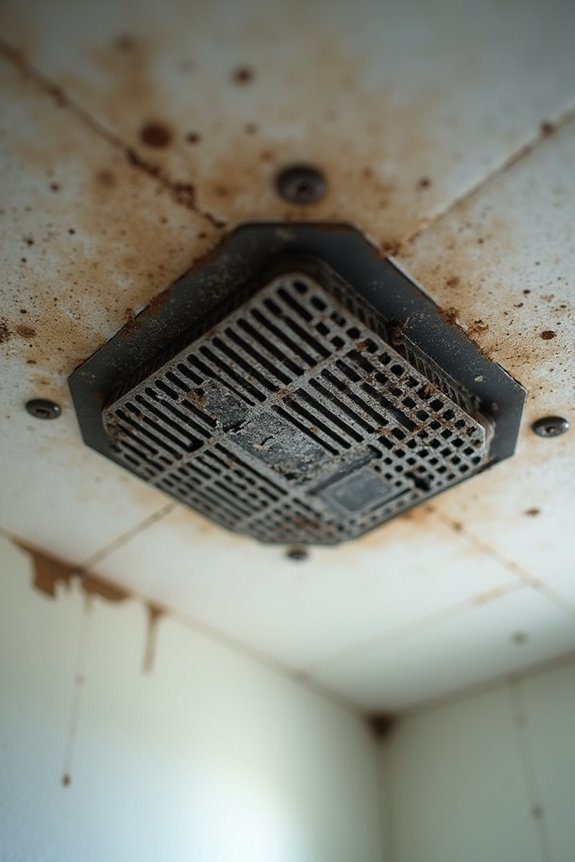
You’ve nailed the ductwork setup, but now we’ve got to talk about where that fan actually lives—because a perfectly routed system doesn’t matter much if you can’t get to the thing when it needs cleaning. I’ve learned this the hard way.
When you bury your exhaust fan deep in attic insulation or crawlspace ducts, maintenance becomes a nightmare. You’re disturbing cellulose, wrestling with tight spaces, and honestly? Most people just skip it. That’s when dust piles up, your motor works overtime, and fire risk climbs. The housing and fan assembly are harder to replace than the motor itself, so you’re looking at serious long-term headaches.
The real problem: buried fans leak conditioned air into unconditioned spaces, tanking your efficiency and hiking energy bills.
How Long Should Your Fan Actually Run?
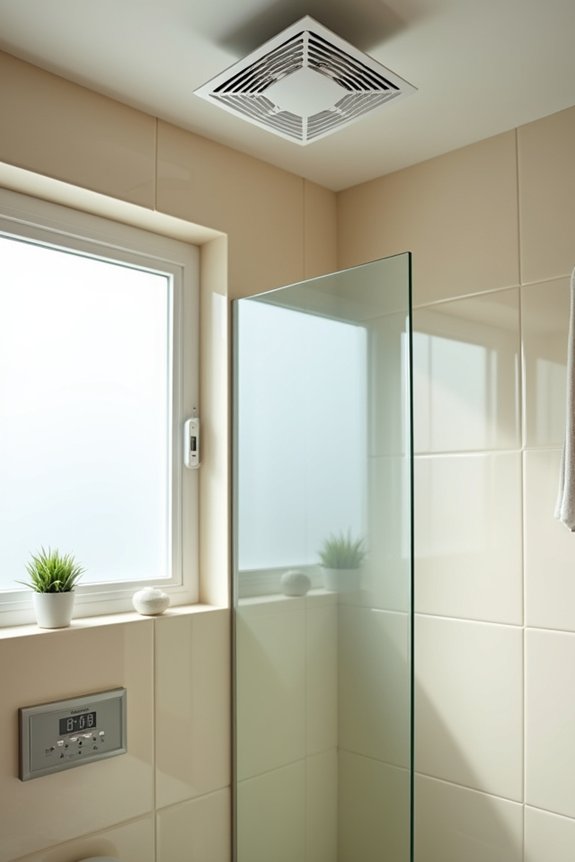
they either run their bathroom fan for five minutes after a shower and call it a day, or they leave it blasting 24/7 like it’s some kind of air-purifying superhero. The truth? You need a balanced approach.
- Run your fan about 30 minutes per hour to hit that sweet spot for air exchange
- A 50 CFM unit running continuously gives you three air changes daily in a 2,000 sq ft home
- Boost it during showers or cooking, then dial back to low-speed (30–50 CFM) afterward
- Check your fan monthly—dust buildup and aging parts affect how safely it operates
Your home needs consistent moisture removal without cranking your heating or cooling bill sky-high.
Continuous Ventilation in Modern, Tight-Built Homes

When’s the last time you opened a window in your home—and actually felt a breeze? If you’re living in a modern, tightly sealed house like mine, the answer’s probably “never.” That’s where continuous ventilation comes in. I’ve learned that running a single fan constantly—usually 30–50 CFM—exchanges stale indoor air with fresh outdoor air steadily. You’re not relying on windows or hoping occupancy triggers ventilation. For a typical three-bedroom home, I aim for about 60 CFM continuously, which keeps moisture and pollutants at manageable levels. I’ll be honest though: it does increase my heating and cooling loads if that incoming air isn’t conditioned first. Pairing it with balanced systems like HRVs helps offset that cost, making it workable for folks like us who want clean air without the energy penalty.
When to Call an Electrician vs. DIY Setup
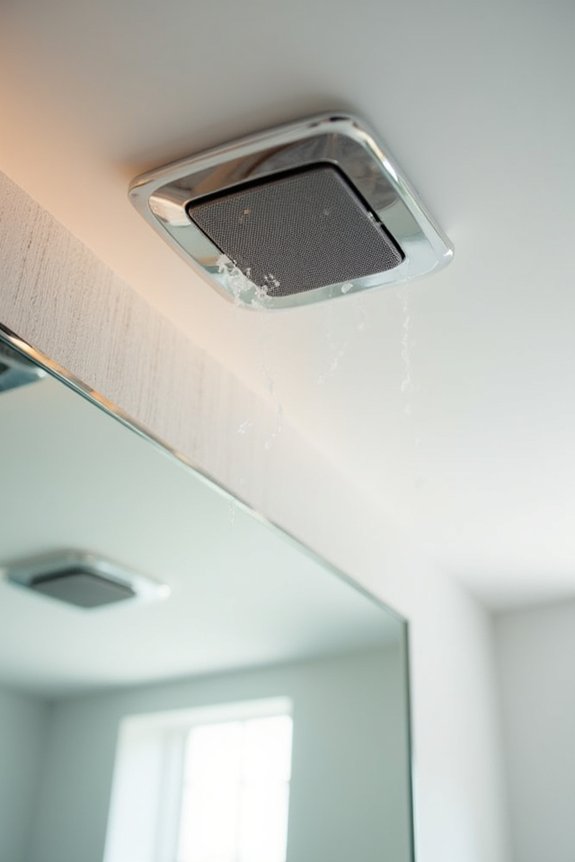
Installing a bathroom fan isn’t always a flip-a-switch kind of project—sometimes it requires actual electrical work. Here’s how I decide whether to call in a pro or tackle it myself:
- Standalone setup with pre-approved wiring – I can handle this if I’m confident about proper grounding and GFCI protection
- New circuit integration or timer controls – I call an electrician to maintain code compliance and safe operation
- HVAC system interlock or ductwork modifications – Definitely professional territory for bathroom fan ventilation efficiency
- Uncertain about routing, duct sealing, or fire safety – I consult an electrician rather than guessing
When in doubt, I’ve learned that calling someone beats risking improper overloading or noncompliant wiring. Your home’s safety matters more than saving a few dollars.