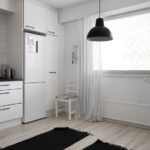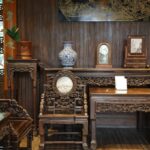
I’ve discovered that decorating a blank living room wall requires three strategic moves. First, I pick a focal point—bold art, a TV, or statement furniture—that anchors the room with personality. Next, I arrange seating to face that focal point, pulling pieces away from walls for breathing room. Finally, I layer in color through textiles, add texture with wallpaper or shiplap, and position lighting to highlight everything. These coordinated elements work together to create an inviting space.
Choose Your Focal Point: Art, TV, or Statement Furniture
How do you decide what deserves the spotlight on a massive blank wall? Picking your focal point is the first step to working with that space. You’ve got three solid options: art, a TV, or statement furniture.
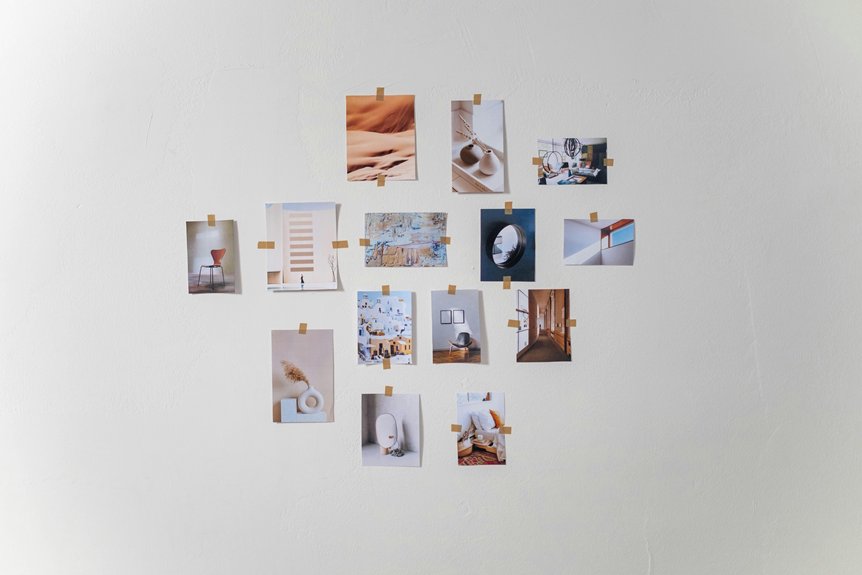
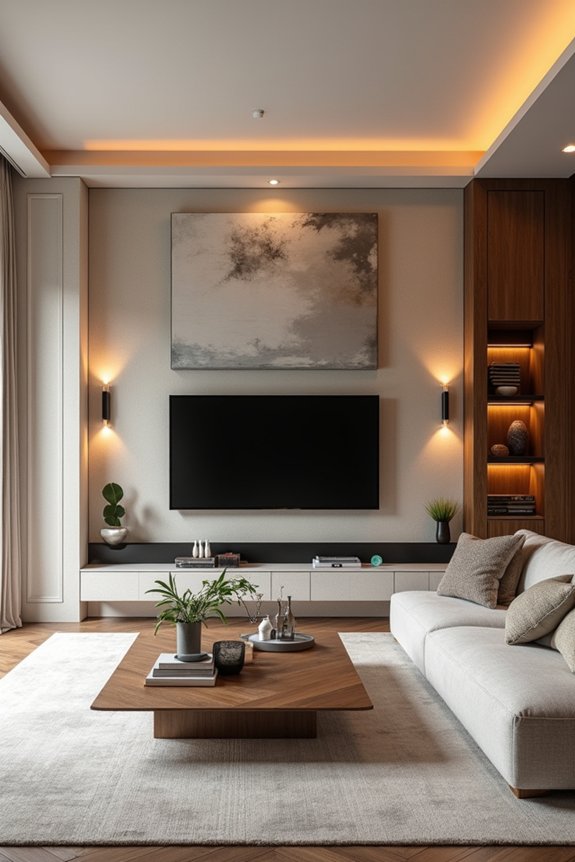
A bold gallery wall or oversized piece can anchor the room with color and personality. If you’re a TV person, centering a large screen works well when you balance it with proper lighting and a rug below.
Statement furniture—think a console with a mirror or built-in shelving—can be a primary design element too. Whatever you choose, coordinate your color palette across art, curtains, and rugs so everything feels connected. Your wall will benefit from this approach.
Arrange Furniture to Frame and Balance Your Wall
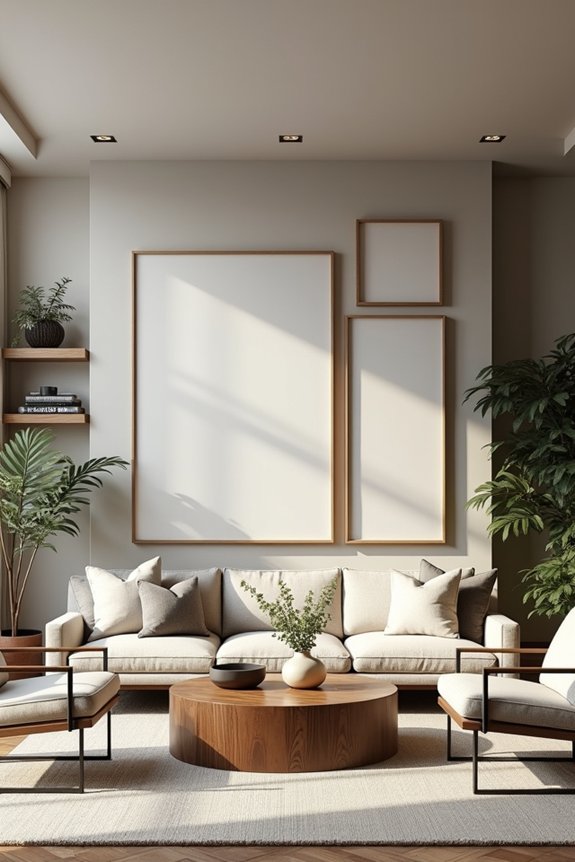
Once you’ve picked your focal point, here’s where furniture arrangement becomes essential—positioning your pieces so that wall actually stands out instead of looking like a lonely billboard.
I pull my seating pieces away from the wall to create breathing space and depth. This simple move adds dimension to a large wall. I angle my sofa toward the accent wall or TV, so everyone naturally faces that focal point. Then I frame the area with end tables and lamps on both sides—they anchor the space while spreading light across your wall feature.
The key to furniture placement? Match your piece sizes to your wall. An oversized sectional overwhelms delicate artwork, while a tiny chair disappears against bold wall space. Balance creates harmony, and that’s when a room finally feels well-considered and inviting.
Layer in Color, Texture, and Light for Impact
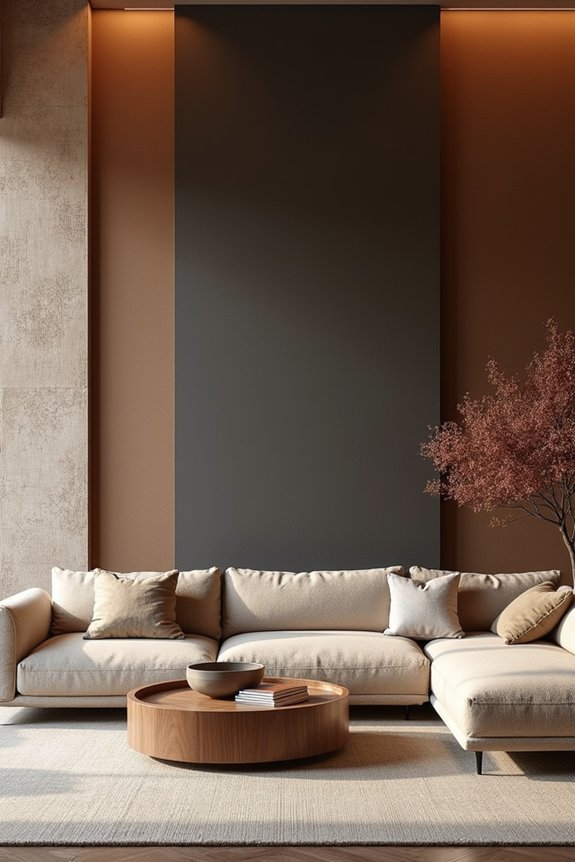
A bold art piece alone won’t do the trick—you’ve got to build layers around it to make your wall shine. I’ve learned that color, texture, and light work together to create visual impact on a plain surface.
First, I choose textiles like a patterned rug or throw pillows that echo my artwork’s colors. This layering ties everything together cohesively. Next, I add texture through architectural details—maybe shiplap or wallpaper—which creates visual interest without clutter.
Here’s where lighting fixtures become valuable. I strategically place picture lights or wall sconces above my focal area, which highlights the artwork and adds vertical dimension. This thoughtful combination of color, texture, and light doesn’t just decorate a wall; it creates an inviting space where you’ll actually want to spend time.