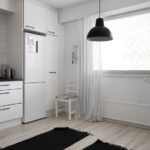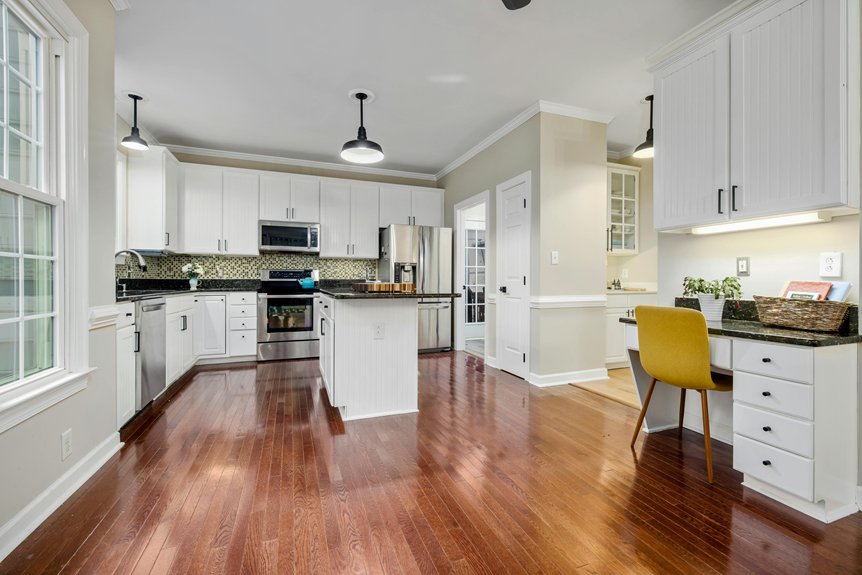
I’ve noticed kitchen desks are everywhere now, and honestly, it makes sense. Remote work forced us to carve out office space wherever we could find it, and the kitchen became the obvious choice—you’re near coffee, family, and natural light. What’s useful is how designers now hide desks behind soft-close drawers and matching cabinetry so your workspace vanishes after use. They’re not isolating anymore; they blend smoothly into your home while boosting resale value. The reasons behind this comeback run quite deep.
How Remote Work Created Demand for Hybrid Kitchen Spaces
Why’d it take a global shift to work-from-home for us to realize kitchens could be more than just cooking zones? When remote work became our new reality, I noticed something interesting: families wanted to stay connected while staying productive. That’s when hybrid kitchen spaces took off.
I’ve watched homeowners redesign their kitchens into multifunctional hubs. Built-in workstations nestled beside breakfast nooks let us answer emails while keeping an eye on lunch prep. It’s a practical solution, honestly. These aren’t elaborate setups—just compact desks with integrated outlets and USB charging surfaces that support our daily work needs.
What appeals to me most? We’re not isolating ourselves in home offices anymore. Instead, we’re blending work and family life together, staying present while accomplishing what matters.
Why Open Plans Sparked the Return of Defined Work Zones
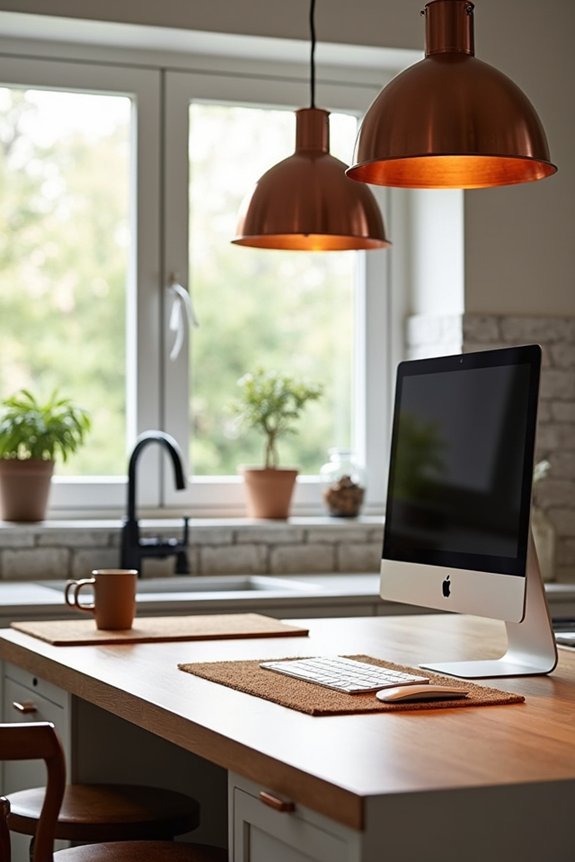
Those hybrid kitchen workstations I mentioned? They’re solving a real problem that open-plan kitchens created. See, when your kitchen flows directly into your living space, everything gets loud—blenders, pans clanging, delivery drops. It’s chaos for video calls, honestly.
That’s why defined work zones are making a comeback. Kitchen desks let you claim your own corner without sacrificing that open, airy feeling you value. You’re not boxing yourself in; you’re being smart about it.
These zones separate your workspace from cooking chaos, which also helps with air quality. Cooking particulates won’t drift through your entire home while you’re working. It’s practical design that respects both your productivity needs and your desire for connection—the best of both worlds.
Keeping Paperwork and Screens Out of Sight
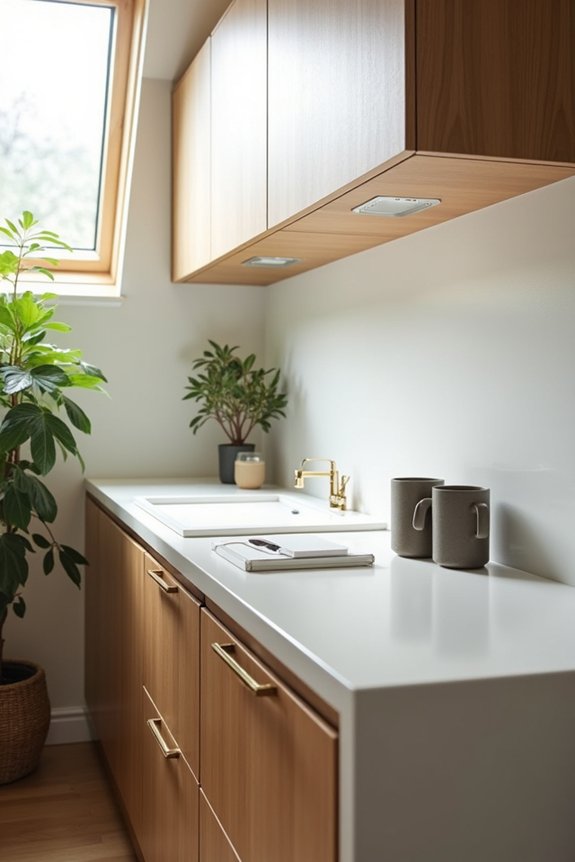
The value of a kitchen desk is having a place to work—and making that workspace disappear when you’re done. Concealment matters. You don’t want paperwork and chargers visible during dinner.
| Storage Solution | What It Hides | Why It Works |
|---|---|---|
| Soft-close drawers | Documents and devices | Keeps clutter invisible |
| Vertical organizers | Papers and supplies | Maximizes hidden space |
| Matching cabinetry | Work zones | Blends seamlessly |
| Pull-out surfaces | Daily tasks | Tucks away completely |
I use dedicated pull-out work zones that slide right back into the cabinetry. My paperwork stays organized yet out of sight. Vertical storage keeps my chargers and pens hidden until I need them. When guests arrive, my kitchen looks calm and collected—no screens or scattered organization visible. That’s the real appeal: functionality without the visual mess.
Turning Kitchen Desks Into Multi-Purpose Zones
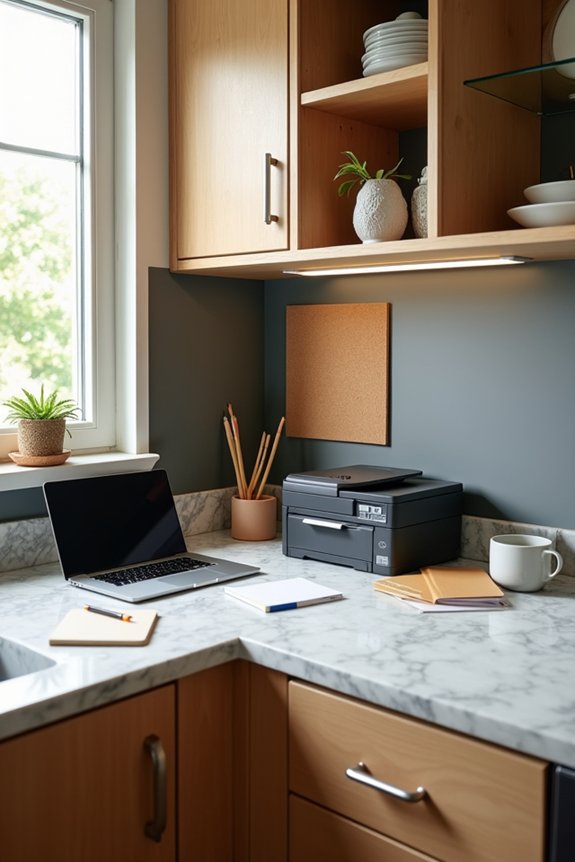
I’ve realized that the best kitchen desks aren’t just for work anymore—they’re actually doing double duty as gathering spots where I can catch up on emails one minute and brew coffee for friends the next. You can create a multi-purpose zone by pairing your workspace with a beverage station or rolling cart nearby, so you’re not stuck choosing between productivity and hospitality. What I appreciate most is how flexible layouts with pull-out desks and movable cabinets let me shift from work mode to meal-prep mode without rearranging my entire kitchen.
Work and Leisure Integration
How’d you like to knock out your work emails while your coffee brews? Blending work and leisure in today’s kitchen workspaces creates integrated zones that shift how we live—you’re answering Slack messages one moment, then prepping dinner the next, all without leaving your favorite room.
These remote work setups don’t feel stuffy or separate. Instead, they flow naturally with your kitchen’s vibe. Built-in desk surfaces sit alongside your beverage station, creating a functional environment where productivity meets comfort. Accent lighting carves out your focus zone without disrupting the social heart of your home.
The appeal? You’re part of a growing community rejecting rigid home layouts. Your kitchen becomes your command center, blending ambition with the comfort that makes a house feel lived-in.
Zoning Kitchen Functionality
What if your kitchen desk didn’t have to choose between being a workspace and a prep station? Zoning changes how we use these spaces. By creating distinct task areas within your kitchen footprint, you’re building separate zones for cooking, working, and studying—all without knocking down walls.
Here’s what works: I use subtle dividers like strategic lighting and furniture placement to define my kitchen desk zone from my prep area. This separation keeps me focused when I’m tackling emails, then lets me transition smoothly to meal prep. Multi-purpose spaces like mine combine charging stations, compact work surfaces, and hidden storage, maximizing functionality while maintaining that open, airy feel. It’s possible to have it all—you just need intentional zoning.
Soundproofing and Separating Work From Cooking Noise
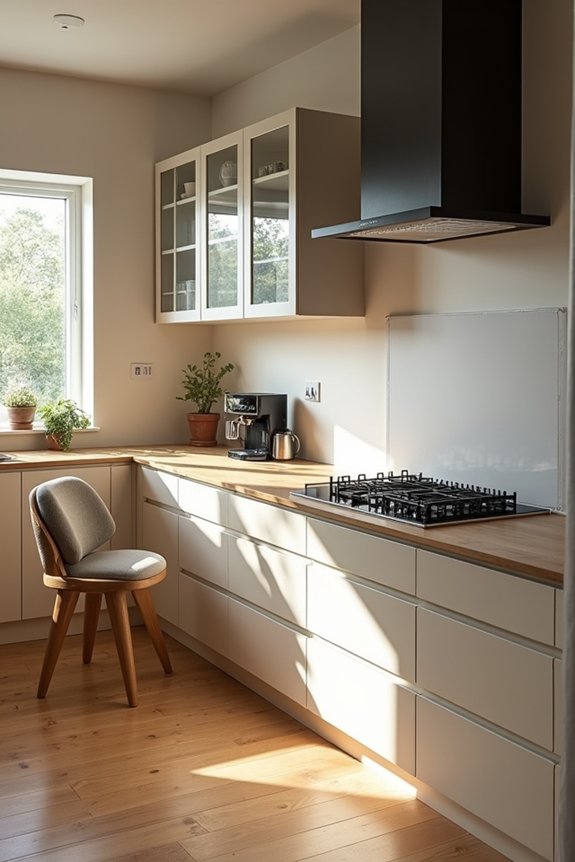
One of the biggest challenges with a kitchen desk is managing the noise—because let’s face it, you can’t exactly ask your blender to keep it down during an important video call. I’ve found that smart soundproofing doesn’t mean building walls or creating a dungeon-like space. Instead, I use partial boundaries and soft dividers that separate my work area from cooking zones while keeping the kitchen feeling open. Strategic material choices like soft rugs and fabric screens dampen sounds effectively. I’ve also discovered flexible solutions work best—movable screens and curtains let me adjust my workflow depending on whether I’m hosting meetings or meal prepping. This separation keeps my productivity intact without sacrificing the connected feel that makes kitchen desks so appealing.
Built-In Storage That Doubles as Desk Infrastructure
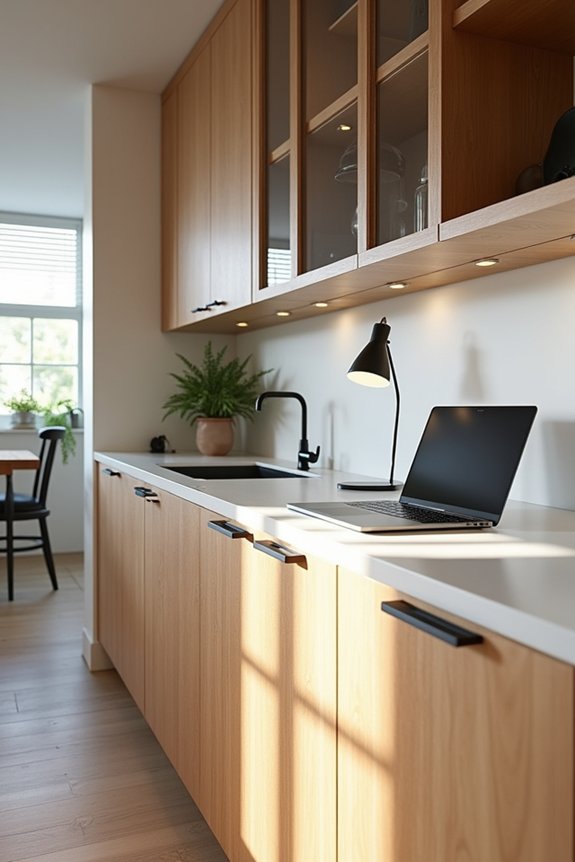
a kitchen desk without smart storage is basically a paperweight waiting to happen. I’ve learned that integrated storage makes your desk into an actual workspace, not just a clutter magnet.
Here’s what works:
- Pantry cabinets (used in 47% of projects) keep supplies organized and within arm’s reach
- Task-specific zones like coffee bars and baking areas double as desk infrastructure, combining function with style
- Walk-in pantries (appearing in 16% of projects) provide dedicated staging areas so your desk stays clean
Built-in storage gives your workspace room to function. When everything has a home, your desk becomes genuinely usable. You’re not hunting for pens or shuffling papers around appliances. Instead, you’ve got a setup where cabinetry, appliances, and your actual work surface work together naturally. That’s when a kitchen desk truly belongs in your home.
What Kitchen Desk Styles Work Best With Modern Cabinetry
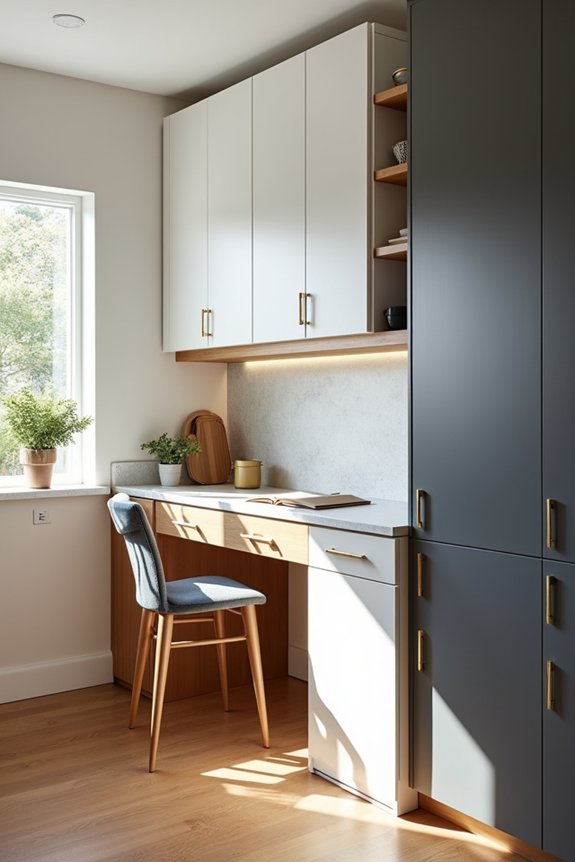
I’ve found that pairing natural wood like white oak or walnut with your kitchen desk creates a warm, inviting atmosphere that makes you want to sit down and tackle your to-do list. When I matched my walnut desk accents with minimalist cabinetry—the flat-panel kind with clean lines—the whole space felt cohesive and well-designed, not like I’d just squeezed a workspace into my kitchen as an afterthought. The benefit is that these natural materials soften any harshness between lighter countertops and cabinetry, so your desk becomes part of the overall design rather than standing out like it wandered in from another room.
Natural Wood Paired With Desks
When you’re designing a kitchen desk for 2026, natural wood works well alongside modern cabinetry. This combination pairs contemporary spaces with functional work zones that are pleasant to use.
Here’s what natural wood desks offer with modern cabinets:
- White oak and walnut tones provide visual warmth without clashing with painted or flat-panel cabinet styles
- Exposed wood grain brings texture and personality that sleek cabinetry alone may lack, preventing spaces from feeling sterile
- Mixed materials approach lets you pair a natural wood desk with lighter countertops and layered lighting for balance
The result is a kitchen workspace that balances current design with enduring style. Your desk becomes the warm anchor point that makes the overall design deliberate and comfortable.
Minimalist Cabinetry Complements Workspace
How do you keep a kitchen desk from getting lost in the shuffle of modern cabinets? Minimalist cabinetry works well for this. Flat-panel doors and clean lines create the perfect backdrop for your desk zone without competing for attention.
I’d recommend pairing light, neutral cabinets with warm-toned countertops. This combination frames your workspace nicely while keeping things visually balanced. When I added brushed nickel hardware to my setup, it brought cohesion to the design.
What made a real difference: integrated storage solutions. Tall pantry cabinets and shallow drawers keep documents, chargers, and supplies organized right where you need them. You’re building a workspace that doesn’t announce itself as an office—it blends into your kitchen activities. That’s what thoughtful minimalist design accomplishes.
Fitting a Desk Without Sacrificing Cooking Space
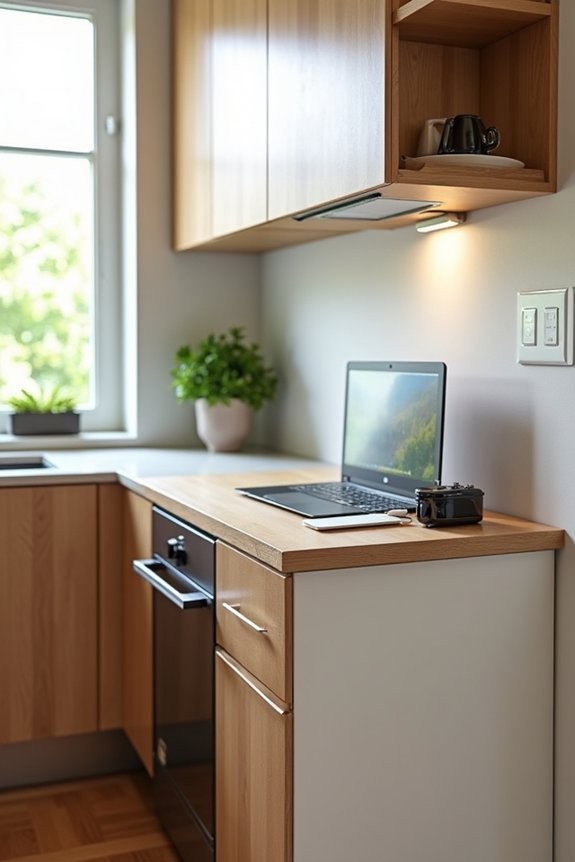
You’ve probably wondered whether you can actually squeeze a workspace into your kitchen without turning it into an obstacle course. It’s doable with smart desk integration and space-saving design. Here’s how to make it work:
- Built-in desks paired with pull-out surfaces – Tuck a slim workspace into your cabinetry, keeping your prep zones completely clear for cooking.
- Fold-down or roll-away options – When you’re not working, these surfaces disappear, freeing up your kitchen workflow instantly.
- Strategic placement near islands or pantries – Position your desk where natural light hits, so it doesn’t interrupt movement around the kitchen.
The key is task lighting and power outlets. These elements make the workspace feel deliberate rather than cramped. You can reclaim your kitchen without sacrificing cooking functionality.
Design Cohesion: Pairing Desks With Warm Cabinetry Trends
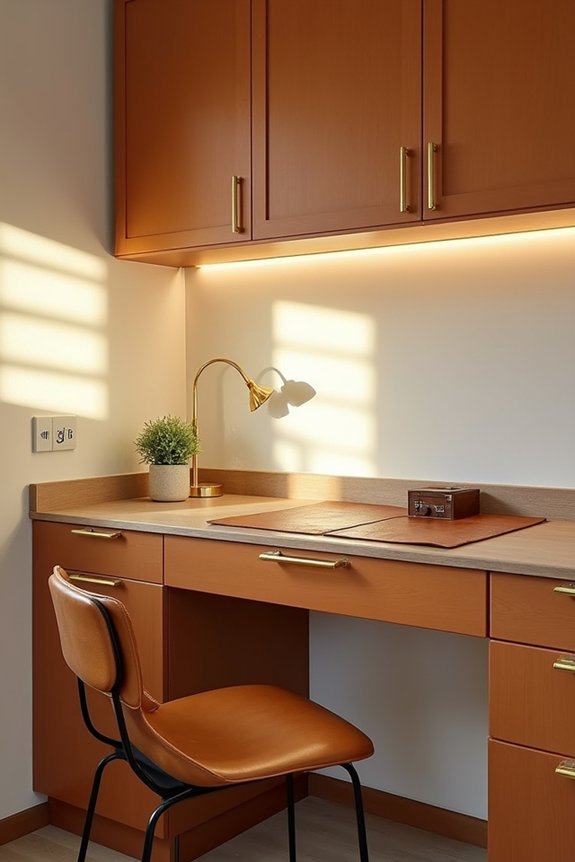
I’ve found that matching kitchen desks with warm wood tones—think white oak or walnut cabinetry—keeps your workspace visually connected to the rest of the room. When I paired champagne bronze hardware on both my desk and cabinet handles, the setup looked deliberate rather than like I’d simply placed a random table into my kitchen. The approach works because your desk surface, countertops, and cabinetry share that same warm palette with soft beige or gold veining, creating a unified design that appears well-considered and complete.
Warm Wood Complementation
One of the smartest design moves I’ve seen lately is pairing kitchen desks with warm wood cabinetry—think white oak and walnut tones that feel both timeless and inviting. When I integrated desks with these wood cabinets, I found three effective elements:
- Lighter countertops keep the space bright and prevent it from feeling cave-like
- Layered lighting provides warmth while making desk work actually possible
- Brass or warm gold hardware ties everything together well
The wood grain works best when left visible rather than painted over. These warm wood tones create a durable aesthetic that holds up well over time. Your workspace doesn’t just function better—it actually fits in your kitchen rather than sitting awkwardly in a corner.
Hardware And Finish Coordination
When you’re designing a kitchen desk that actually looks like it belongs there, the hardware and finishes are what matter most. I’ve learned that matching your desk’s hardware—think champagne bronze, brushed brass, or warm gold tones—to your cabinetry creates that cohesive, inviting feel. These warm tones tie everything together well, particularly when paired with natural wood like oak or walnut. The key is coordination; when your desk’s hardware complements your cabinet colors and stone countertops, it stops looking like an afterthought and becomes part of your kitchen’s overall design. Moving away from sterile stainless steel toward warmer finishes makes your desk a functional design feature that clearly belongs in your warm, livable space.
Kitchen Desks as Long-Term Resale Value Drivers
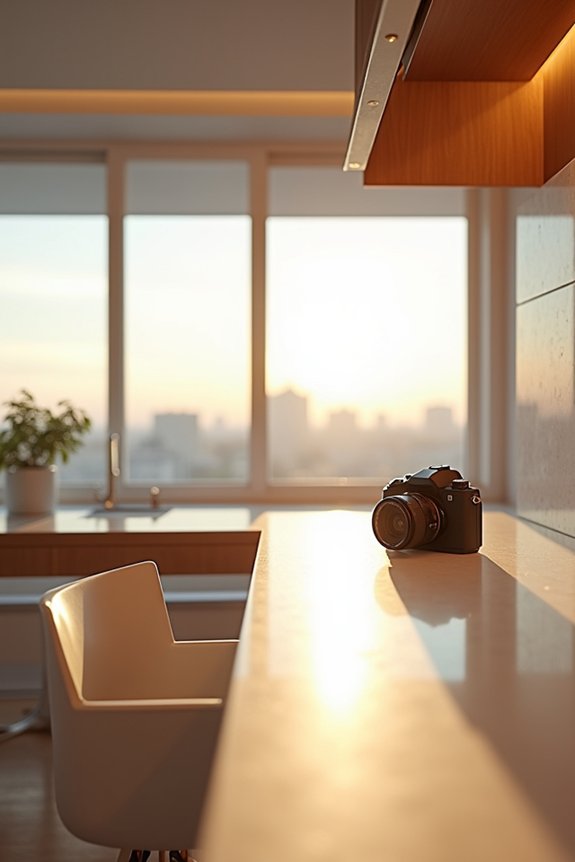
Why do real estate agents light up when they spot a kitchen desk during a home walkthrough? I’ve noticed they recognize something buyers desperately want: an integrated workspace that boosts resale value. Here’s what makes kitchen desks such smart investments:
- They future-proof your home by combining work and living spaces, appealing to remote workers and families juggling multiple tasks
- They command higher prices in open-plan layouts where functionality meets style, especially when paired with storage and charging stations
- They reduce perceived clutter through hidden tech integration, making your kitchen feel organized and sophisticated
I’ve seen homes with dedicated kitchen desks sell faster and stronger. Buyers aren’t just purchasing countertop space anymore—they’re investing in flexibility. When you blend a functional workspace into your kitchen design, you’re giving future owners the lifestyle they’re already imagining. That’s powerful resale appeal.