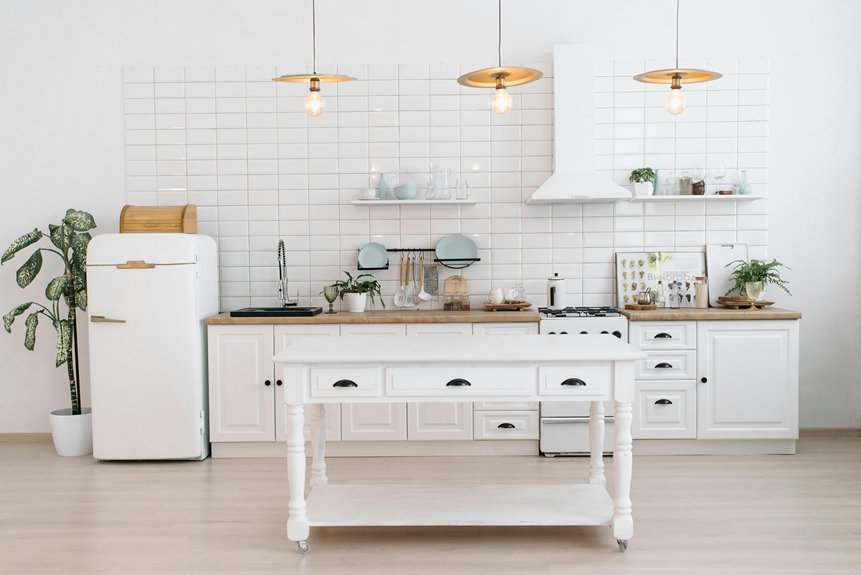
I’ve revamped my kitchen from ordinary to one with character by combining bold choices with personal touches. A statement backsplash or gallery wall becomes your kitchen’s focal point, while picking one anchor color—like deep emerald—keeps things focused. I’ve added mirrors opposite windows to bounce light around, layered in cozy textures with textiles, and arranged open shelves with vintage finds and meaningful items that actually tell my story.
The real benefit comes when you balance function with personality, letting your space reflect who you genuinely are rather than looking like everyone else’s.
Decorate Your Kitchen With a Bold Backsplash or Gallery Wall
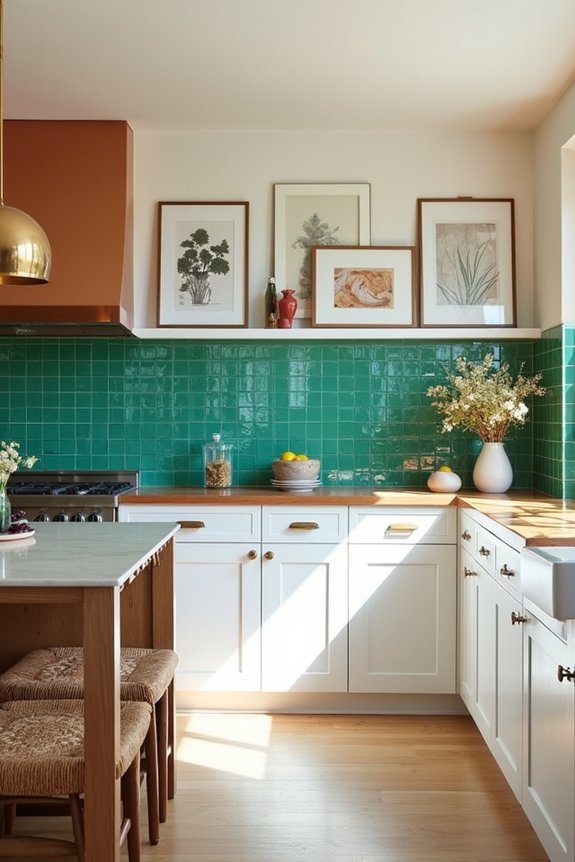
How do you refresh a kitchen that feels a little bland? A bold backsplash or gallery wall can make a real difference. When I installed a striking panda quartzite backsplash, my entire kitchen suddenly felt more deliberate and polished—no upper cabinets needed. The bold backsplash became my kitchen’s main character.
I paired mine with brass and black fixtures to create that high-contrast look that ties everything together. If you’re not ready for a full remodel, consider painting your cabinets in a contrasting tone instead. Your bold backsplash will carry the visual drama well.
Alternatively, gallery walls with oversized artwork and picture lights work just as well. Open shelving nearby displays meaningful plates and curated vases, balancing function with personal style. Either approach turns an ordinary kitchen into a space worth spending time in.
Set the Mood: Choose a Statement Color That Anchors the Space
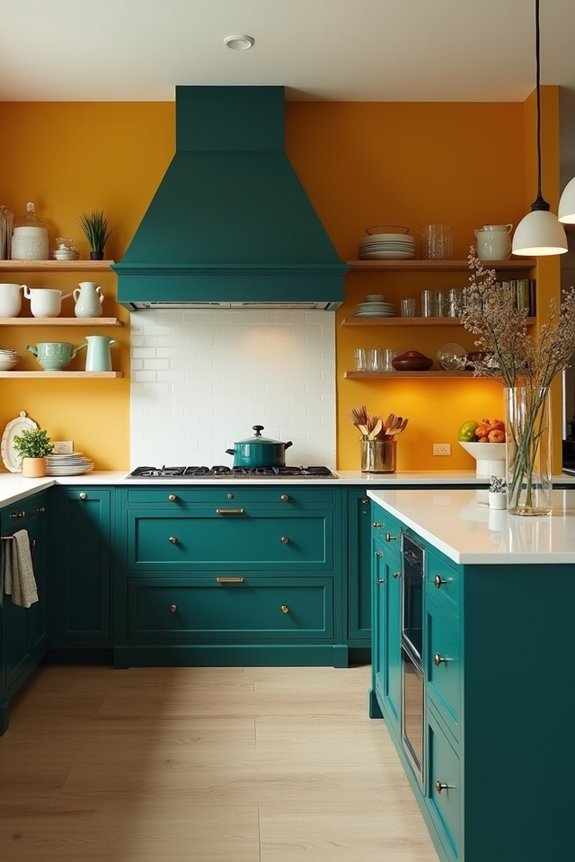
If you’re looking to bring your kitchen to life, picking one bold color and building everything around it can shift the whole vibe. A statement color—like deep emerald or navy—gives you an instant anchor without requiring a major renovation.
I typically apply my bold color strategically: maybe on lower cabinets or an island, then keep upper cabinets and walls neutral for balance. This approach prevents your space from feeling overdone.
I pair my bold choice with brass or black hardware to create contrast. Adding warm wood tones or textured tiles around your statement color enhances the overall design. The key is considering how existing features—like natural light or brick—interact with your color choice, creating a unified result rather than one that feels haphazard.
Brighten Your Kitchen With Strategic Mirrors and Lighting
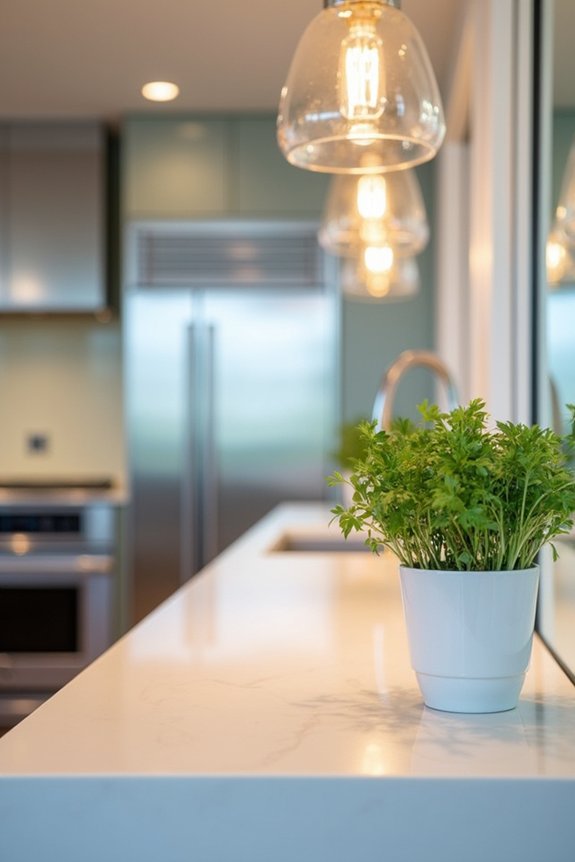
Ever notice how a small kitchen can feel cramped and gloomy, even on a sunny day? I’ve been there, and I found the perfect fix: strategic mirrors and lighting.
Here’s what I’ve discovered works best:
- Place mirrors opposite windows to bounce natural light around and create depth that makes your space feel twice as big
- Position mirrors near the backsplash or dining zone to amplify both daylight and artificial light without looking forced
- Pair mirrors with light-colored walls and glossy finishes like white marble or white oak to keep everything bright and clean
I love that mirrors do double duty—they’re functional and stylish. When I combined reflective surfaces with bright, scrubable finishes, my kitchen became noticeably brighter. It’s no longer just functional; it’s actually inviting. You’ll feel the difference immediately.
Make It Cozy: Layer Textures With Textiles and Soft Furnishings
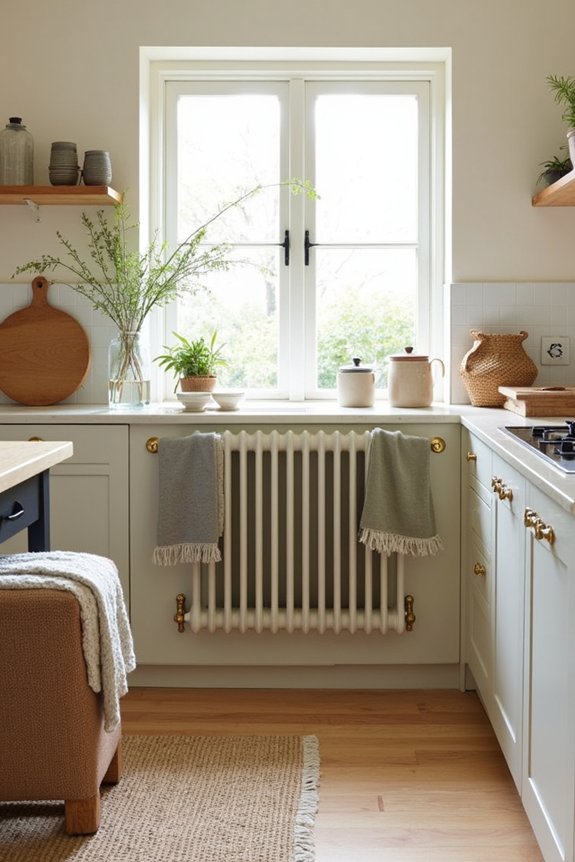
I’ve found that layering textures with curtains, cushions, and throws is one of the easiest ways to make a kitchen feel more inviting instead of sterile. You can strategically drape fabrics like Scarlet Vine by Jasper Textiles over open shelving or use patterned curtains to frame your cabinets and hide less-attractive bins, which saves you from doing a full remodel. The trick is pairing these soft textiles with natural materials—think wooden cabinets and brass accents—so your space feels warm and balanced rather than looking like you’ve overdone it with fabric.
Layering Textures Strategically
How do you keep a kitchen from feeling cold and sterile? I’ve learned that strategic layering creates inviting rooms where people actually want to gather.
Here’s what I’ve discovered works:
- Mix hard and soft surfaces – I pair sleek cabinetry with oversized artwork and textured curtains to add depth without chaos
- Display textiles on open shelving – Slim metal shelves showcase my favorite fabrics and decor while keeping clutter hidden
- Combine natural fibers with metallic accents – Brass hardware paired with linen curtains creates tactile contrast that feels considered
The real payoff comes from balancing bold counters (like panda quartzite) with softer drapery. This prevents that clinical vibe I used to hate. Meaningful textiles—ones that remind me of memories—bring personality to my kitchen. It’s about creating layers that tell my story.
Textile Color and Pattern
Textiles deserve more than an afterthought in your kitchen design. Using them as a core element helps establish the room’s character. Choosing the right colors and patterns directly affects how the space functions and feels. When I selected Schumacher-patterned curtains for my kitchen, the room gained a sense of deliberation—as though the choices had been carefully considered.
Consider these practical approaches: your textiles should relate to your existing palette. If you have brass accents and warm wood, soft greys in your fabrics create balance without becoming monotonous. Two-tone or textured fabrics add depth without demanding excessive attention.
The foundation of this approach is matching your textile selections to what already exists in the room. Pairing rich Scarlet Vine fabrics with black hardware creates visual interest that gives the space a composed, welcoming quality. That’s when a kitchen stops feeling like a generic layout and starts feeling like a room you’ve actually inhabited.
Soft Furnishings Selection
Once you’ve nailed down your textile colors and patterns, it’s time to layer in the soft elements that make a kitchen welcoming. Soft furnishings bring personality to spaces where people naturally gather.
Here’s what works best:
- Reuse fabric with memories – Hang kitchen curtains made from old textiles with sentimental value, adding personality and connection instantly.
- Select complementary materials – Choose pieces like Scarlet Vine by Jasper Textiles that echo your existing color scheme while softening hard cabinet lines.
- Conceal and comfort – Strategic curtains hide storage bins while creating visual coziness that invites lingering.
Pairing these soft furnishings with nearby greenery ties everything together, creating a space that feels lived-in and inviting.
Bring Life Indoors With Potted Herbs and Fresh Plants
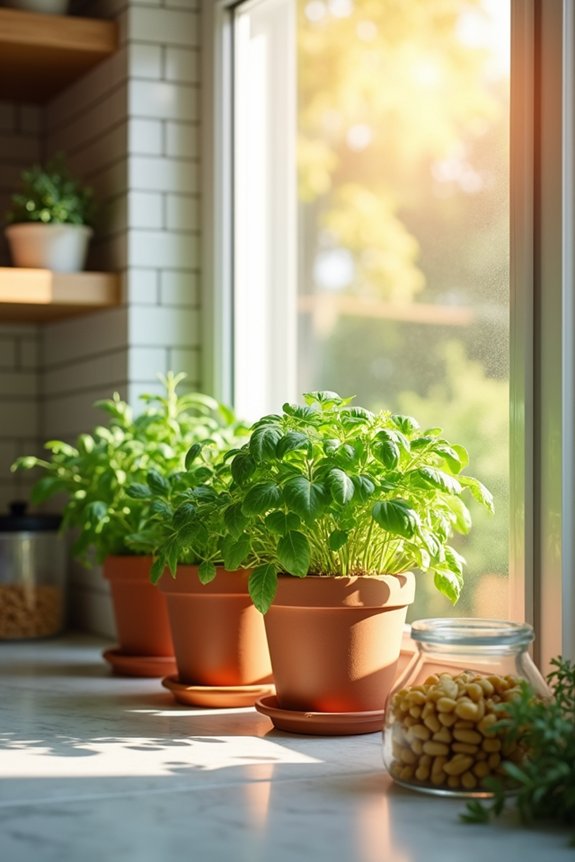
Want to know why some kitchens feel alive and inviting while others feel sterile? I’ve discovered that potted herbs on my counter make a real difference. They add greenery and practical function while sitting right there when I’m cooking—no running to the store for fresh basil anymore.
I’ve also found that terra-cotta vessels pair beautifully with my sleek cabinetry, creating a balance between modern and comfortable. I’m thinking about adding a window garden with hanging shelves next, since my kitchen gets great natural light.
What I love most is how visible plants on shelves create vertical interest. They’re practical too—I can grab what I need while also decorating at the same time. It’s honestly one of the easiest ways I’ve made my kitchen feel like mine.
Curate Displays: Show Off Meaningful Items and Vintage Finds
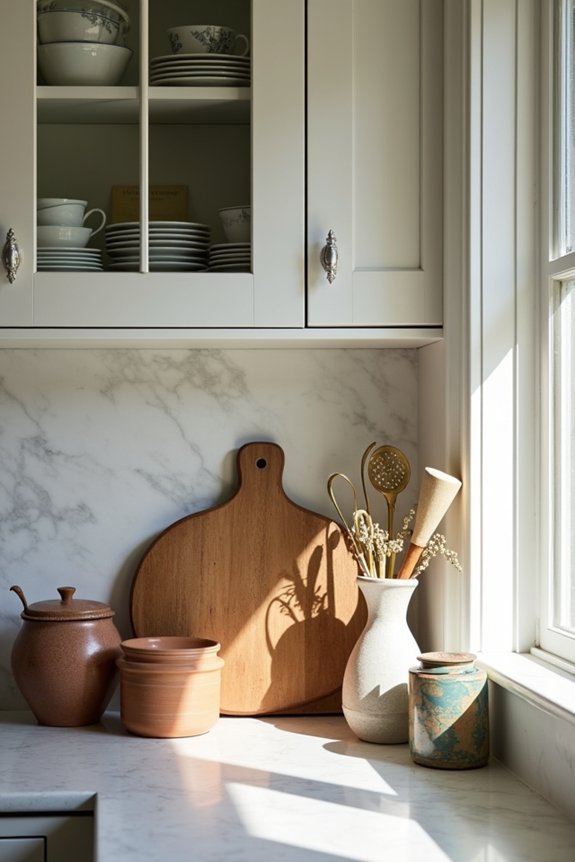
Instead of filling your kitchen shelves with random stuff you picked up at the store, I’ve found that displaying the things you actually love—whether that’s your grandmother’s vintage oyster tins, decorative plates you’ve collected, or objects that remind you of meaningful moments—changes how the space feels. Open shelving becomes way more interesting when you treat it like telling your own story rather than just storing things, and suddenly your kitchen feels lived-in instead of cold and empty. The key is balancing those bold surfaces and statement pieces with personal treasures that make you smile when you see them.
Display Meaningful Personal Items
Why settle for a bare kitchen wall when you could tell your story instead? I’ve found that displaying personal items makes my kitchen feel more like home.
Here’s what I display:
- Family heirlooms—like my grandmother’s antique plates arranged on open shelving
- Travel souvenirs—postcards, small ceramics, or local artwork that spark conversations
- Meaningful keepsakes—oyster tins, vintage finds, or objects connected to cherished memories
When I pair these personal items with cohesive materials like brass accents or coordinated colors, everything comes together as a deliberate choice rather than random placement. I’m not just decorating; I’m sharing pieces of my life. My kitchen walls now show who I am, creating warmth that no generic décor could provide.
Vintage Finds and Character
Beyond sharing your personal story through family photos and travel mementos, there’s another layer of kitchen design that comes from hunting down vintage treasures. I’ve discovered that antique bar carts, oyster tins, and decorative plates bring personality to my kitchen decoration ideas. These vintage finds aren’t just visually appealing—they’re conversation starters that reflect who I am and where I’m from.
I love pairing brass accents with modern finishes to brighten the space without clashing. Displaying antique plates on open shelving adds texture and tells a cohesive story. When I mix old and new, my kitchen feels warm and lived-in rather than sterile. You don’t need expensive pieces either; thrift stores and flea markets hide one-of-a-kind treasures waiting to add personality to your space.
Styling Open Shelving Effectively
How do you turn blank shelves into a display that actually tells your story? I’ve learned that open shelving works best when you’re intentional about what you showcase. Rather than cramming everything in, I select items that matter to me.
Here’s what I focus on:
- Meaningful vintage pieces like brass rails or ceramic dishes that spark conversations
- Functional displays such as herb jars and cookbooks that look good and serve a purpose
- Cohesive color schemes using white oak or fire-bright ceramics to tie everything together
The trick? Balance is everything. I keep my open shelving light and airy by pairing it with hidden storage elsewhere in my kitchen. This way, I’m not stressing about clutter while still displaying the items I genuinely love. Your shelves should feel like you.
Style Open Shelves: Function Meets Personality
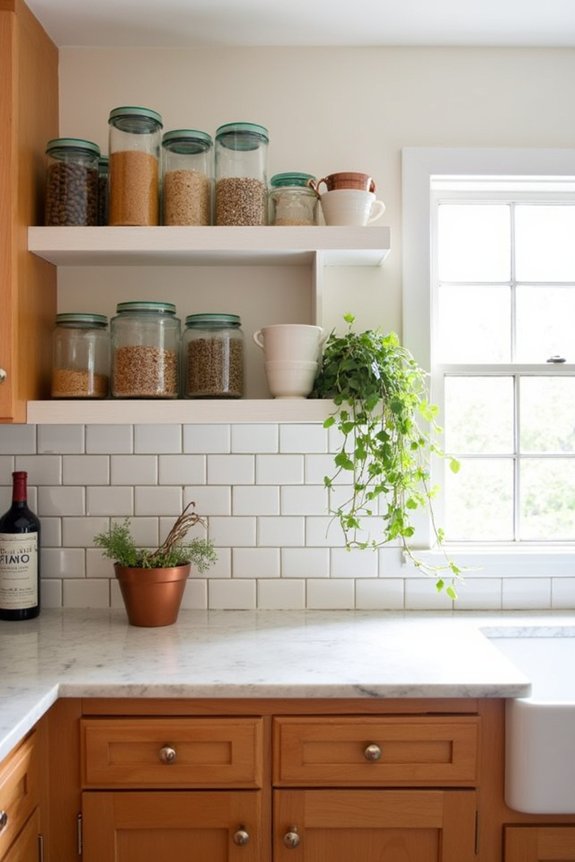
Open shelves are one of those kitchen upgrades that’ll actually make your space feel bigger. When I removed my upper cabinet doors, my kitchen instantly felt airier and more inviting. Here’s what I’ve learned: curate items that matter to you. I display my favorite cookbooks, wooden boards, and fresh herbs rather than cramming in random stuff. Pair open shelves with matching materials—I chose wood tones that work well together. Slim metal shelves work best; they’re practical without looking bulky. Add rails or hooks for extra organization, and you’ve got function plus personality. Your space tells your story, so fill it with things that matter to you. That’s when open shelves really work.