Scandinavian design didn’t come from fancy design schools—it grew out of honest craftsmanship and wartime necessity. Starting in the 1890s with Skønvirke, designers blended traditional skills with modern thinking, creating functional objects at reasonable prices. The 1930 Stockholm Exhibition launched it nationally, while WWII scarcity pushed designers to innovate with available materials. By mid-century, pioneers like Arne Jacobsen demonstrated that good design could serve everyone, not just the wealthy. The exploration of these principles reveals their influence across furniture and consumer electronics.
What Scandinavian Design Really Means
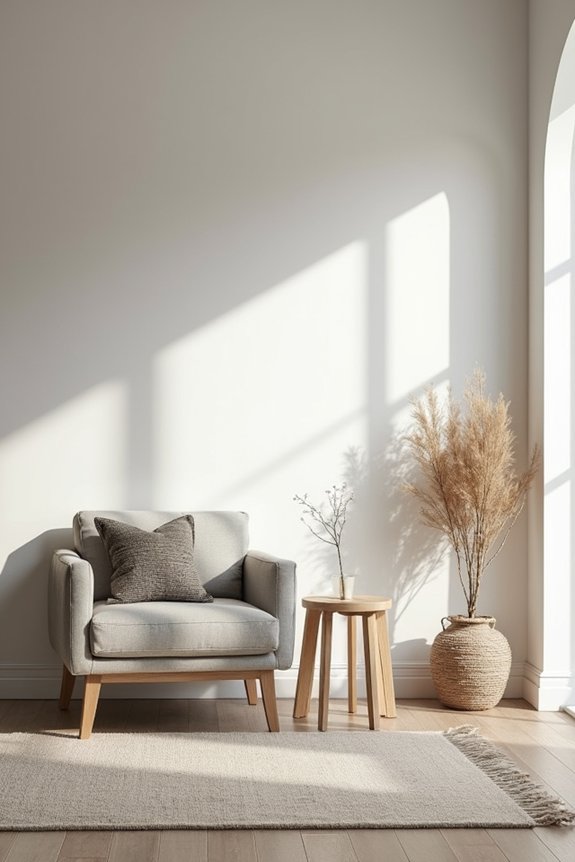
Ever wondered why a simple wooden chair or a minimalist room can feel so satisfying to look at? I’ve found that Scandinavian design is really about something special: the belief that “less is more.” It’s not cold or empty—it’s actually quite the opposite.
What I appreciate most is how everything serves a purpose. You won’t find random decorations cluttering things up. Instead, you get simplicity that feels warm and inviting. Think clean lines, natural materials like wood, and neutral colors that calm your mind.
The beauty here is that functionality and aesthetics work together, not against each other. A chair isn’t just practical; it’s also genuinely beautiful to look at. That’s what makes it work. It’s design that respects both your space and your wallet—creating something that belongs in your home for decades.
Skønvirke and the Arts and Crafts Foundation (1890s–1910s)
When I explore Denmark’s design heritage, I discover that Skønvirke—meaning “Graceful Work”—shaped how craftspeople thought about creating beautiful, functional objects during the 1890s and early 1900s. The movement wasn’t just about making things by hand; it blended traditional craftsmanship with fresh, modern ideas inspired by organic forms (kind of like nature decided to team up with factories, except Skønvirke preferred the handmade route). You’ll notice this philosophy in concrete examples—from the Swan Apothecary in Roskilde to the magazine Skønvirkeda that designers launched in 1914 to share their vision of what thoughtful, graceful design could accomplish.
Danish Arts and Crafts Movement
In a world where “graceful work” was actually the whole point of making things, Skønvirke—literally “Graceful Work”—offered Denmark a different path in the late 1800s. This movement rejected mass production’s hollow shortcuts, insisting that every craftsman pour soul into their creations.
The movement crystallized when the Selskabet for Dekorativ Kunst launched the magazine Skønvirke in 1914, cementing the philosophy into something tangible. Here’s what defined it:
- Natural materials shaped with honest intention, not factory shortcuts
- Functional beauty that served both eye and purpose
- Architectural examples like Roskilde’s Swan Apothecary (1899) demonstrating the vision’s viability
Graceful Work Design Philosophy
The philosophy centered on craftsmanship, blending functional design with artisanal details. Think of it like this: they didn’t separate “art” from “everyday stuff.” A table wasn’t just furniture; it was a conversation between maker and user. The Selskabet for Dekorativ Kunst promoted these ideals through magazines, showing how quality materials and careful work gave ordinary objects depth and meaning. That’s belonging in design.
Architectural Innovation and Influence
As we shift our focus from philosophy to practice, I’d like to introduce you to Skønvirke—a Danish movement whose name literally means “Graceful Work”—that emerged in the 1890s and fundamentally reshaped how Scandinavians thought about buildings and the spaces inside them.
Danish design principles weren’t just theoretical; they showed up in actual structures. Here’s what made Skønvirke’s architectural approach distinctive:
- Functional beauty – Every detail served a purpose while maintaining visual appeal
- Quality materials – Craftspeople used what lasted, rejecting cheap shortcuts
- Human-centered spaces – Buildings were designed for people, not ego
The Swan Apothecary in Roskilde (1899) perfectly captures this philosophy. Walking inside, you’d notice how every element—from doorways to decorative flourishes—balances usefulness with artistry. That’s Skønvirke’s lasting gift to our design heritage.
The 1930 Stockholm Exhibition: Scandinavian Design’s National Debut
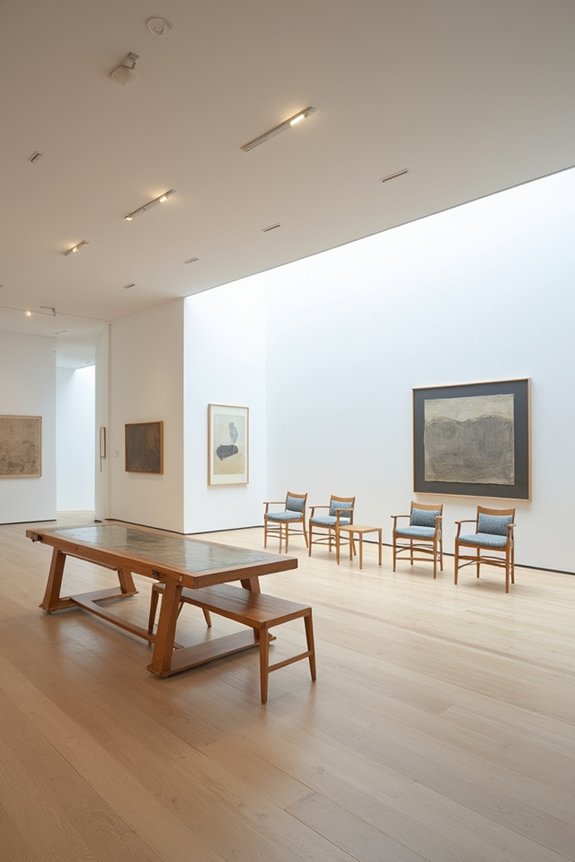
When I trace the roots of Scandinavian design, I keep coming back to one pivotal moment: the 1930 Stockholm Exhibition. I find myself drawn to how this event became the official launch of Scandinavian design origins, reshaping an entire region’s creative identity. What strikes me most is how curators deliberately merged traditional craftsmanship with industrial production—no snooty elitism here. They wanted beautiful, affordable objects for everyday people like us. The Stockholm Exhibition showcased furniture, textiles, and architecture that felt connected and purposeful. Key designers who exhibited there later became central figures defining Nordic aesthetics. This single event sparked international fascination with Scandinavian design that continues to influence how we think about minimalism and functionality today.
Danish Functionalism: The Birth of Scandinavian Modern Design
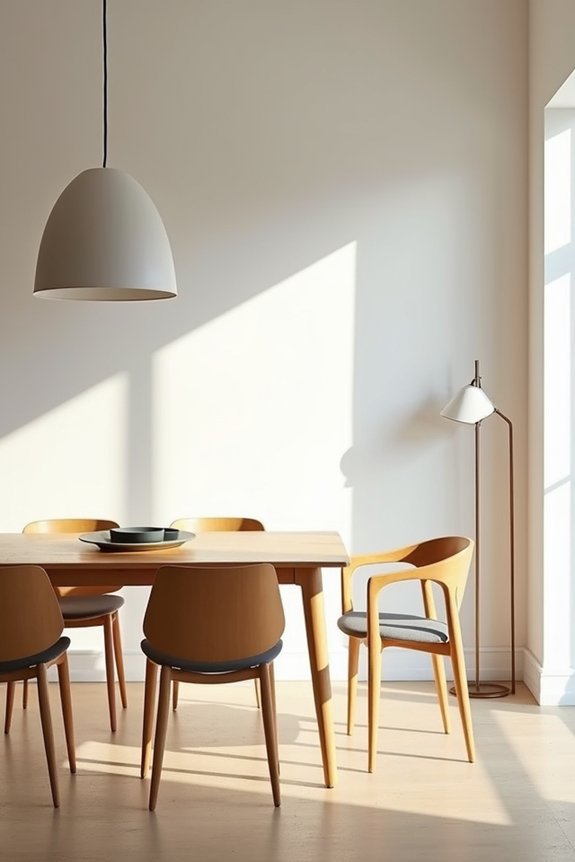
Danish functionalism posed a fundamental question: could beautiful design be affordable? Designers like Kaare Klint and Poul Henningsen demonstrated that eliminating ornamental details in favor of simple geometric forms, practical materials such as plywood, and efficient construction methods could yield objects that functioned well and possessed visual appeal at accessible price points. Their Library Chair and light fixtures established that utilitarian items could satisfy both functional and aesthetic requirements, founding the design movement now recognized as Scandinavian modernism.
Functionalism’s Core Principles
How’d you like to own a beautiful chair that doesn’t cost a fortune and actually fits in your tiny apartment?
That’s exactly what Danish Functionalism promised—and honestly, it delivered. I discovered that this movement rejected fancy decoration, asking designers instead to prioritize what actually works. Here’s what made Functionalism significant:
- Honest materials like solid wood and leather, showing their true nature without pretense
- Modular designs that adapted to cramped urban spaces we all navigate
- Mass production that meant quality pieces weren’t just for wealthy people
Danish Functionalism believed good design belonged to everyone, not just the elite. Pioneers like Kaare Klint and Poul Henningsen proved that practicality and beauty weren’t enemies—they were partners. This wasn’t about being boring; it was about respecting both your wallet and your space.
Denmark’s Design Revolution
Those principles I just mentioned—honest materials, modular designs, affordable quality—didn’t just pop up out of nowhere in Denmark. They emerged from real people solving real problems in the early 20th century. Kaare Klint, a furniture pioneer, started asking radical questions: Why shouldn’t beautiful design be accessible to everyone? Why couldn’t everyday objects be both practical and gorgeous?
Danish functionalism answered these questions by stripping away unnecessary decoration. Designers like Klint focused on what actually worked—clean lines, quality wood, steel that lasted. They weren’t creating art for museums; they were crafting pieces for your home, your office, your life. This wasn’t snobbish design—it was democratic. It belonged to you, to me, to everyone willing to appreciate something genuinely well-made.
WWII and After: How Wartime Scarcity Shaped Nordic Aesthetics
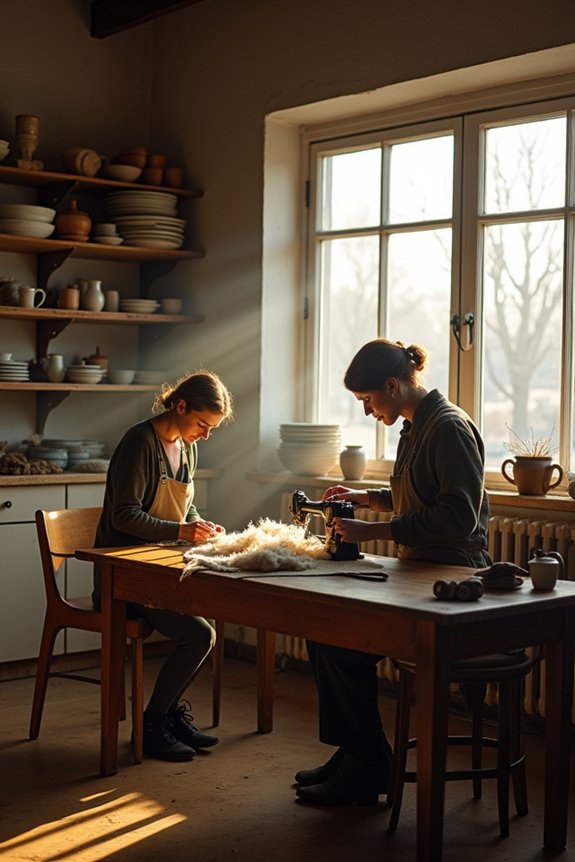
When I think about how design gets born from hardship, Scandinavia’s wartime experience stands out as one of history’s most significant moments. During World War II, scarcity forced Nordic designers to reimagine everything—they couldn’t rely on luxury materials anymore, so they got creative with what they had.
Design’s greatest innovations often emerge from scarcity, not abundance—necessity forces creativity where luxury cannot.
Here’s what happened:
- Designers repurposed leftover metals and available woods into honest, practical pieces
- Manufacturers shifted from fancy items to durable, affordable furniture for everyday people
- Wartime shortages eliminated unnecessary decoration, leaving only clean, functional designs
This scarcity taught Scandinavians something powerful: good design doesn’t need to be expensive or complicated. After the war, this mindset evolved into the iconic mid-century Scandinavian Modern style—light-filled spaces with simple lines that actually worked for real families. That’s the legacy we inherited.
The Golden Age: Aalto, Jacobsen, Wegner, and Their Contemporaries
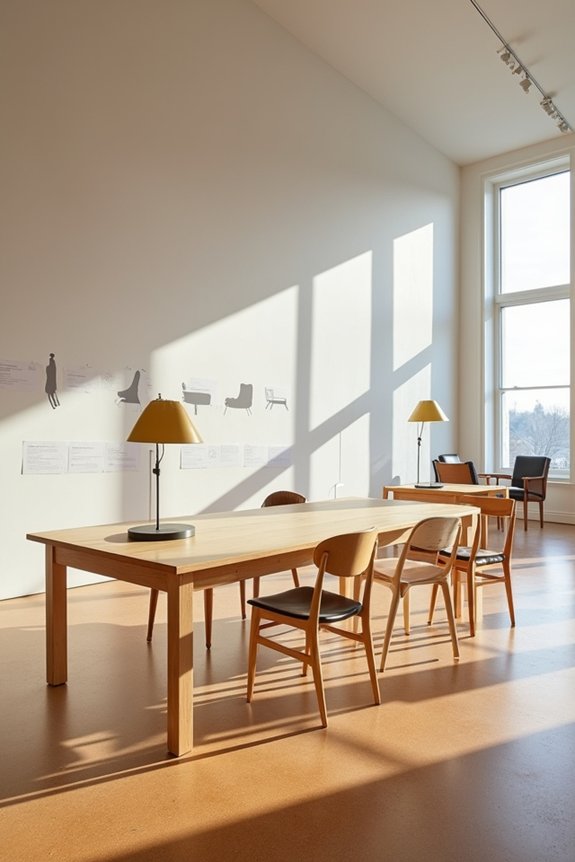
I find that when I look at furniture from the 1950s, I’m struck by how designers like Arne Jacobsen and Alvar Aalto managed to make pieces that were both beautiful and practical—chairs that didn’t require a design degree to sit in comfortably. These pioneers weren’t content just making things look sleek; they pushed themselves to rethink how furniture should actually work in people’s homes, blending art with everyday usefulness in ways that remain relevant today. You’ll notice that their creations, from Jacobsen’s iconic Egg Chair to Aalto’s curved plywood designs, established the clean lines and honest craftsmanship that became the foundation of Scandinavian modernism.
Pioneering Furniture Design Icons
How’d you like to sit in a chair that doesn’t just hold you up but actually makes you feel something? That’s what these designers understood. I find Arne Jacobsen’s work absolutely brilliant—his Egg Chair curves around you like a protective hug. Then there’s Hans Wegner’s Wishbone Chair, which combines elegance with comfort in a way that feels almost purposeful.
Here’s what makes their furniture significant:
- Bent plywood and innovative materials that expanded the possibilities of what chairs could be
- Organic shapes that flow like natural forms
- Functional beauty that serves both body and soul
These aren’t just pieces of furniture—they’re invitations to belong to something lasting. I genuinely believe sitting in one changes how you see design forever.
Architectural Innovation and Vision
Why’d three Finnish and Danish designers become so influential that their work still shapes how we think about modern spaces today? I’d argue it’s because Aalto, Jacobsen, and Wegner didn’t just follow design principles—they rewrote them. They believed buildings and furniture should feel alive, not sterile. Aalto integrated natural materials like bent wood and light into everything, from the Paimio Sanatorium to the Savoy Vase. Jacobsen stripped things down to essentials with his Egg Chair, proving minimalism could be warm and approachable. Wegner obsessed over comfort, crafting the Wishbone Chair with such care that sitting in it carries weight and consideration. Their architectural vision? Make spaces that actually work for real people. That’s why we’re still studying their approach.
Defining Modern Scandinavian Aesthetics
Once you understand how these designers rewrote the rules of architecture, you’re ready to see what actually made their furniture and spaces look so distinctly Scandinavian. I’ve noticed three things that define this aesthetic:
- Clean lines and honest materials – think the Paimio Chair’s curved plywood that shows off what wood can do
- Function married to beauty – every piece serves a purpose while looking elegant
- Organic shapes – forms that feel warm, not cold
What struck me most is how Aalto, Jacobsen, and Wegner didn’t fight against materials; they celebrated them. Their work feels inviting because it’s stripped down to essentials, with zero pretense. You don’t need fancy decoration when proportions are this good. That’s what matters.
The Lunning Prize (1951–1970): Defining Excellence in Nordic Design
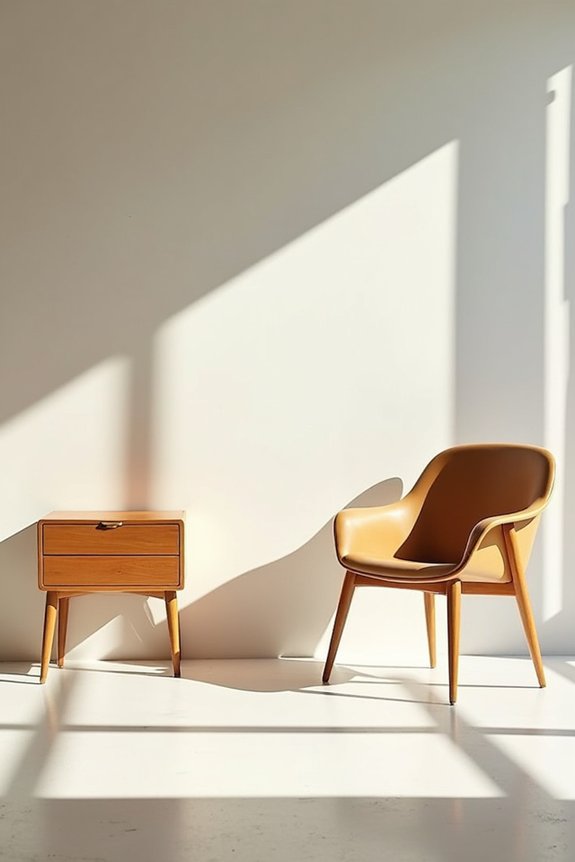
A single prize fundamentally altered how the world perceived Scandinavian furniture and design. The Lunning Prize, created by designer Erik Lunning between 1951 and 1970, became the standard for recognizing excellence in Nordic design. It functioned as the highest honor for Scandinavian creativity—propelling talented designers and brands from Denmark, Sweden, Norway, Finland, and Iceland into international recognition. The prize acknowledged everything from innovative chairs to distinctive textiles, all grounded in modernist principles and craftsmanship. What distinguishes this achievement extends beyond the awards themselves; it lies in how they consolidated Nordic design into a unified identity that engaged international audiences and influenced mid-century design permanently.
The 1954 Brooklyn Breakthrough: When America Discovered Scandinavian Design
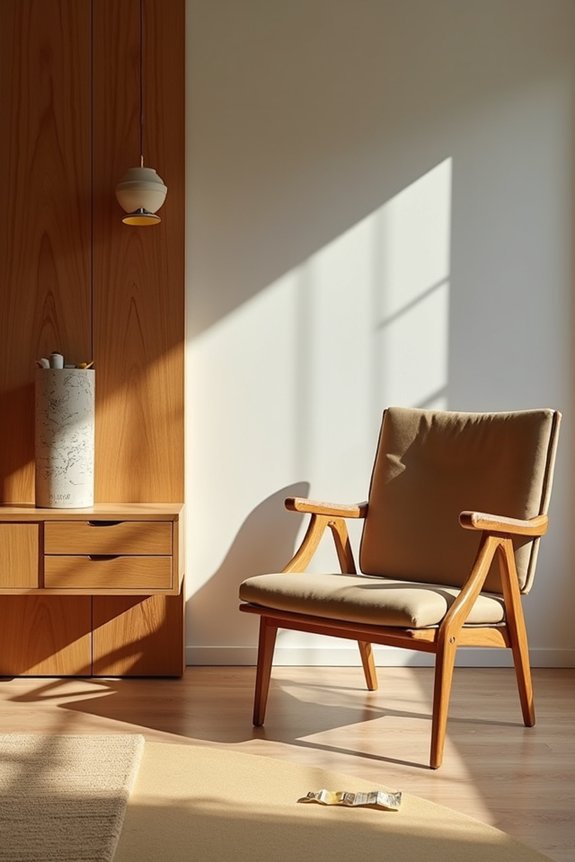
The Lunning Prize had crowned Nordic design’s best and brightest, but winning an award in Scandinavia didn’t automatically make you a household name in America—that required something bigger. Enter the 1954 Brooklyn Museum exhibition, “Design in Scandinavia,” which changed everything.
The 1954 Brooklyn Museum exhibition proved that Nordic design needed more than prestigious awards—it needed America’s direct attention.
I’d argue this show was the real breakthrough moment. Here’s why it mattered:
- It brought iconic Scandinavian furniture directly to American eyes, not just design magazines
- It proved Nordic pieces weren’t just beautiful—they were affordable for regular families
- It connected democratic ideals with functional design, making it feel accessible to everyone
Suddenly, you weren’t just buying a chair; you were joining a movement. From 1954–1957, the exhibition traveled across North America, shifting how we saw design. Scandinavian modernism stopped being exclusive and became something we all belonged to.
Finnish Functionalism: From Rural Craft to International Recognition
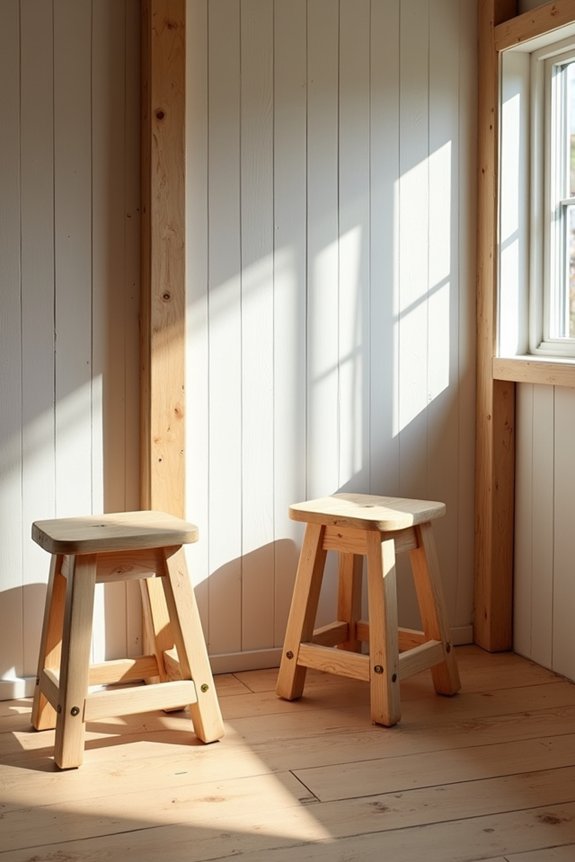
While Scandinavian design was gaining momentum across the region, Finland took a slightly different path—one that started in small villages and workshops before spreading across the globe. Finnish Functionalism emerged by blending traditional regional craft with modern industrial production, creating something genuinely accessible. Designers like Alvar Aalto advanced the movement through organic forms and innovative bent plywood construction that prioritized human-centered values. Warmth and tactility became Finland’s design signature. By the 1930s–1950s, exhibitions and publications showcased this approach internationally. Institutions like the Design Museum in Helsinki reinforced these values through education and exhibitions. The movement created products you could actually afford and use daily—practical thinking that challenged design conventions of its time.
Norwegian Minimalism: Defining the Nordic Aesthetic
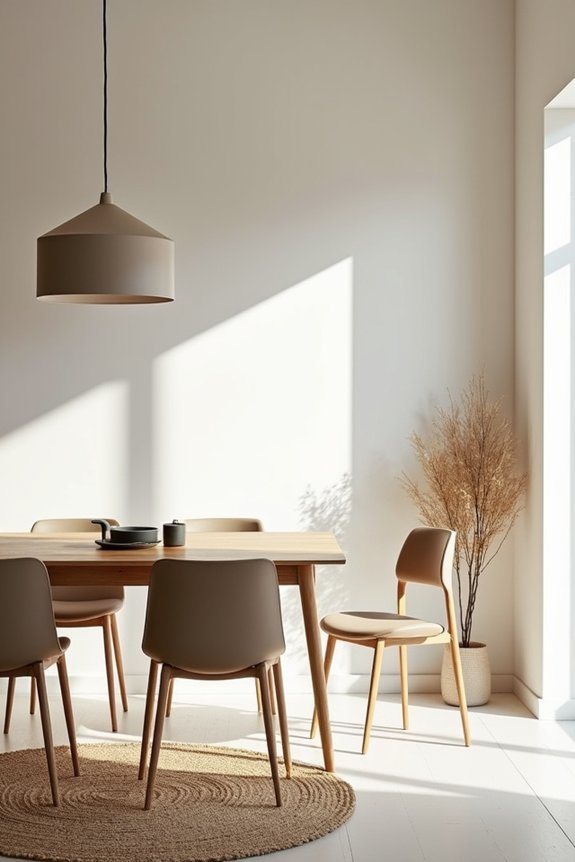
When I first studied Norwegian design, I realized it’s based on the principle of restraint—these designers believed that removing everything unnecessary actually makes spaces feel better, not emptier. You’ll see this philosophy everywhere: a wooden chair with clean lines, a room lit by warm lamps instead of bright overhead lights, and walls painted in soft grays and whites that let you focus on what really matters. What’s notable is how nature shapes every decision, so you might find a piece of slate or raw wool in a room not because it’s fashionable, but because it honestly reflects the Nordic landscape and what people there actually need to live well.
Function Over Decoration
When you embrace function over decoration, you’re making choices that stick around:
- A wooden chair that’s beautiful *because* it’s perfectly shaped for sitting, not hidden under cushions
- Windows designed to flood your home with precious light during those endless dark winters
- Natural materials like wood that warm a room while lasting decades, not just looking nice this season
This approach means every piece earns its place. You’re not decorating for show; you’re building a home that actually works for how you live. That’s what matters.
Clean Lines and Restraint
That practical foundation we just explored? It basically leads us to clean lines and restraint—the visual soul of Norwegian minimalism. I’ve noticed how Scandinavian designers strip away everything unnecessary, keeping only what serves a purpose. They use straight edges, uncluttered spaces, and neutral colors that calm your mind rather than overwhelm it. Think of a room with pale walls, natural wood furniture, and nothing extra sitting around. This minimalism isn’t boring; it’s sophisticated. By removing excess, designers actually highlight what matters—texture, material quality, and how light moves through a space. Wool textiles, pine, and stone become focal elements when nothing competes for attention. That’s how it works: functionality meets beauty through restraint.
Nature’s Influence on Form
If you’ve ever stood in front of a Norwegian fjord or walked through a dense forest there, you’ll understand why the scenery basically dictates the design. I’ve noticed how designers draw inspiration directly from their landscape, and it makes sense.
Norway’s dramatic environment shapes everything—from organic curves to earthy tones. Natural materials like wood, stone, and wool aren’t just popular choices; they’re connections to the land itself. You’ll find:
- Curved furniture echoing mountain silhouettes and flowing water
- Raw wood finishes that celebrate tree grain and imperfections
- Neutral palettes mirroring snow, granite, and forest floors
This approach creates spaces that feel grounded and honest. When I look at Norwegian minimalism, I see designers asking, “What does our home actually need?” rather than “What looks fancy?” That’s the landscape speaking through their work.
Swedish Design: The International Standard for Form and Function
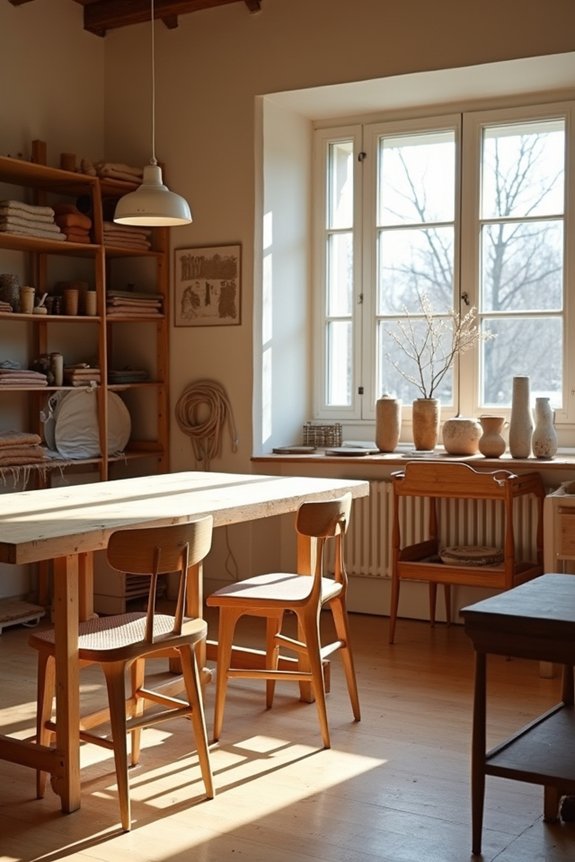
How’d Swedish designers manage to convince the world that a simple wooden chair could be beautiful? They understood something we all crave: honesty in design. Swedish creators didn’t hide their materials or overcomplicate things. Instead, they embraced form and function as partners, not opponents.
What made Scandinavian design influential wasn’t fancy decoration—it was accessibility. Designers like Bruno Mathsson crafted furniture using affordable materials, proving that quality didn’t require wealth. They believed good design belonged to everyone, not just the rich.
Swedish institutions championed this philosophy relentlessly, setting standards that influenced global manufacturing. Their legacy taught us that clean lines, practical usability, and warmth create lasting beauty. Today, when you choose something simple and well-made, you’re actually choosing Swedish design’s winning formula.
From Furniture to Consumer Electronics: Scandinavian Design’s Global Expansion
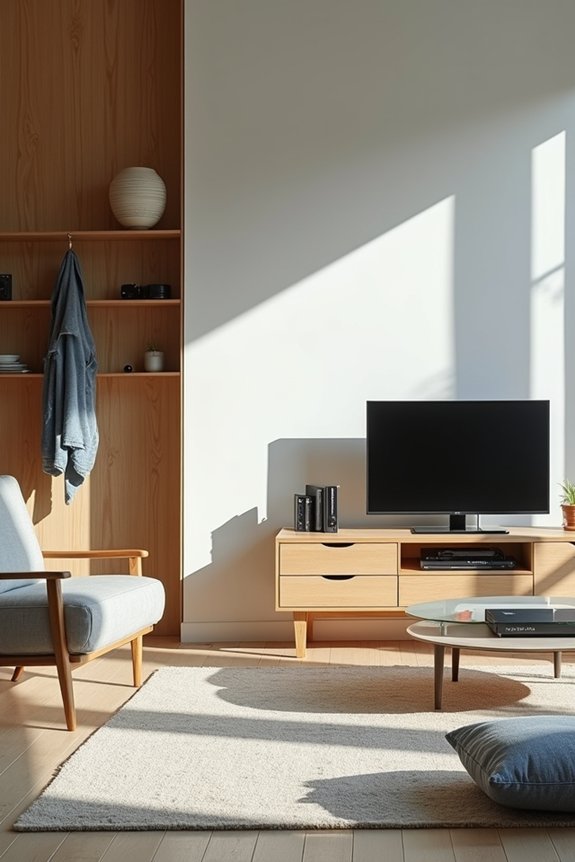
Swedish designers didn’t stop at furniture—they took their winning formula and applied it everywhere. I’ve watched how Nordic design principles spread across the globe during the global expansion of the mid-20th century.
Nordic design principles spread globally during mid-20th century expansion, transforming everything beyond furniture into thoughtfully crafted design statements.
Here’s what made this shift significant:
- Consumer electronics became canvases for minimalist beauty—phones and appliances reflected the same clean lines as famous chairs
- Cars adopted Scandinavian simplicity, proving functionality and style aren’t enemies
- Everyday products became design statements through quality materials and thoughtful construction
The Lunning Prize accelerated this movement by celebrating designers internationally. Iconic pieces like Arne Jacobsen’s Egg Chair showed us that Scandinavian aesthetics belonged everywhere, not just living rooms. By the late 20th century, you’d recognize that approachable, well-crafted sensibility across countless products. We’d finally created a design language everyone could belong to.
How Scandinavian Design Remained Timeless: The Principles That Endure
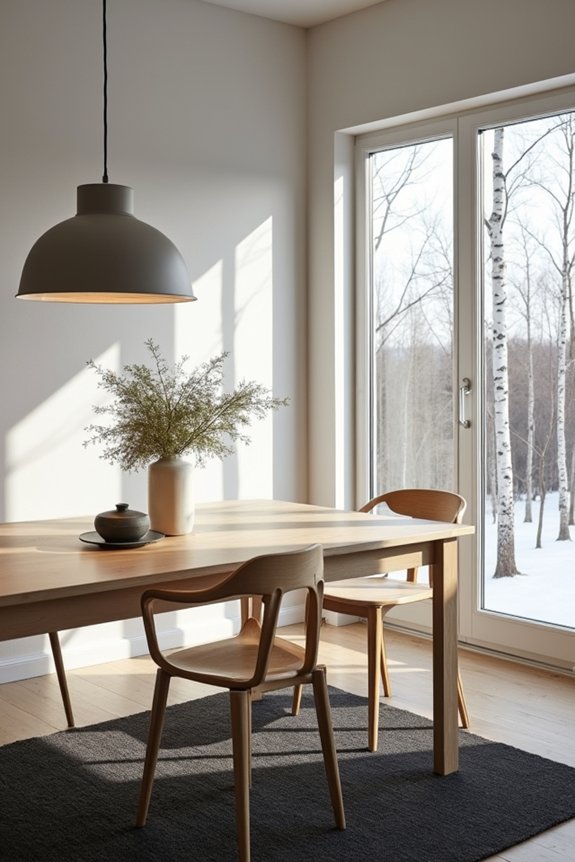
What makes design remain relevant decades later? Scandinavian designers built their work on Functionalism and Craftsmanship.
These designers believed form should follow function—nothing unnecessary, nothing wasteful. Hans Wegner’s Wishbone Chair looks current today because it’s simple and genuinely comfortable. That’s deliberate work, not accident.
Scandinavian design stands apart through its focus on quality materials and honest construction. Arne Jacobsen and Alvar Aalto refused shortcuts. They highlighted wood grain and showed how things were made.
When you design for real people’s actual needs—not passing trends—your work lasts. These principles created pieces people still want in their homes, which outlasts anything chasing what’s popular this season. That’s longevity.
Scandinavian Design Today: Legacy and Modern Applications
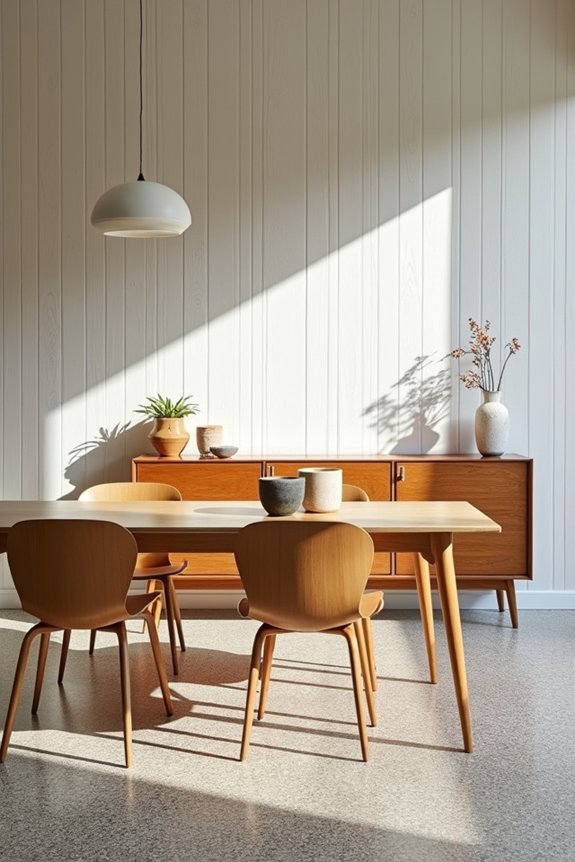
You’d be hard-pressed to walk through a modern home—or even a coffee shop—without spotting something that traces back to Scandinavian design principles. I’ve noticed how these timeless ideas still shape what we buy and use daily.
Scandinavian design principles are everywhere, subtly shaping the products we buy and use in our daily lives.
The legacy thrives because it blended Art and Craft with Functionalism perfectly. Today, you’ll find this influence everywhere:
- Minimalist furniture in IKEA stores and boutique shops, proving accessibility still matters
- Tech products with clean lines—think smartphone designs prioritizing simplicity over clutter
- Sustainable home goods that respect both beauty and environmental responsibility
Designers today aren’t copying the past; they’re building on it. They understand what I’ve learned too: that something doesn’t need ornate decoration to hold value. When form serves function honestly, it belongs in our lives for decades.