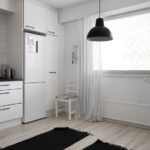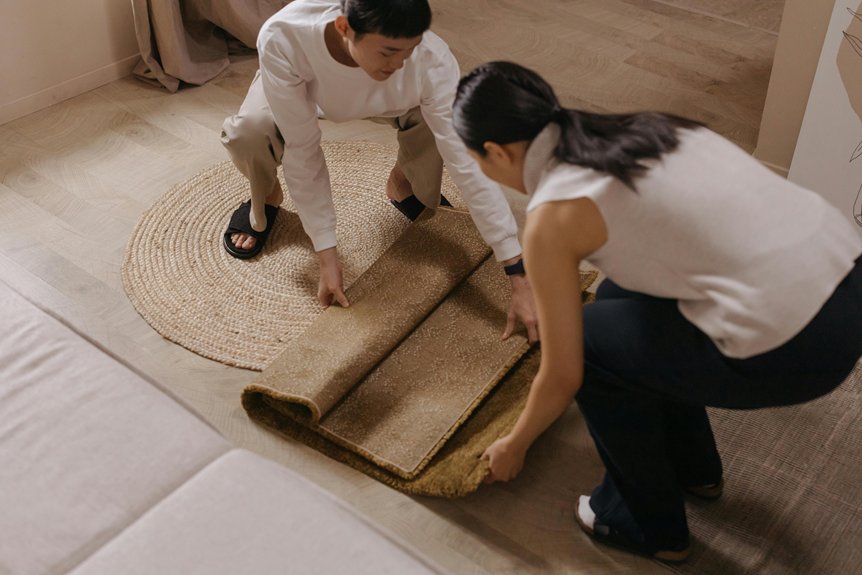
Scandinavians nail rug design because they see them as space organizers, not decoration. I’ve learned they anchor furniture groupings with one large rug instead of cluttering with multiple ones, use flat-weave runners to guide movement through hallways, and layer different textures to naturally separate zones. They pick neutral tones that let light move freely, choose hand-woven pieces built to handle daily chaos, and embrace how rugs age beautifully over time. They treat rugs as investments that evolve with your home.
Use One Large Rug to Zone Open-Plan Living Without Dividing Walls
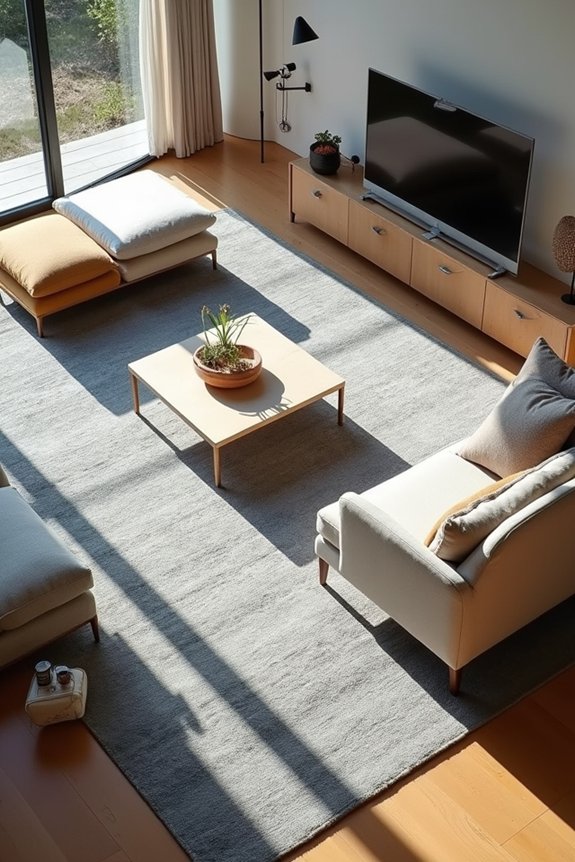
How do you create separate living spaces without throwing up a wall? A large Scandinavian rug does the job well. In my open-plan living area, I placed a 9×12 rug beneath all my seating and coffee table, instantly defining the zone without cluttering the space. The neutral tones anchor everything together while letting natural light move across the room.
What I appreciate most is the simplicity. Rather than layering multiple rugs—which I tried once and regretted—I keep it minimal with a single dominant piece. The rug’s texture creates cohesion between my minimalist furniture and stark architecture, grounding the space without bold colors competing for attention. It’s zoning done the Scandinavian way: intentional, calm, and welcoming.
Measure and Size Your Rug to Fit Furniture Groupings
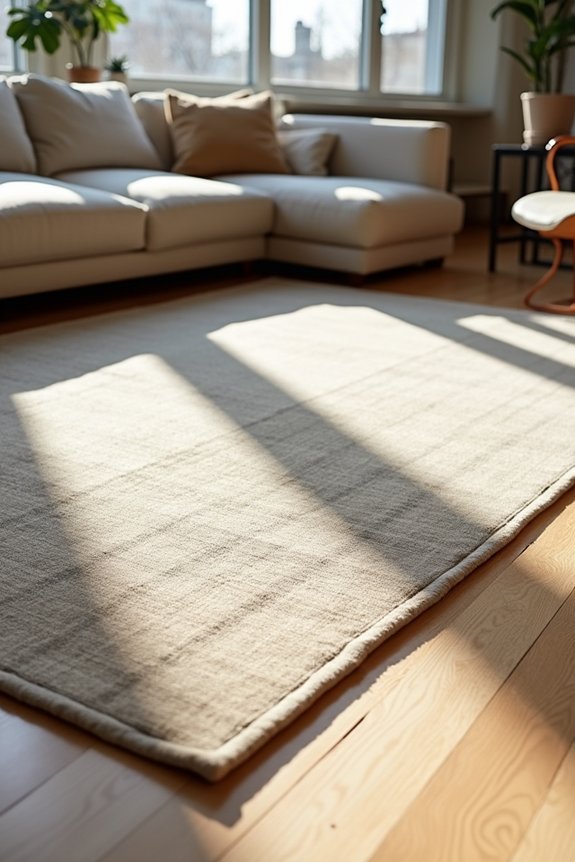
When I first bought a rug for my living room, I grabbed something that looked nice in the store—and immediately regretted it when it barely peeked out from under my sofa. That’s when I learned that proper rug sizing actually matters.
For a living room rug, I now anchor all furniture underfoot with a large area rug like a 9×12. In dining rooms, I place the rug directly under the table so chairs sit on it fully. For bedrooms, I position the rug to accommodate all nightstand feet, creating unified furniture groupings.
In open-plan spaces, appropriately sized Scandinavian rugs define zones without chaos. The key? Maintaining tonal cohesion across textures so your rug complements, not overwhelms, your furniture. Getting sizing right improves how a space feels.
Combine Flat-Weave and Pile Rugs to Separate Zones Naturally
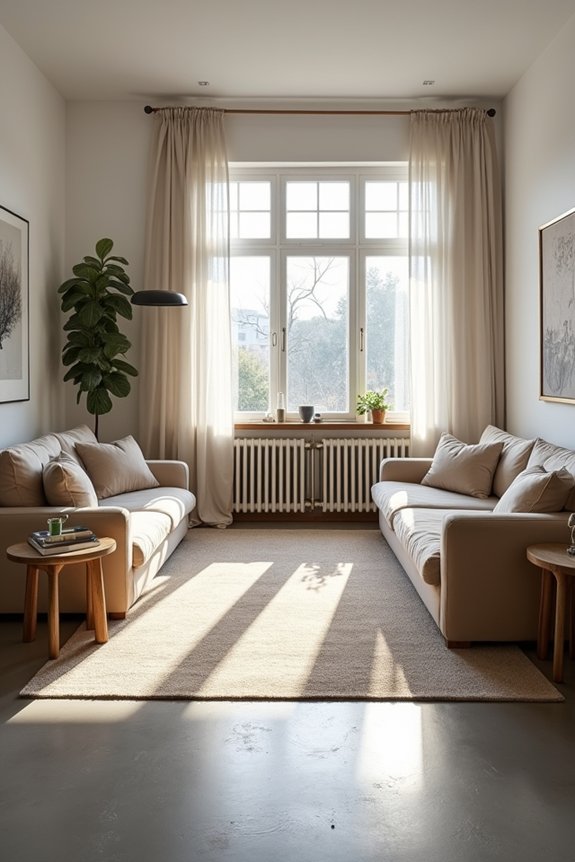
Why settle for walls when rugs can do the job better? I’ve found that combining flat-weave Rölakan rugs with plush pile rugs creates natural zones without closing off your space. In my open-plan living area, I layered a neutral flat-weave runner through the hallway, then positioned a cozy pile rug in my living area while anchoring the dining zone with flat-weave underneath. This textural contrast maintains tonal harmony across the room—everything feels connected yet distinct.
| Zone | Rug Type |
|---|---|
| Hallway | Flat-weave runner |
| Dining | Flat-weave underlay |
| Living | Pile rug |
| Seating | Flat-weave anchor |
| Conversation | Softening pile |
The benefit? You’re defining movement and function without adding extra furniture to your space.
Add a Runner to Define Hallways and Bedroom Boundaries
There’s something worthwhile about a well-placed runner—it gives an empty hallway purpose as a deliberate design statement. Scandinavian rugs excel at this job, bringing understated elegance to spaces we often overlook.
In my hallways, a hand-woven runner creates the perfect visual guide, leaving 6–12 inches of exposed flooring on each side. This balance feels deliberate, not cramped. For bedrooms, I place runners between twin beds or along a bed’s foot to unify the layout and soften stark space.
I always choose neutral tones and subtle patterns—they whisper rather than shout. The warm texture underfoot adds comfort while maintaining that minimalist design aesthetic. Durable materials mean my runners withstand daily wear beautifully, proving that understated doesn’t mean fragile.
Balance Light and Warmth With Neutral Rug Tones
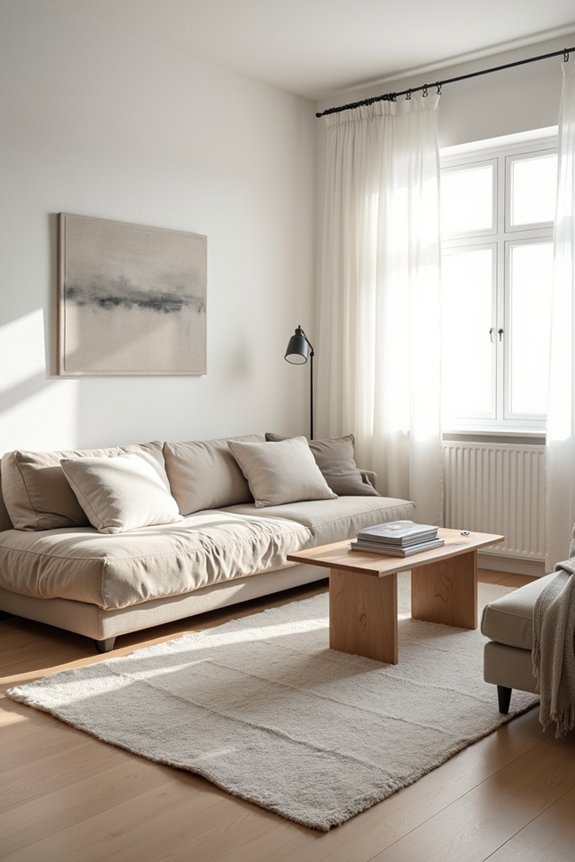
How do you make a room feel both bright and cozy when you’re living somewhere that doesn’t get much sunlight? I’ve discovered that neutral tones like gray, beige, and taupe work well together. In my living room, I chose a Scandinavian rug in soft white with subtle texture—it bounces natural light around instead of swallowing it. Throughout the day, I watch how the soft light diffusion creates different moods across the fibers. The benefit? These neutral rugs warm up spaces without demanding attention. I layer texture through flat-weave patterns and plush areas to add personality while keeping my modern home feeling connected and cohesive. The approach: neutral palette plus intentional texture creates the balance of light and warmth that makes everyone feel at home.
Select Hand-Woven Rugs Built for High-Traffic Daily Wear
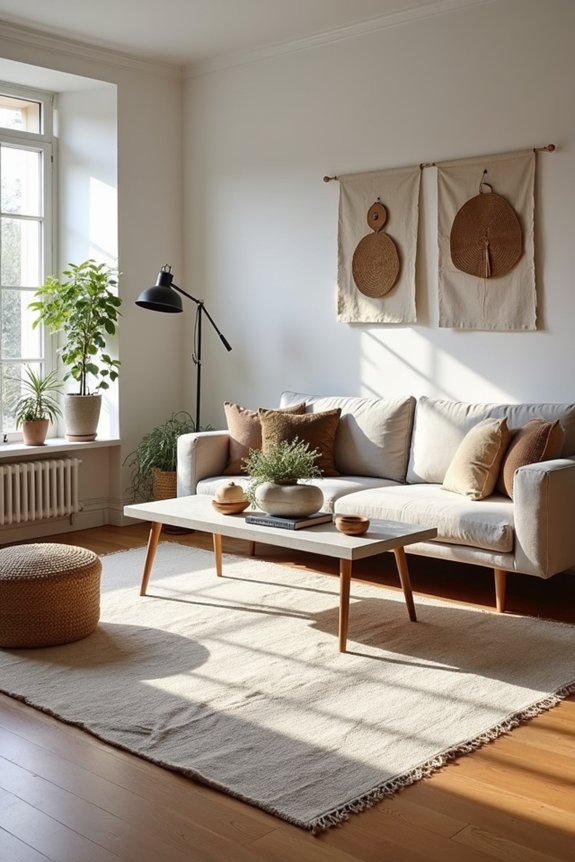
If you’ve got kids, pets, or you’re just constantly moving through your home (guilty on all counts), hand-woven rugs work well for high-traffic spaces. These rugs are built differently than regular ones—their weaving method creates a sturdier structure that resists daily wear and tear, especially when they’re made from tough natural fibers like wool. The key is choosing hand-woven options with tight weaves and reinforced edges, because they’ll keep their pattern sharp and stay in one piece for years, even with your family’s non-stop foot traffic.
Durability Through Hand-Weaving
When I first learned about Scandinavian hand-woven rugs, I discovered that the weaving method itself—not just the materials—is what makes these rugs so durable for busy households.
Here’s what creates hand-woven rugs that last:
- Tighter weaves create stronger foundations that resist fraying and wear patterns
- Traditional techniques produce denser construction than knotted methods
- Natural wool fibers bounce back from foot traffic and resist crushing
- Staining resistance comes from tightly packed fibers that prevent dirt penetration
The longevity is evident. These rugs outlast cheaper alternatives in high-traffic areas, maintaining their visual appeal despite daily use. Quality hand-woven construction makes your rug a lasting investment, not a temporary fix.
High-Traffic Area Solutions
Hand-woven Scandinavian rugs perform exceptionally well in high-traffic areas like foyers, hallways, and the worn path from your couch to the kitchen. These rugs thrive in busy spaces because their robust construction and natural fibers actually strengthen with use. Dense, low pile weaves conceal footprints while resisting wear. Look for reinforced edges that prevent fraying and a maintenance-friendly design that handles daily wear. Round or rectangular shapes help mask wear patterns effectively. When you choose hand-woven pieces for your busiest areas, you can stop worrying about replacement costs. These durable rugs don’t just survive everyday life—they’re built for it.
Let Your Rug Age Gracefully While Supporting Longevity
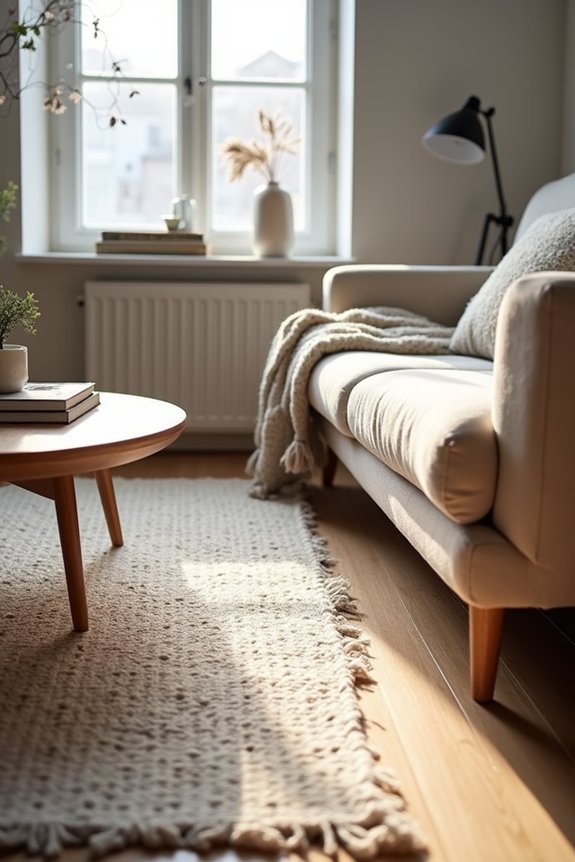
I’ve discovered that the best part about owning a Scandinavian rug is watching it develop character over time—it’s like having a piece of art that improves with age, kind of like how my jeans fit perfectly after years of wear (except, you know, actually intentional). When you invest in quality materials like wool and natural fibers, your rug doesn’t just survive daily life; it gains a soft patina and personality that tells the story of your home, so those inevitable footprints and creases become evidence of how loved it is. The neutral tones and timeless designs mean your rug stays beautiful and relevant for decades, supporting both longevity and your changing style without needing replacement every few years.
Patina as Design Evolution
Rather than viewing wear as damage, Scandinavians celebrate how their rugs develop character over time—and it’s one of the most grounded design philosophies. I’ve watched my own rug evolve, and the changes are real. Here’s what makes patina development significant:
- Hand-woven construction creates deeper texture changes as fibers compress with use
- Natural fibers like wool and cotton age well, maintaining durability while softening
- Neutral palettes let evolving patina blend with changing light and décor
- Strategic underlayment in high-traffic zones slows wear intentionally, creating richer character
This isn’t neglect—it’s deliberate design. Your rug becomes a living record of your home’s story. Scandinavian design embraces imperfection, and that’s freeing. You’re not fighting against wear; you’re partnering with it, letting your rug grow more distinctive alongside your life.
Quality Materials Age Better
Most of us don’t think twice about what our rugs are actually made from, but Scandinavians do—and there’s a reason. When I chose handwoven wool for my living room, I realized I wasn’t just buying a rug; I was investing in longevity. Natural fibers like wool and cotton outlast synthetic alternatives because they’re built to handle daily life. These materials develop a rich patina over time—those subtle color shifts and worn areas that tell your rug’s story. I’ve learned that traditional techniques like hand-knotting create structural integrity that withstands foot traffic for decades. What convinced me most? Maintenance is straightforward with natural fibers, and they age well across seasons. Choosing sustainable, durable materials means your rug becomes a lasting family piece, not disposable decor.
Investing in Timeless Pieces
The best part about Scandinavian rugs? They’re basically an investment that pays dividends over decades. I’ve learned that choosing timeless pieces means I’m not chasing trends that’ll look dated in five years.
Here’s what makes this strategy work:
- Hand-woven natural fibers like wool develop character through patina progression
- Neutral tones and classic geometric patterns complement any style change
- Durable constructions handle high-traffic areas without wearing thin
- Quality materials in your living room become family heirlooms, not landfill
When I selected my Scandinavian rug, I ditched the worry about matching everything perfectly. These pieces adapt as my home evolves. The longevity speaks for itself—my rug doesn’t need replacing; it’s just getting better with age, gaining that beautiful worn-in look that shows it belongs here.